Tokyo as Your Home Base: A Month of Neighborhood Days and Short Trips
Plan a slower month in Japan with Tokyo as your base. Mix neighborhood routines, selected big days and short trips while accounting for travel and room costs.

Written by Hive Heaven

Using Tokyo as a home base for a month works best when you genuinely want time in the city between outings. Choose a neighborhood that supports everyday life, group larger visits sensibly and add short trips only when the travel and extra cost feel worthwhile. One base simplifies logistics; it does not make every Japanese destination nearby.
After a flight from California, it is tempting to make every day prove that the journey was worth it. Another temple, another district, another train ticket. A longer stay gives you a different possibility: the trip can be worth it on the day you go back to the same lunch place because you liked it.
What should the opening days look like?
Keep them close enough to understand your surroundings. Find the useful station exit, learn the room's instructions and choose a breakfast that is easy to repeat. You can still visit something exciting; just do not make the first week an endurance test that the following three weeks must repair.
Kinshicho Station 錦糸町駅
3-14-6 Kotobashi, Sumida-ku, Tokyo
Open in Google Maps
Kinshicho is one candidate for this approach. Test your real destinations against its transport connections, then examine the last walk to the room. A familiar station is valuable because it helps you return, not because it removes the need to plan every journey.

How can a neighborhood day still feel like travel?
Give it one small intention. Try lunch somewhere new, browse an area you passed yesterday or take a short walk before returning. If you enjoy Pokémon, for example, the official SKYTREE TOWN shop in Oshiage can be one outing; it need not turn into a mission to visit every store in Tokyo.
Pokémon Center SKYTREE TOWN
Tokyo Solamachi East Yard 4F, 1-1-2 Oshiage, Sumida-ku, Tokyo
Open in Google Maps
Another person might choose stationery, architecture or a quiet coffee instead. The attraction is having enough time to follow a preference without building an entire day around it. Leave room for places that become interesting only after you have walked past them once.
A base becomes useful when it gives you somewhere to return to—and the freedom not to leave every morning.
When should you add a short trip?
Add one when you can name the experience you want. Hakone may appeal for hot springs and a different landscape. Nikko may appeal for heritage and nature. Read the destination's official transport information and choose a manageable area rather than collecting every sight under the same regional name.
Count the full journey, including the trip from your room to the departure point and the local connection at the other end. Decide whether a day outing or overnight visit gives you the pace you want. An overnight trip may be more relaxed, but it introduces another accommodation cost.
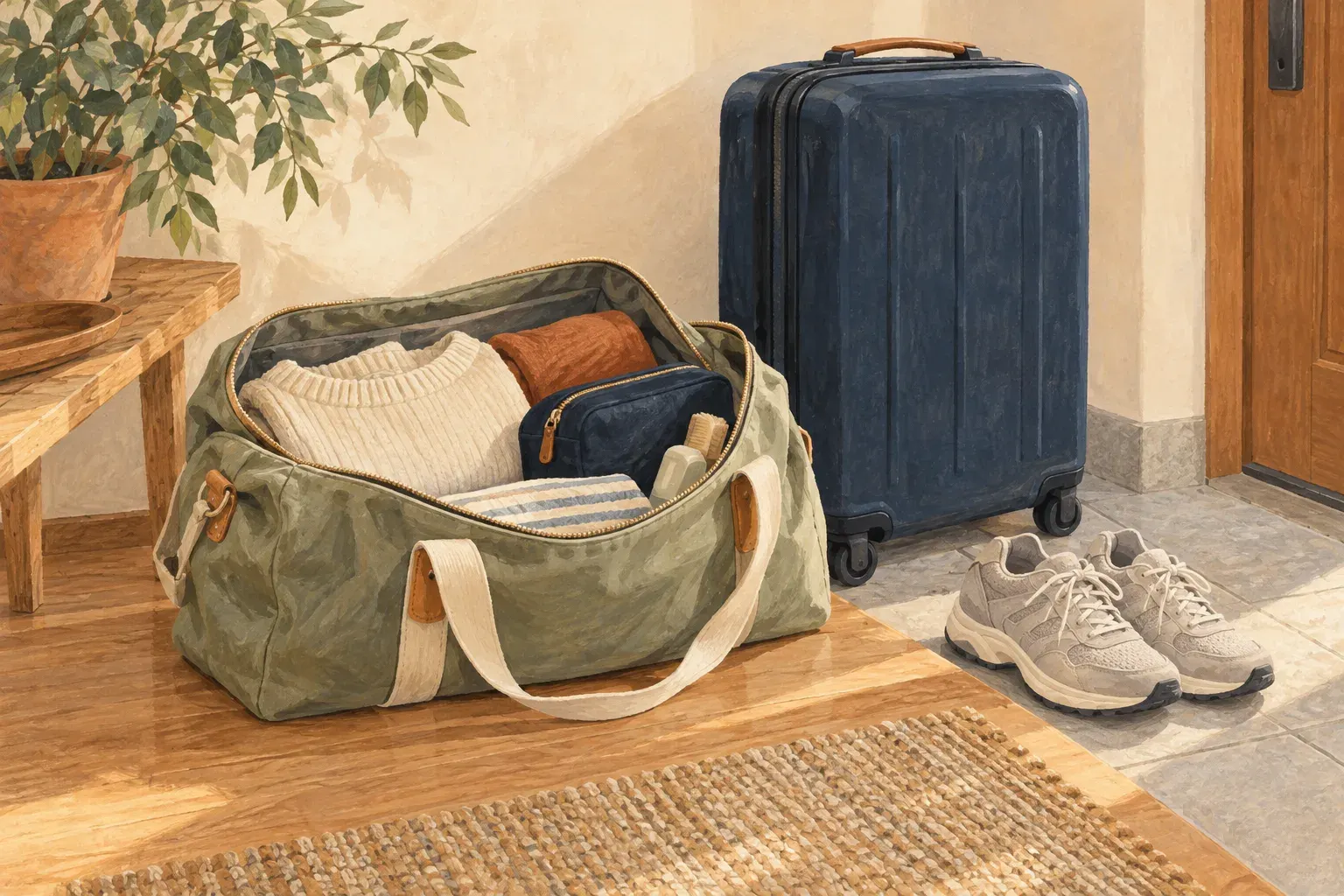
Should you keep the Tokyo room while you are away?
It can be convenient if you maintain the reservation and the arrangement suits the provider's terms. Your main luggage stays in your booked room and you return to a familiar place. You still pay for the overlapping Tokyo nights unless a specific agreement says otherwise.
If you end one reservation and start another later, account for storage, moving and the possibility that the original room is no longer available. These are two different plans, not interchangeable versions of the same price.
What belongs in the final week?
Leave time to repeat the things that made the month feel yours. A final favorite meal can be more satisfying than crossing town to tick off a place you never particularly wanted to visit. Check the departure route, finish groceries and pack with enough time to notice what you are taking home besides shopping.
For a HIVEN enquiry, share your continuous stay dates, party size, beds and any planned nights away. Confirm the actual room and complete terms. A month in Tokyo does not have to be a compressed tour of Japan. It can be a substantial visit to one city, with a few carefully chosen windows into somewhere else.
Frequently asked questions
Is Tokyo a sensible base for visiting all of Japan?
Not for every itinerary. Distant priorities may deserve separate stays rather than repeated long journeys.
Do I need an outing every day?
No. Neighborhood time and repeat visits are part of this slower approach.
Can I leave bags after checkout while taking a side trip?
Do not assume storage is available. Ask separately; it differs from leaving belongings in a continuously booked room.
How do I choose between a day trip and two nights away?
Compare the complete journey, intended activities, energy and extra accommodation cost.
Information checked: 21 October 2026. Prices, availability, school calendars, opening hours, transport and booking conditions may change. Recheck official information before publication and before booking or visiting. Suggested outings are independent planning ideas, not included tours or services.
Sources
Tokyo Metro — Kinshicho station and exits — https://www.tokyometro.jp/lang_en/station/kinshicho/index.html
Pokémon Center SKYTREE TOWN — official shop details — https://shop.pokemon.co.jp/en/shop/pokemoncenter-skytreetown/
Japan National Tourism Organization — Hakone — https://www.japan.travel/en/destinations/kanto/kanagawa/hakone-and-around/
Nikko official tourism — getting around — https://www.visitnikko.jp/en/plan-your-trip/getting-to-and-around-nikko/
HIVEN — Residence and booking information — https://www.hivenstay.com/


