Seven Convenience Store Meals for Real Life
Not a snack list, but a practical long-stay guide: seven convenience store meal patterns for breakfast, quick lunch, late dinner, rainy days, workdays, light meals, and dessert.

Written by Hive Heaven
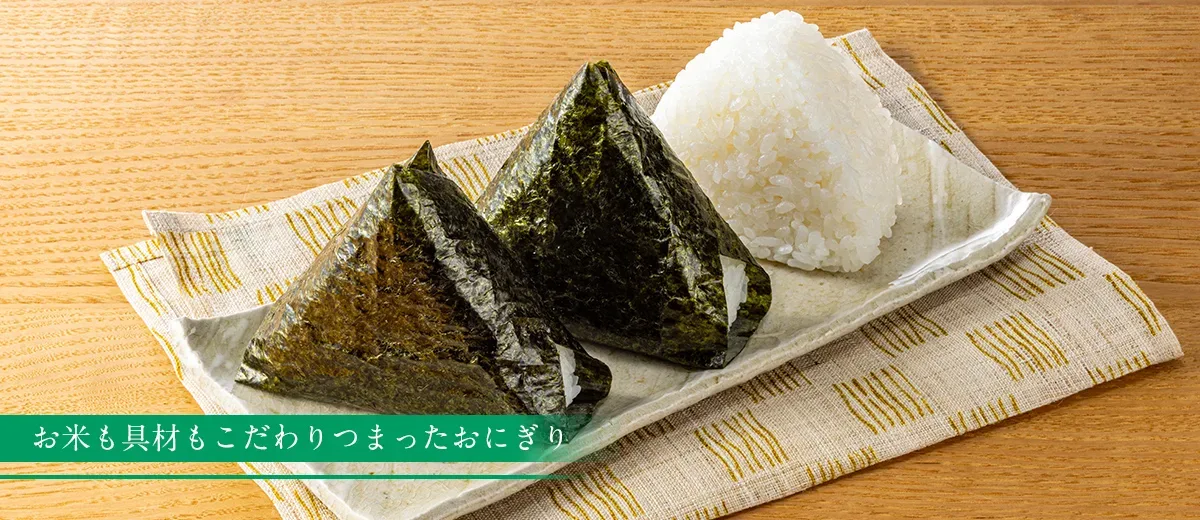
Convenience store food in Tokyo is easy to misunderstand. On a short trip, it becomes entertainment: egg sandwiches, fried chicken, seasonal sweets, novelty drinks, late-night snacks, and the pleasure of seeing how much fits inside one small shop. During a longer stay, the role changes. A convenience store is not only a place to try things. It is a tool. It solves breakfast when the morning starts too early. It solves lunch when work runs long. It solves dinner when cooking no longer feels possible. It solves the rainy day when going to the supermarket would turn a small need into a wet errand. This guide is not about the seven “best” convenience store foods. It is about seven real-life meals. The difference matters.
Think in Situations, Not Snacks
A snack list asks, “What should I try?” A long-stay meal list asks, “What does this day need?” Japanese convenience chains make that possible because their prepared-food shelves are organized around everyday use: rice balls, sandwiches, bento boxes, salads, café drinks, chilled items, frozen foods, and sweets. 7-Eleven Japan lists dedicated categories for onigiri, sandwiches, salads, and frozen foods; FamilyMart lists product categories including bento and sandwiches; Lawson’s product pages include café drinks, sandwiches, salads, salad chicken, and frozen foods. That does not mean every meal should come from a convenience store. It means you can stop treating the convenience store as a tourist attraction and start using it as a rhythm: small purchase, clear purpose, no overthinking, back to the day.
1. Breakfast: Onigiri, Coffee, and Something Soft
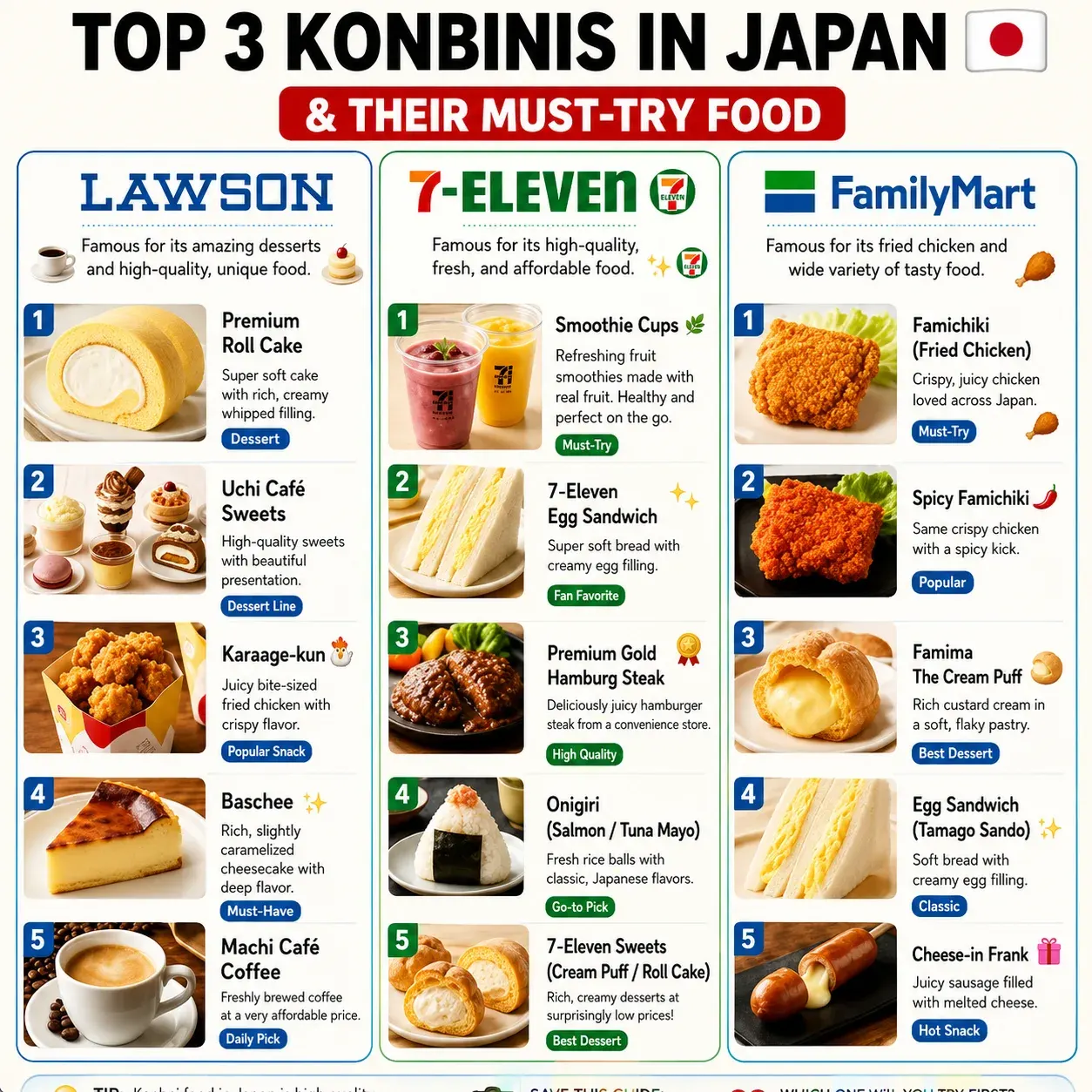
The best convenience store breakfast is small and stable. Start with one onigiri. Add coffee. Add something soft if the day needs more: yogurt, a banana, a boiled egg, or a small bread. This is not the most exciting meal in Tokyo, which is exactly why it works. Onigiri is the strongest breakfast anchor because it is portable, portioned, and easy to understand after two or three mornings. 7-Eleven’s official product pages maintain a dedicated onigiri category, while its quality page explains that onigiri are made under hygiene management and that rice and filling choices may vary by product and region. Coffee is the second anchor. Lawson describes MACHI café as its in-store freshly brewed coffee service, and FamilyMart’s tourist-facing page also introduces how to buy and make FAMIMA CAFÉ drinks. This breakfast is for mornings when you need to leave before the city has fully opened. It is enough to start the day without making the morning heavy.
2. Quick Lunch: Sandwich, Salad, and Tea
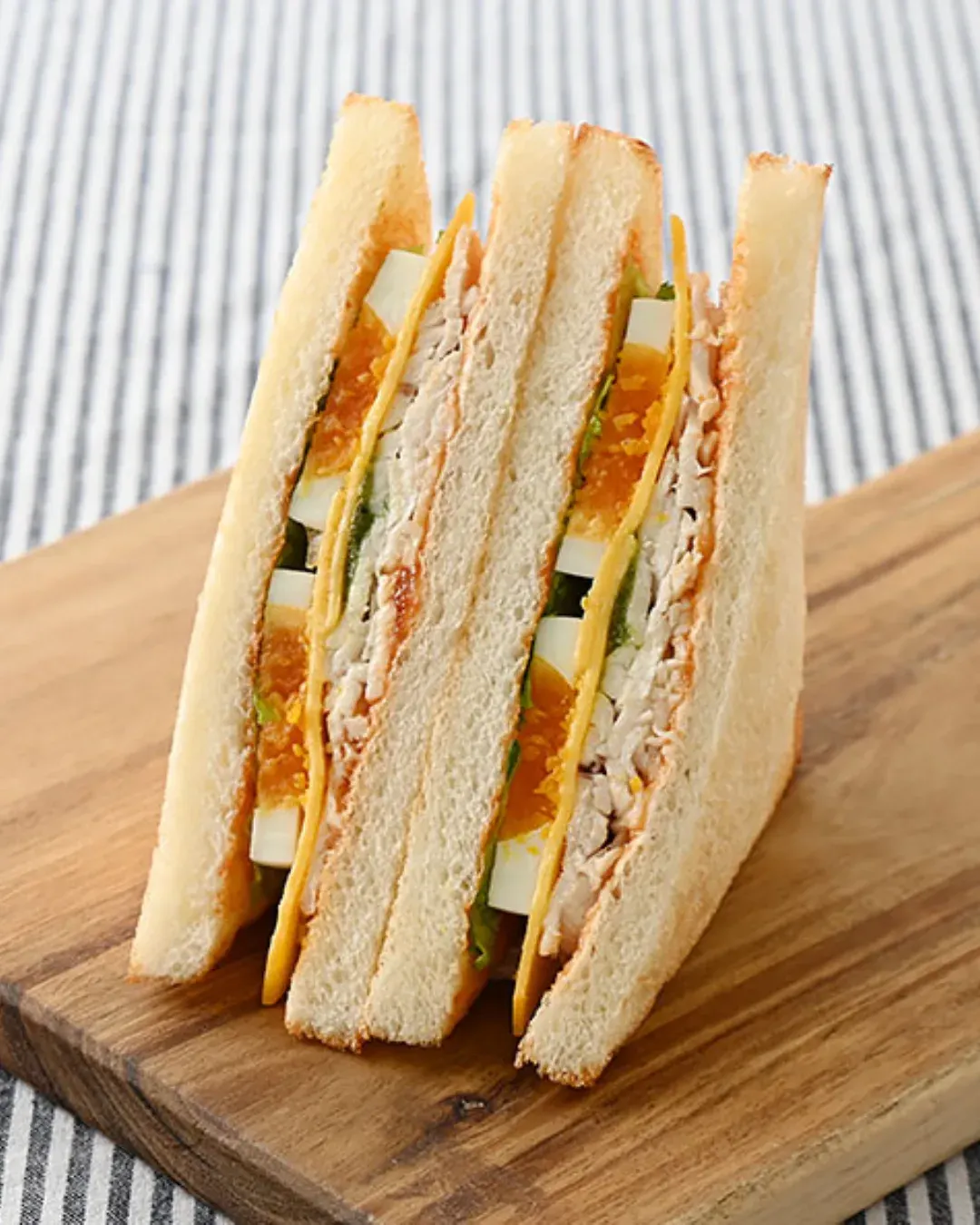
A quick lunch should not become a sugar crash. Choose a sandwich, add a small salad, and drink unsweetened tea or water. This is the meal for days when you are between errands, between calls, or between neighborhoods and do not want to sit down for a full restaurant lunch. Sandwiches are useful because they are fast but still feel like lunch. FamilyMart and Lawson both maintain sandwich and roll-bread product categories, while 7-Eleven lists a sandwich and roll-bread category as well. The salad matters because it changes the meal from “bread because I was tired” to “lunch because I made one decision.” 7-Eleven, FamilyMart, and Lawson all list salad categories or current salad products, but availability changes by region and store. Eat it somewhere appropriate: your room, an office lounge, a designated eating area, or a park bench where eating is allowed and tidy. Convenience should not mean leaving trash behind.
3. Late Dinner: Bento When Cooking Is Already Over
Late dinner is where the convenience store becomes most useful. Not every night needs a restaurant. Not every night needs cooking. Some nights need one warm bento, one soup, and no further decision. FamilyMart’s official bento category shows how broad this shelf can be, from standard boxed meals to chilled bento and regional items. Its pages also caution that availability may vary by region and store, which is why the best rule is to choose by shape rather than by one fixed product name. For late dinner, avoid buying too many “extras” because you are hungry while standing under bright lights. Choose one main meal. Add soup or tea if needed. Skip the second fried item unless it is really dinner, not fatigue. Back at HIVEN, put the meal on a plate if you can. That small step turns emergency food back into dinner.
CONVENIENCE STORES AROUND KINSHICHO STATION
Around Kinshicho Station, Sumida City, Tokyo
Open in Google Maps
4. Rainy Day: Frozen Food or Noodles at Home
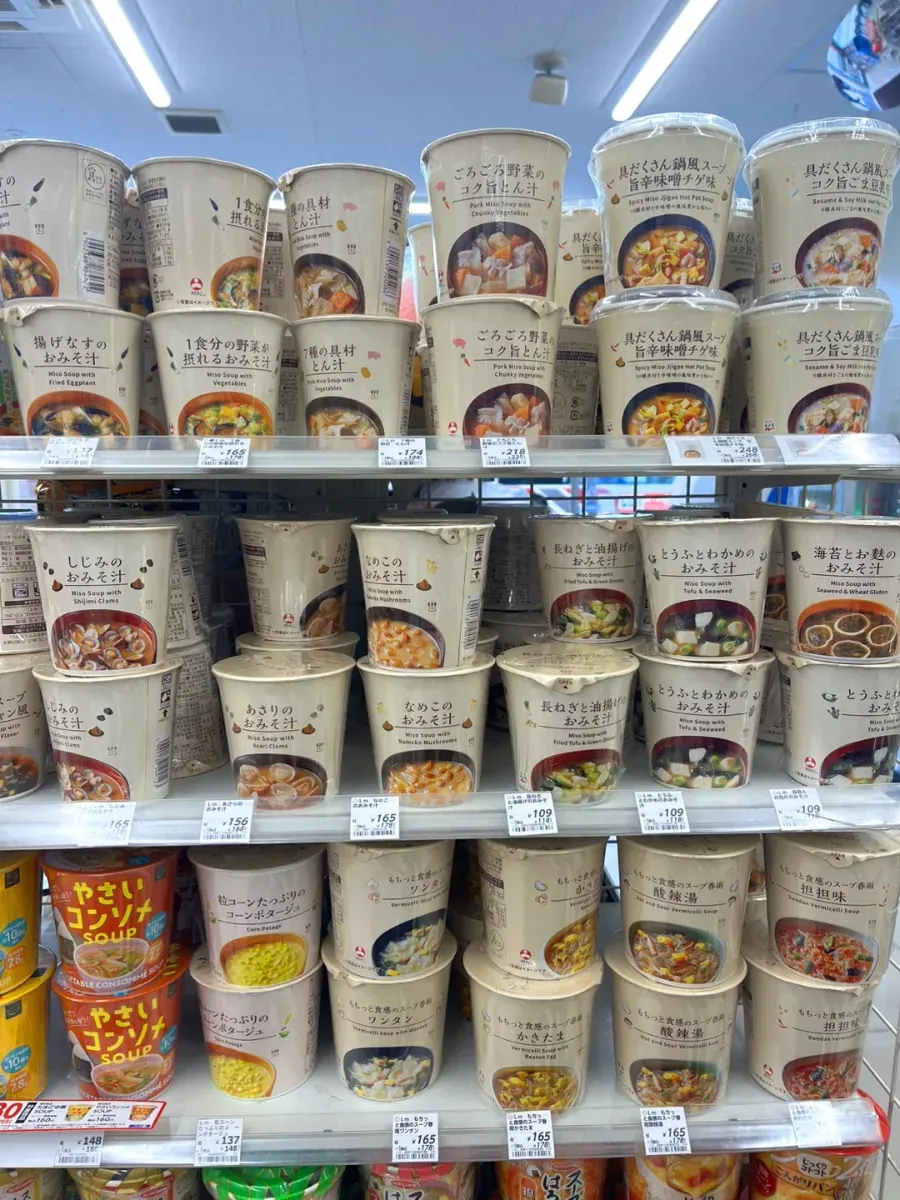
Rain changes the value of a convenience store meal. On a dry day, walking to a supermarket may be better. On a wet night, a frozen pasta, frozen rice dish, frozen udon, or simple noodles can be the practical choice. Frozen food is not only a supermarket category. 7-Eleven, FamilyMart, and Lawson all list frozen-food categories, and Lawson’s current frozen-food page includes items such as pasta, rice dishes, noodles, dumplings, frozen fruit, and sweets. This meal works best when your residence has the equipment for it. Check whether you have a microwave, plate, bowl, chopsticks, and a way to handle packaging. Do not buy frozen food only to discover that you cannot heat or eat it comfortably. The rainy-day rule is simple: buy the meal that gets you home fastest and keeps you from going back out.
5. Workday: Protein, Salad, and Coffee
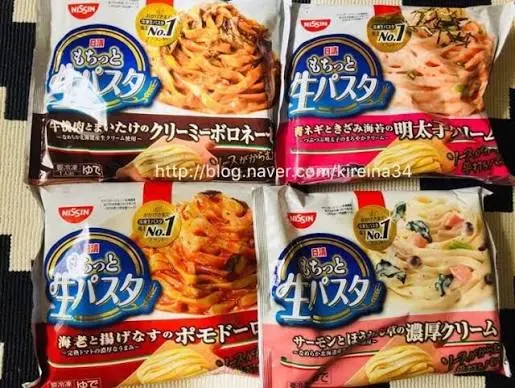
The workday meal has a different job. It should keep you awake without making you sluggish. This is where salad chicken, protein sandwiches, salads, and coffee become useful. FamilyMart lists protein-oriented products such as chicken, broccoli, and egg sandwiches and salad-chicken salads; Lawson lists salad chicken and other chicken protein items, including product pages with protein and calorie information. The point is not to count every gram. The point is to avoid the workday trap: sweet bread, sweet drink, no water, then a crash before the next call. A better pattern is simple: protein item, small salad, coffee or tea, water nearby. Eat away from the keyboard if possible. Return to work before the meal becomes another form of procrastination. Convenience stores are good at workday meals because the portions are already decided. You only need to choose the pattern.
6. Light Meal: Soup, Egg, Tofu, or Salad
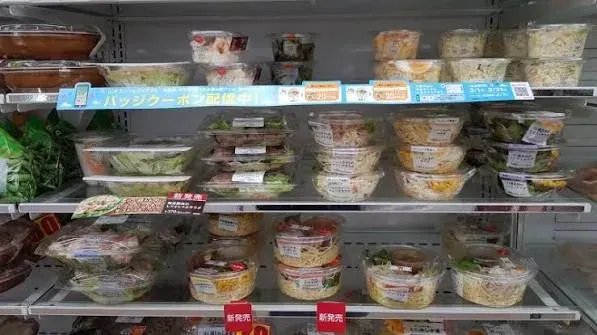
Some evenings do not need a full meal. This happens more often during a long stay than during a short trip. You ate well at lunch. You are tired from walking. The room is warm. A heavy bento would solve hunger but make the night feel worse. Choose small instead: soup, boiled egg, tofu, salad, seaweed side dish, or a single onigiri. Add tea. Stop there. Convenience stores help because they let you buy only one or two pieces of a meal. You do not need to commit to a full supermarket basket or a restaurant seat. The danger is that “light meal” can turn into random grazing. Avoid that by giving the meal a shape: one warm item, one fresh item, one drink. Then leave the store.
7. Dessert: One Sweet, Not a Snack Spiral
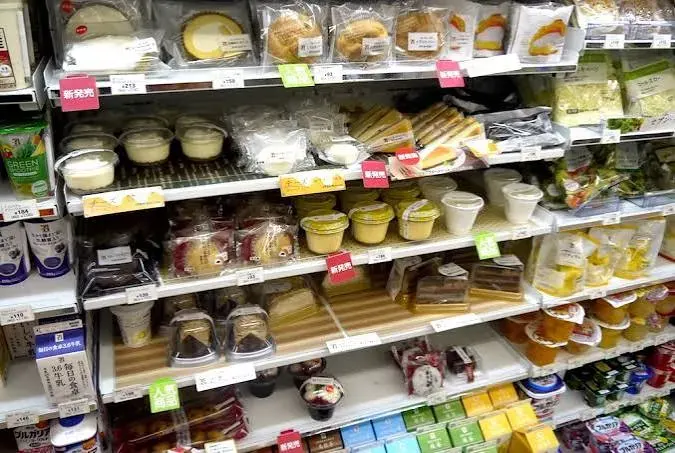
Dessert is where the convenience store is both helpful and dangerous. The shelves are designed for one more thing. Seasonal sweets, chilled desserts, ice cream, chocolate, and small pastries are easy to justify because each item looks small by itself. Use dessert deliberately. Buy one sweet after an errand, after laundry, after a long walk, or after a late work session. Pair it with coffee or tea. Bring it back to the room or eat it in a proper place. Do not turn dessert into a second shopping route. Lawson’s English product page introduces “choice sweets and recommended products,” and the major chains all maintain rotating sweet or dessert shelves, but this is exactly why the rule matters: one sweet is a ritual; five sweets are indecision. During a longer stay, dessert should mark the end of a day. It should not become the day.
“A convenience store meal is useful when it solves a situation, not when it becomes a substitute for every meal.”
How to Use Konbini Meals for a Month
Use convenience stores as a system. Keep breakfast simple. Make lunch balanced enough to return to the day. Let late dinner be warm but not excessive. Save frozen food for rainy days or tired nights at home. Use protein and salad for workdays. Keep light meals genuinely light. Treat dessert as an ending, not a habit that keeps expanding. Also rotate stores. Not because one chain is always best, but because each shelf teaches you something. 7-Eleven may be easy for onigiri and prepared staples. FamilyMart may be easy for sandwiches, café drinks, and bento choices. Lawson may be useful for MACHI café, salad chicken, frozen meals, and sweets. The exact best store is the one that fits your route back to HIVEN that day. The longer you stay, the less the convenience store feels like a novelty. That is when it becomes most useful.
Real Life, Not a Food Challenge
Back at HIVEN, the best convenience store meal may not be the one you remember most. It may be the one that let the day continue. The breakfast before a train. The sandwich between calls. The bento after a late return. The frozen noodles on a rainy night. The protein lunch that kept the afternoon steady. The small soup when dinner needed to stay quiet. The single dessert that made the room feel like home. Tokyo’s convenience stores are famous because they are good at small needs. A long stay teaches you which needs are actually yours. Use them for that. Not as a checklist. Not as a snack challenge. As one more way the neighborhood helps you live here for a month.