A Month in Tokyo Without a Car: Groceries, Trains and Everyday Life
Visiting Tokyo from California for a month? Plan a car-free routine around useful station exits, smaller grocery trips and the walk back to your actual room.

Written by Hive Heaven
A car-free month in Tokyo is easiest when you choose accommodation around the routes you will repeat: the station, groceries, meals and the walk home. Investigate those journeys before booking rather than assuming that every address near a train symbol will feel equally convenient.
If your normal California grocery run ends with bags in a trunk, Tokyo may invite a different calculation. That large bottle and extra bag of rice now need to reach the room in your hands. The change can be enjoyable once you stop asking a walking routine to behave like a driving routine.
What becomes your starting point instead of the car?
A useful station exit and a reliable route home. At Kinshicho, use the official station information to identify the line and exit for your journey. The nearest entrance is not always the best one with luggage, and a station name alone does not tell you where the elevator is.
Kinshicho Station 錦糸町駅
3-14-6 Kotobashi, Sumida-ku, Tokyo
Open in Google Maps
Try to understand one uncomplicated local route before making ambitious plans. Save the accommodation address and entry instructions offline. If the phone battery runs low after a long day, knowing the last few turns is more reassuring than having memorized the entire rail network.
IMAGE SLOT — Placement: After station section / cover option. Prompt: New photography brief: actual Kinshicho public street and station approach at pedestrian eye level, no staged accessibility signage or invented route diagram, 3:2. Suggested alt: Learning a walkable route around Kinshicho Station. Suggested caption: One familiar route can make a large city feel more manageable.. Use a new image file owned by this draft. Label illustrations as illustrations; do not present them as photographs of an actual room or place.
How should the grocery run change?
Start smaller. Buy for a day or two, learn the fridge and discover what you actually eat while traveling. The most economical-looking package is not always the most useful purchase if it is difficult to carry or ends up unfinished.
SEIYU Kinshicho 西友錦糸町店
4-27-14 Kotobashi, Sumida-ku, Tokyo
Open in Google Maps
SEIYU Kinshicho is one local grocery option to check. Verify current hours and temporary notices for the day you need it. Put heavier shopping near the end of a short outing, not at the beginning of an afternoon of sightseeing.
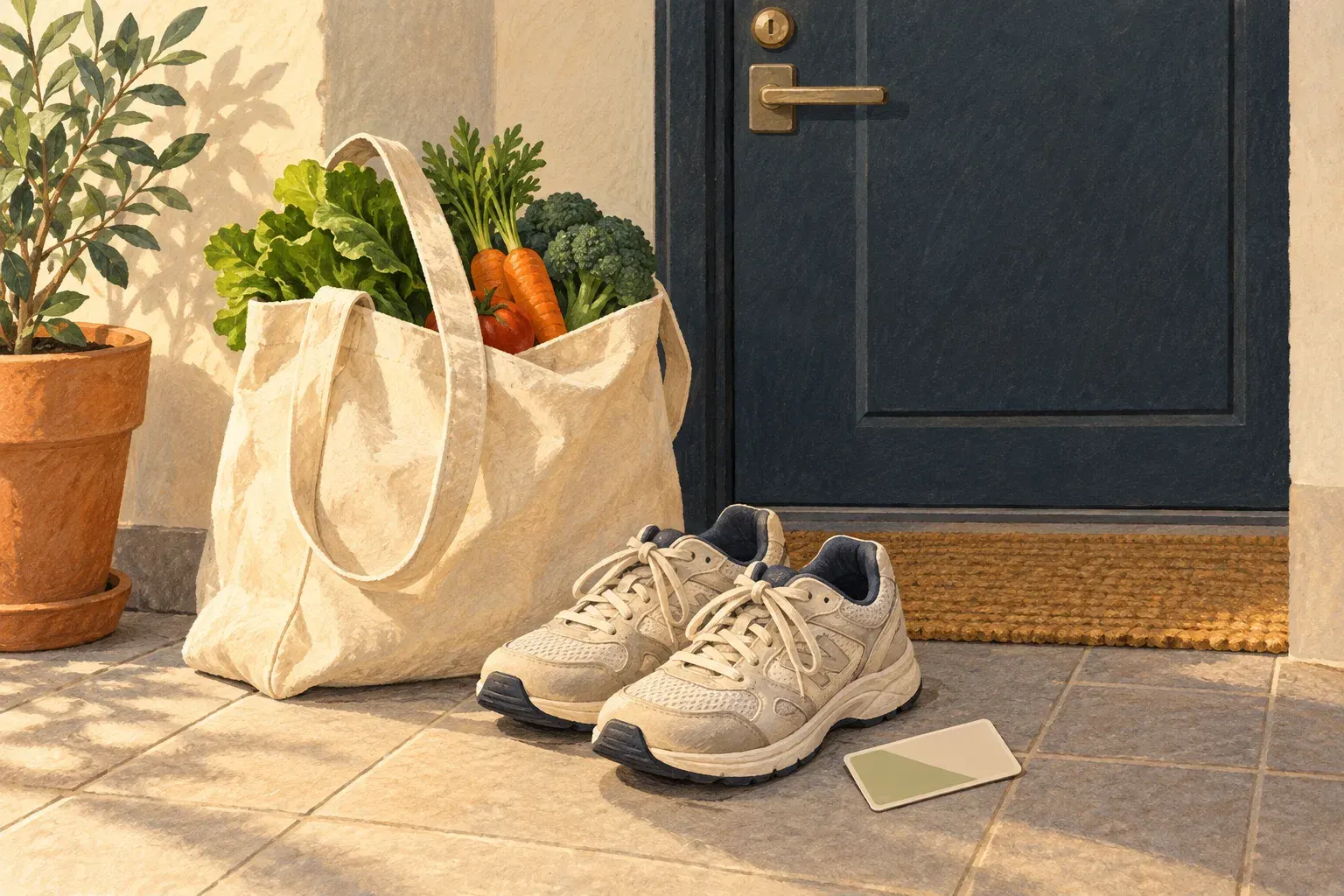
Without a trunk to fill, a small grocery bag can become a good reason to know your neighborhood.
Do you need a pass for every train journey?
Start with the routes and frequency, then compare the products that cover them. Different operators and services have different conditions. A pass that looks convenient may add little value during a week when you spend several days close to the room.
Leave time for the parts between trains: platforms, corridors, exits and street crossings. Your navigation app can help, but the pace that suits you is still yours. Travelling without a car does not require racing through every station.
What about rain, tired legs or a late return?
Keep alternatives available. A car-free trip does not mean you must walk every journey; decide when another suitable transport option is worth the cost. Check operating times before a late outing and avoid assuming the same route will run at every hour.
If step-free access is essential, examine the complete path from your room to the destination, including the building entrance. Confirm specific requirements directly. An elevator at one end cannot tell you what happens along the rest of the journey.
How do you choose a room for this kind of month?
Ask HIVEN about the exact building and room, then test the routes you expect to use. Consider where you will put shoes, shopping and luggage without blocking everyday space. The appeal is not an abstract promise of perfect walkability. It is the moment when buying breakfast, getting home and heading out again stop feeling like separate projects.
You may come home remembering a train line. You may also remember the tiny grocery list that fitted in one bag and the street you learned by walking it twice. A slower visit leaves room for both.
Frequently asked questions
Do I need to rent a car for a month in Tokyo?
It depends on your plans, but a stay organized around rail and local walking can be practical. Check each journey and your access needs.
Is every route from a station step-free?
No. Check station facilities and the complete building-to-destination route.
Should I buy a large transport pass immediately?
Compare coverage and cost against your actual routes and travel days first.
Can I do a large weekly grocery shop on foot?
Consider weight, storage and distance. Smaller repeat shops may fit your routine better.
Information checked: 21 October 2026. Prices, availability, school calendars, opening hours, transport and booking conditions may change. Recheck official information before publication and before booking or visiting. Suggested outings are independent planning ideas, not included tours or services.
Sources
Tokyo Metro — Kinshicho station and exits — https://www.tokyometro.jp/lang_en/station/kinshicho/index.html
SEIYU — Kinshicho store and temporary notices — https://www.seiyu.co.jp/shop/西友錦糸町店/
HIVEN — Residence and booking information — https://www.hivenstay.com/


