Water on the Window? A Small Winter Routine for a Month in Tokyo
Understand winter window condensation in Tokyo accommodation, check ventilation instructions and report persistent moisture during a longer stay.

Written by Hive Heaven
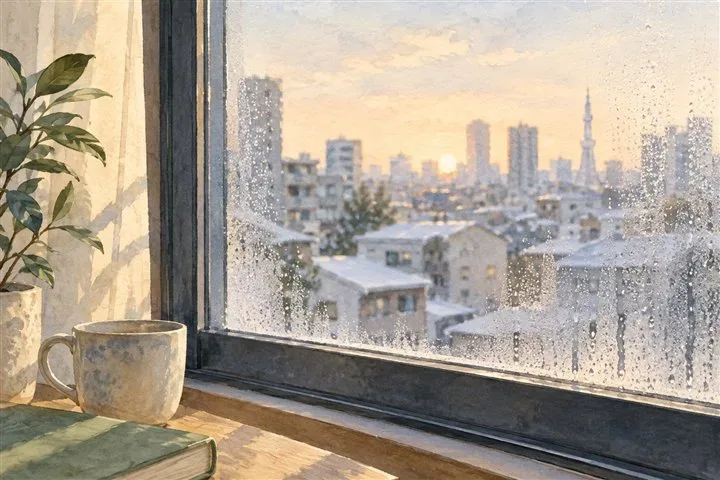
Water droplets on a Tokyo apartment window in winter may be condensation: indoor moisture meeting a cold surface. Turning the heating up is not the whole answer. Notice moisture, follow the room’s ventilation instructions and report recurring problems early during a longer stay.
A comfortable winter room needs attention beyond the number on the thermostat.
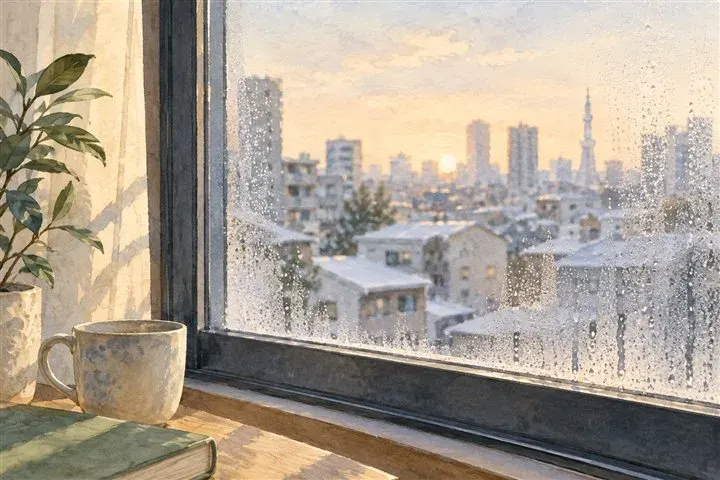
What is worth noticing in the morning?
When opening the curtains, check for moisture around the window. Droplets alone do not diagnose a building-wide problem, but they need not be ignored. Deal with accessible moisture as instructed by the property and keep belongings away from wet areas. If water is running from a wall or ceiling, do not simply assume condensation; contact the operator about the unexplained source.
Why pay attention after cooking or bathing?
Tokyo’s indoor-environment guidance connects moisture-producing activities with ventilation. Learn how the installed ventilation works rather than blocking an opening because it feels cool. Follow building instructions about whether windows may be opened and how to do so safely. Understanding the room’s intended method is more useful than improvising a routine that leaves you uncomfortably cold.
HIVEN BK Kinshicho
4-6-4 Kotobashi, Sumida-ku, Tokyo, Japan
Open in Google Maps
What about laundry and humidifiers?
Wet laundry and humidifier use can affect indoor moisture. Feeling dry does not mean continuous humidification is always appropriate; consider the room conditions and appliance instructions. Use the designated drying arrangements. Do not mix strong cleaning products or treat walls and furnishings yourself in response to marks. Ask the accommodation operator what action is appropriate.
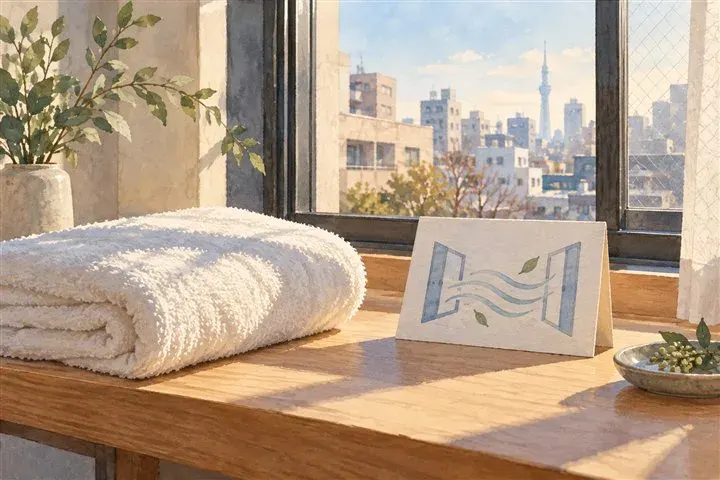
What should you keep handy at HIVEN?
Find the actual room instructions for heating, ventilation and laundry after check-in. If moisture or staining repeats, record its location and timing and send a photograph without personal belongings visible. This article is a practical observation-and-reporting guide, not a building diagnosis or a treatment guide for mould. A clear early message is more helpful than waiting until checkout to mention a persistent issue.
Frequently asked questions
Can condensation occur during winter?
Yes. Indoor moisture can condense on cold surfaces.
Will increasing the heating fix it?
Not necessarily. Ventilation and sources of moisture also matter.
Should I remove wall marks myself?
Report them and follow the property’s instructions instead of treating surfaces without guidance.
Can this guide assess health symptoms?
No. Seek advice from a medical professional for health concerns.
Sources and information check
[Tokyo Metropolitan Government: condensation guidance](https://www.hokeniryo.metro.tokyo.lg.jp/kankyo/kankyo_eisei/jukankyo/indoor/id_faq/id_010)
[HIVEN services](https://www.hivenstay.com/services)
Information checked: 25 October 2026. Recheck prices, availability, services, transport and store information before publication and booking or visiting. Use the actual unit details and final booking terms.


