Planning a Flexible Tokyo Long Stay? What to Check Before Booking
Plan a Tokyo one-month stay around uncertain travel dates with a checklist for booking terms, date changes, cancellation and first-month payment.

Written by Hive Heaven

If your Tokyo dates are still uncertain, compare what happens when plans change before choosing how to book or pay. Flexibility has several parts: moving check-in, extending checkout, cancelling, and choosing payment timing. A benefit in one area does not automatically improve all the others.
For a one- to three-month stay, write down the dates you know, the dates you are estimating and the latest point when you expect to decide. That gives you a useful starting point for reading the reservation’s conditions.
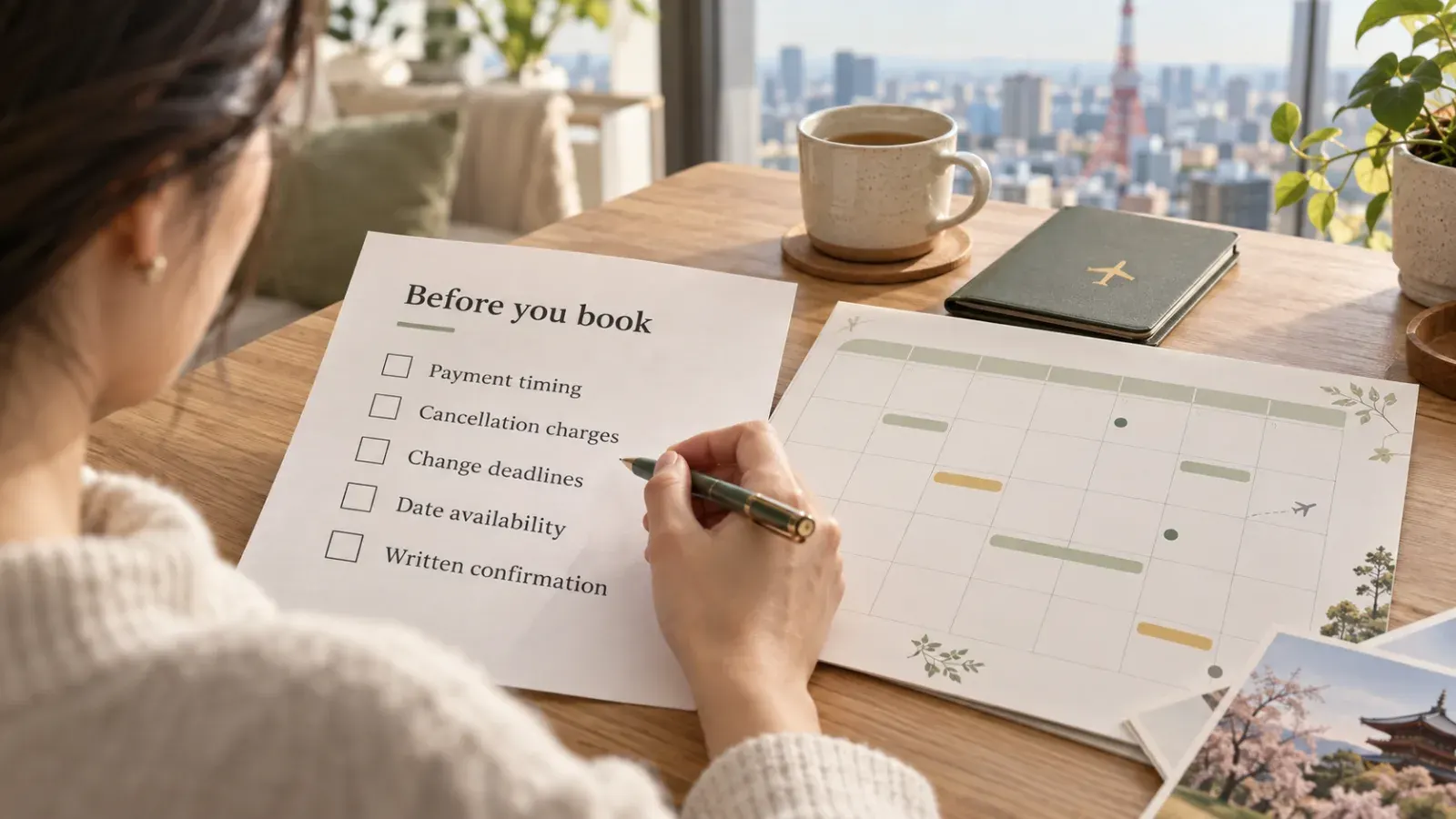
Which uncertainties should you resolve first?
List anything that could affect arrival or departure: flight selection, work scheduling, leave approval or a companion’s plans. This is a planning exercise, not a promise that the accommodation will waive a deadline for those reasons.
Give each uncertainty a practical next step. If your work start date is pending, ask when it will be confirmed. If departure may move, check the extension process. Avoid paying for a degree of flexibility you have not actually verified.
How does the Residence minimum affect your plan?
HIVEN describes Residence as starting at 29 nights. Its FAQ warns that a date adjustment below the minimum may require a different product type. [1][2] Count actual nights rather than assuming “one month” always meets the same requirement.
For example, compare the entire proposed date range if you arrive later but keep the original checkout. The stay becomes shorter; it is not equivalent to moving both dates together. Recheck the product, room and price before accepting a revision.
How should you compare standard booking and Paid Ahead?
Compare four separate questions: when payment occurs, the charge if you cancel, the deadline for changes and whether your replacement dates are available. Paid Ahead advertises earlier first-month payment and changes to cancellation and date-change terms. [3]
That can be useful, but it is not an automatic best choice for every guest. Review the current booking terms alongside the landing page, particularly while the general FAQ and billing text still use different wording about the close-in window. [2][4]
What should you ask before committing?
✓ Which date-change conditions apply to this reservation? ✓ Does Paid Ahead apply, and when is it recognized? ✓ What happens if the new stay is shorter or longer? ✓ Which amounts are charged now, later or after cancellation? ✓ What confirmation shows that a requested change is complete?
For a monthly mansion or serviced apartment in Tokyo, these written answers are more useful than the word “flexible” alone. Save the conditions provided for your actual reservation and keep any support clarification with them.
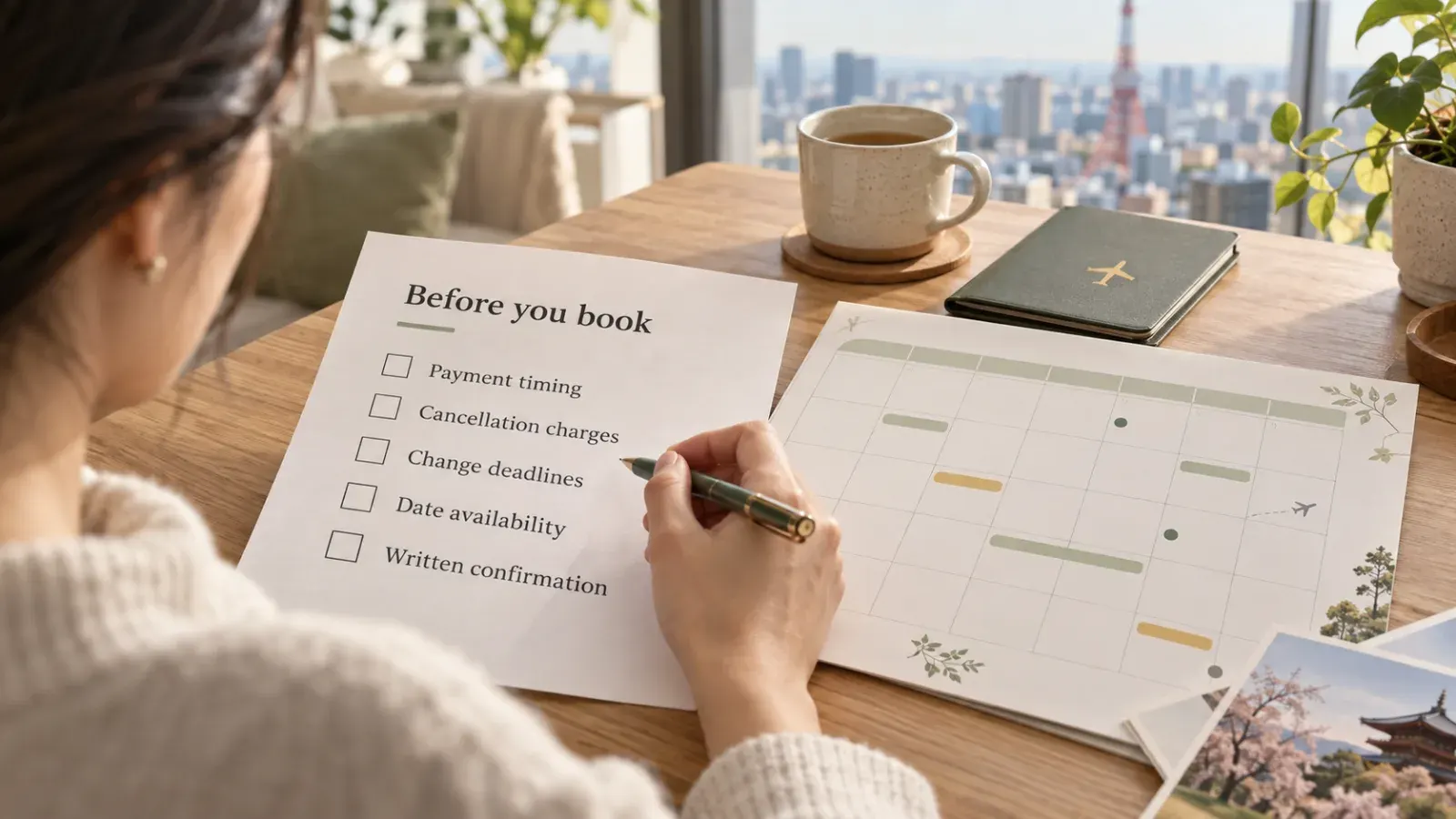
What is a sensible next step if you are not ready?
Browse rooms and prepare a shortlist while checking when your travel decisions will settle. The reviewed search flow allows browsing without dates, but a browse result does not guarantee availability for a future stay. [5]
If you already have a booking, review it before making a second one. Do not assume cancelling and rebooking will preserve the original price, room or cancellation outcome. Ask support about a specific change rather than creating overlapping commitments.
FAQ
Does “flexible” mean I can change without a deadline?
No. Read the actual deadline and eligibility conditions.
Should I pay ahead before my dates are settled?
Compare the advertised benefits, possible cancellation charge and your budget. The right choice depends on your reservation and plans.
Does a later check-in always mean the same number of nights?
No. If checkout stays unchanged, the stay becomes shorter.
Can I rely on an extension before it is confirmed?
No. Keep a backup plan until the extra dates and terms are confirmed.