What Does a Month in Tokyo Really Cost? A USD Budget Beyond the Room Rate
Estimate a month in Tokyo in US dollars without confusing a room quote with a full trip budget. Separate recurring costs, one-off purchases and side trips.

Written by Hive Heaven

To budget for a month in Tokyo in US dollars, begin with the accommodation's full quote in its billing currency, then add flights, daily living, transport, activities and a contingency. Use an explicit exchange-rate assumption rather than treating a converted search result as a fixed USD price.
A room rate is satisfying because it looks like an answer. A month of living is less tidy. Coffee repeats, groceries come in bursts, and the day you planned to walk may become the day you happily pay for an easier ride. The solution is to separate those kinds of spending instead of forcing them into one optimistic number.
What is the first number to obtain?
The complete accommodation cost for your exact nights and guests. Confirm required fees, taxes, services and any utilities charged separately. Then record payment deadlines and the actual charge currency. Compare another property only after making its dates and requirements equivalent.
Your available vacation time also matters. Twenty-eight nights and 29 nights are different bookings, even if both sound like a month. A minimum-stay product may not fit a shorter itinerary, and paying for unused time should be a deliberate choice rather than a rounding error.

How do you convert yen without creating false precision?
For illustration only, if a trip allocation were ¥300,000 and you assumed ¥150 per US dollar, the result would be US$2,000 before payment fees. At an assumed ¥140 per dollar, the same yen amount would be about US$2,143. These are hypothetical rates and an invented allocation, not today's exchange rate or an accommodation offer.
The point is that the yen amount can stay the same while your dollar cost changes. Use a rate from your chosen payment method when planning to pay, account for applicable fees, and leave room for movement instead of presenting a rough conversion as a guaranteed total.
A good budget separates what you know, what you are estimating and what you still need to ask.
Which expenses repeat every day?
Food, drinks and local travel tend to recur, but your pattern will not match someone else's trip report. Decide how often you expect to eat out, have simple meals in the room and visit paid attractions. A kitchen only changes the budget if you actually use the equipment provided.
SEIYU Kinshicho 西友錦糸町店
4-27-14 Kotobashi, Sumida-ku, Tokyo
Open in Google Maps
Start with a small grocery shop, then revise your estimate after a few days. Buying ingredients you do not finish is not an automatic saving over eating out. Similarly, keep special meals in their own line so that enjoying one does not look like the ordinary daily budget has failed.
Which expenses should not be multiplied by thirty?
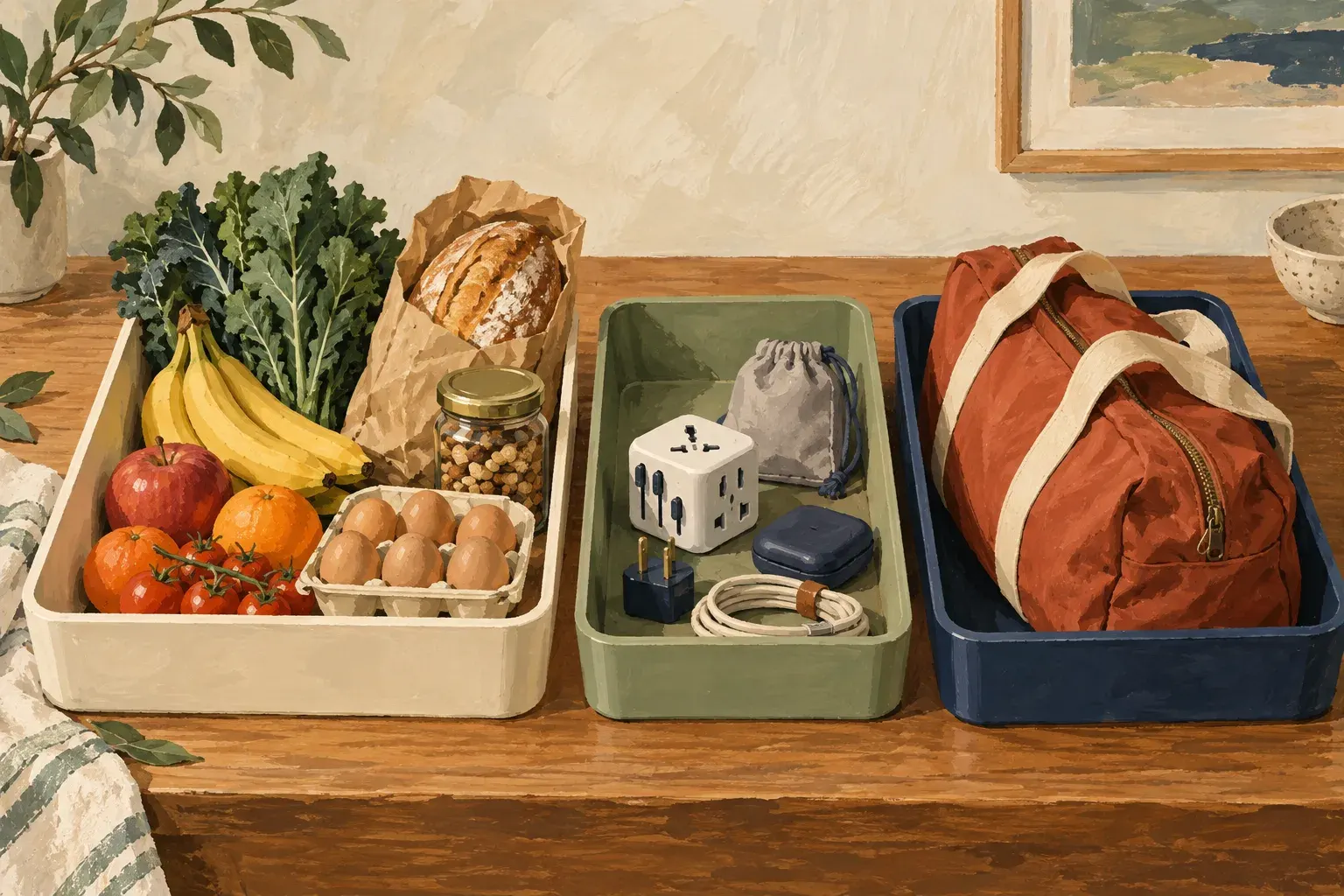
Initial supplies, an adapter you need once, a transport arrangement from the airport and a new item of clothing are different from recurring daily costs. Separate them. The first three days often include setup spending that would distort the monthly estimate if simply multiplied.
Kinshicho Station 錦糸町駅
3-14-6 Kotobashi, Sumida-ku, Tokyo
Open in Google Maps
For local transport, sketch likely journeys from your base and compare coverage before buying passes. The cost of moving between cities belongs in a separate itinerary line. Keep the return journey to the airport visible too; it is easy to budget the arrival and mentally spend the departure money elsewhere.
What happens to the budget if you travel overnight elsewhere?
If you keep the Tokyo room, add the second accommodation rather than subtracting the nights away. Compare the convenience of a continuous base with the total cost and luggage implications of moving. Neither choice is automatically the cheaper or better one.
How do you ask for a useful HIVEN quote?
Send exact dates, guests and beds, plus any essential service needs. Ask for the mandatory total and payment terms, then enter that confirmed figure into your plan. Keep food, flights and independent excursions separate. Once the ordinary costs are visible, you can decide where the trip deserves a little extra rather than discovering it accidentally.
Frequently asked questions
Are the exchange rates in this article current?
No. They are explicitly hypothetical arithmetic examples, not live rates.
Is ¥300,000 a HIVEN room price?
No. It is an invented allocation used only to demonstrate currency conversion.
Should I multiply my first three days of spending by ten?
Not without separating setup purchases from recurring costs.
Does keeping a room during a side trip add cost?
Yes, compared with paying only for the side-trip accommodation; the Tokyo reservation continues under its terms.
Information checked: 21 October 2026. Prices, availability, school calendars, opening hours, transport and booking conditions may change. Recheck official information before publication and before booking or visiting. Suggested outings are independent planning ideas, not included tours or services.
Sources
HIVEN — Residence and booking information — https://www.hivenstay.com/
SEIYU — Kinshicho store and temporary notices — https://www.seiyu.co.jp/shop/西友錦糸町店/
Tokyo Metro — Kinshicho station and exits — https://www.tokyometro.jp/lang_en/station/kinshicho/index.html


