How to Plan a Weekly Food Budget in Tokyo
Build a Tokyo food budget around the meals you actually want, using groceries, prepared food and restaurants without pretending every day will be identical.

Written by Hive Heaven

Plan a weekly food budget in Tokyo by deciding how many meals you expect to eat at home, how many you want to buy ready-made and how often you want restaurants. Price those choices, add drinks and snacks, and review the first week's receipts. This produces a more useful number than borrowing a stranger's monthly total.
A food budget should leave room for the food you came to enjoy. The aim is not to turn every meal into an exercise in restraint. It is to stop small, repeated purchases from quietly using the money you meant to spend on something memorable.
What exactly are you budgeting for?
Decide whether the number covers one person or two and whether it includes alcohol, cafe visits, snacks and special meals. These choices can change the total substantially. A food budget that excludes your daily coffee should not be compared with one that includes it.
Keep household products outside the food subtotal. A shop containing detergent, rubbish bags and toiletries can make groceries look more expensive than they are. You still need to budget those purchases, but identifying them separately helps you understand what repeats.
Accommodation and kitchen equipment are also separate decisions. A lower food spend does not automatically make an apartment cheaper overall. Compare the whole stay, including the room's total and the effort you are willing to put into cooking.
How do you build a normal week?
Count the meals first. Seven days contain twenty-one breakfast, lunch and dinner opportunities per person, but you may skip a meal, eat during a tour or travel outside Tokyo. Use your actual plan rather than forcing every week into a standard shape.
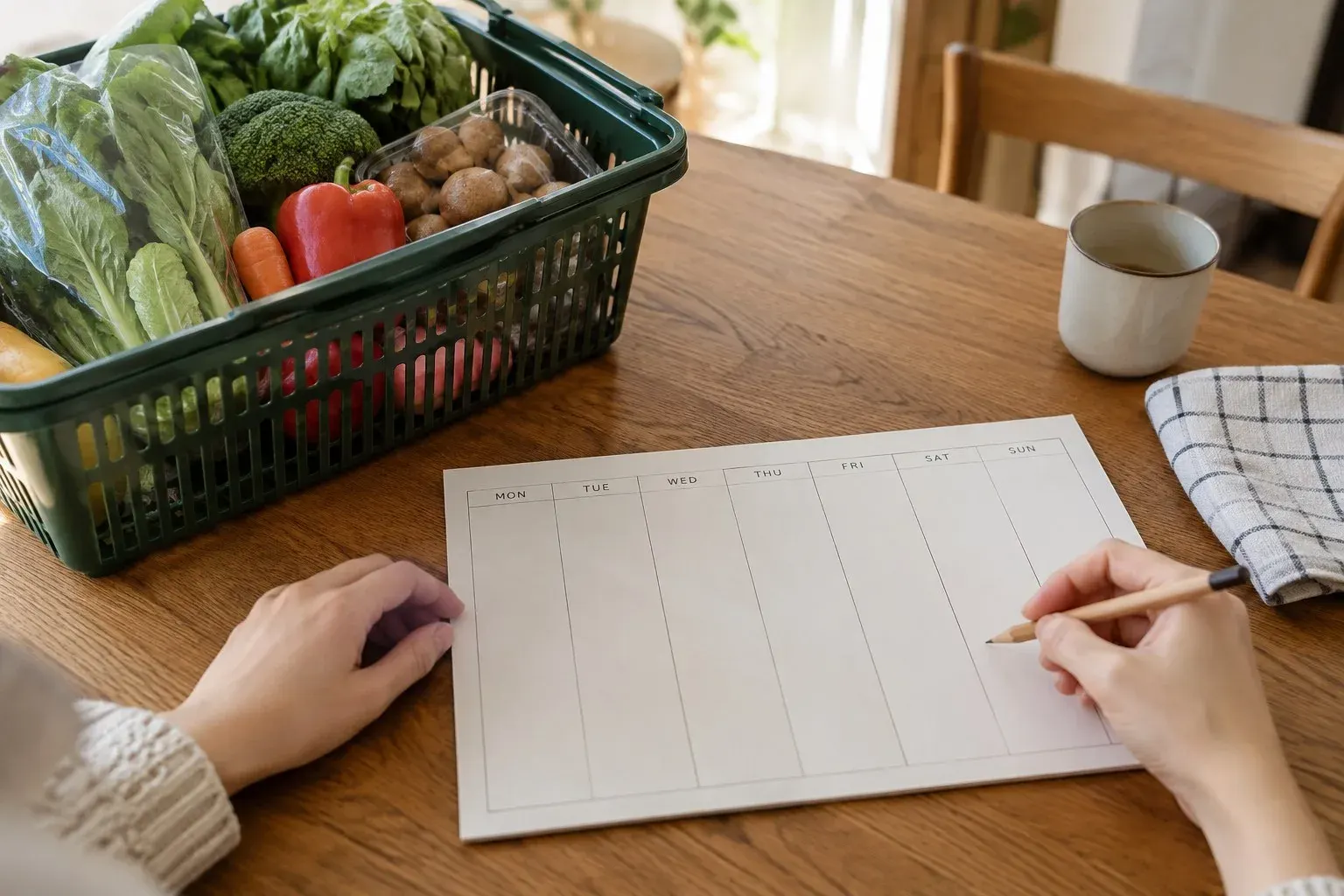
A realistic mixed week might include most breakfasts in the room, several lunches out, a few prepared-food dinners and one meal you are especially looking forward to. You can then decide which items need a grocery purchase and which need a restaurant allowance.
Notice when plans overlap. If you already booked dinner, do not also count a full cooked meal for that evening. If two people share pantry items, avoid charging the same purchase to both budgets. Small accounting errors can make a plausible estimate misleading.
A useful budget describes the week you want to live, including its treats.
What does a worked example look like?
The following is an invented planning example for one person over seven days. The amounts are chosen assumptions for demonstrating the calculation, not observed Tokyo averages, live menu prices or a promise that you can buy particular meals at these prices.
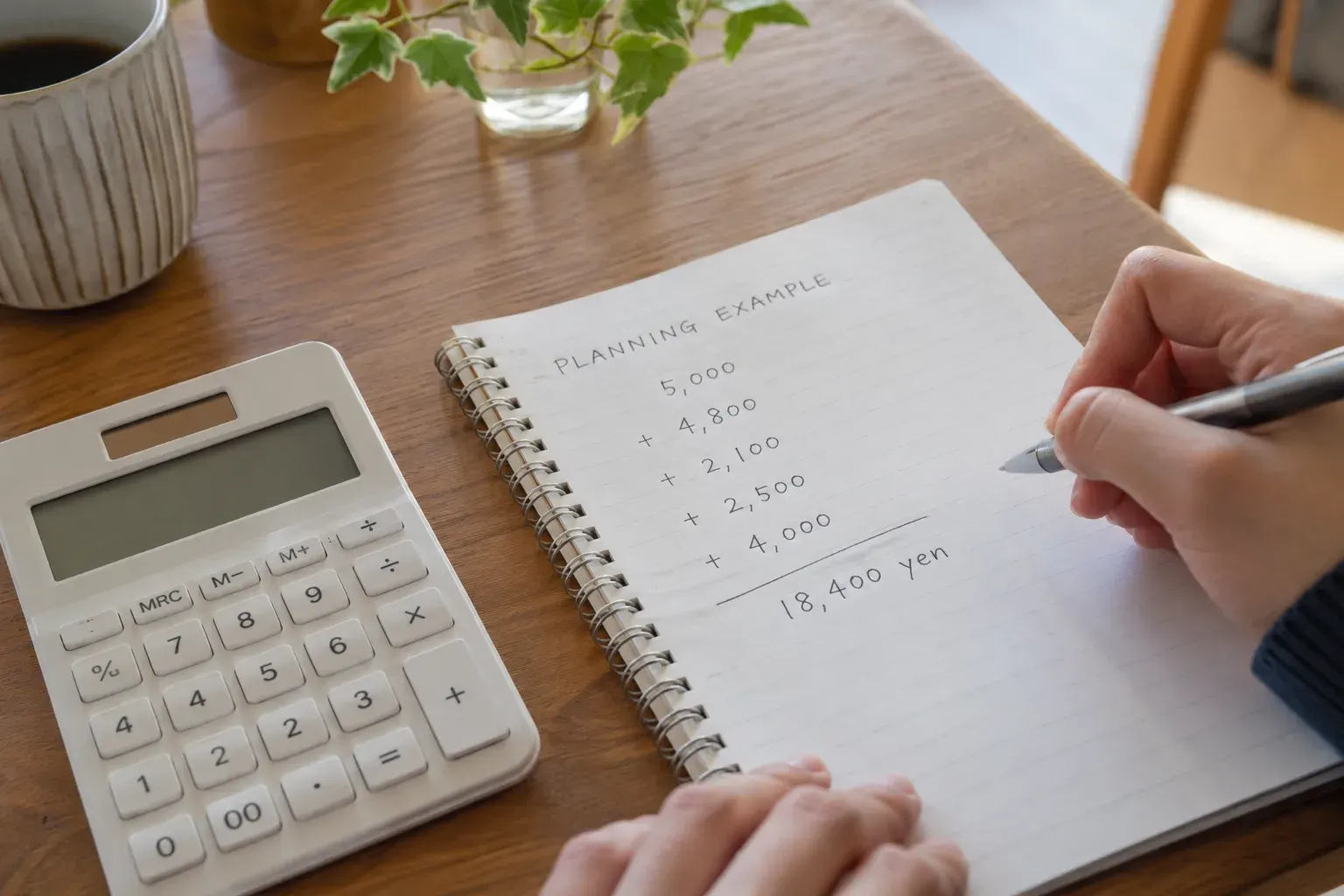
Suppose you set aside ¥5,000 for groceries covering selected breakfasts and simple home meals. Add four casual meals at an assumed ¥1,200 each: ¥4,800. Add three prepared-food meals at an assumed ¥700 each: ¥2,100. Add five cafe visits at an assumed ¥500 each: ¥2,500. Finally, reserve ¥4,000 for a special meal.
The total is ¥18,400 for that illustrative week. A ten-percent contingency adds ¥1,840, bringing the planning amount to ¥20,240. The remaining meal slots must genuinely be covered by the grocery plan; the arithmetic does not prove that the food is sufficient for your needs.
Replace every assumption with current prices from the shops and menus you intend to use. If you want more substantial restaurant meals or different dietary options, change the inputs. The value of the example is that you can see exactly what the number includes.
How do you turn a weekly number into a monthly plan?
Count the actual days. Four identical weeks cover 28 days, so a longer itinerary needs additional food allowance. Arrival and departure days may have different spending patterns because of airport meals, travel or the time you can access the room.
Using the illustrative weekly figure above, four weeks before contingency would be ¥73,600. This remains an example based on assumptions, not a recommended universal monthly budget. Add the remaining days and any different plans rather than describing it as the cost of “one month”.
If you take a side trip, move the relevant food allowance into that trip's budget. Avoid counting those meals twice. A separate note for excursions keeps the Tokyo routine easy to understand without pretending every week is identical.
What should readers using dollars or pounds do?
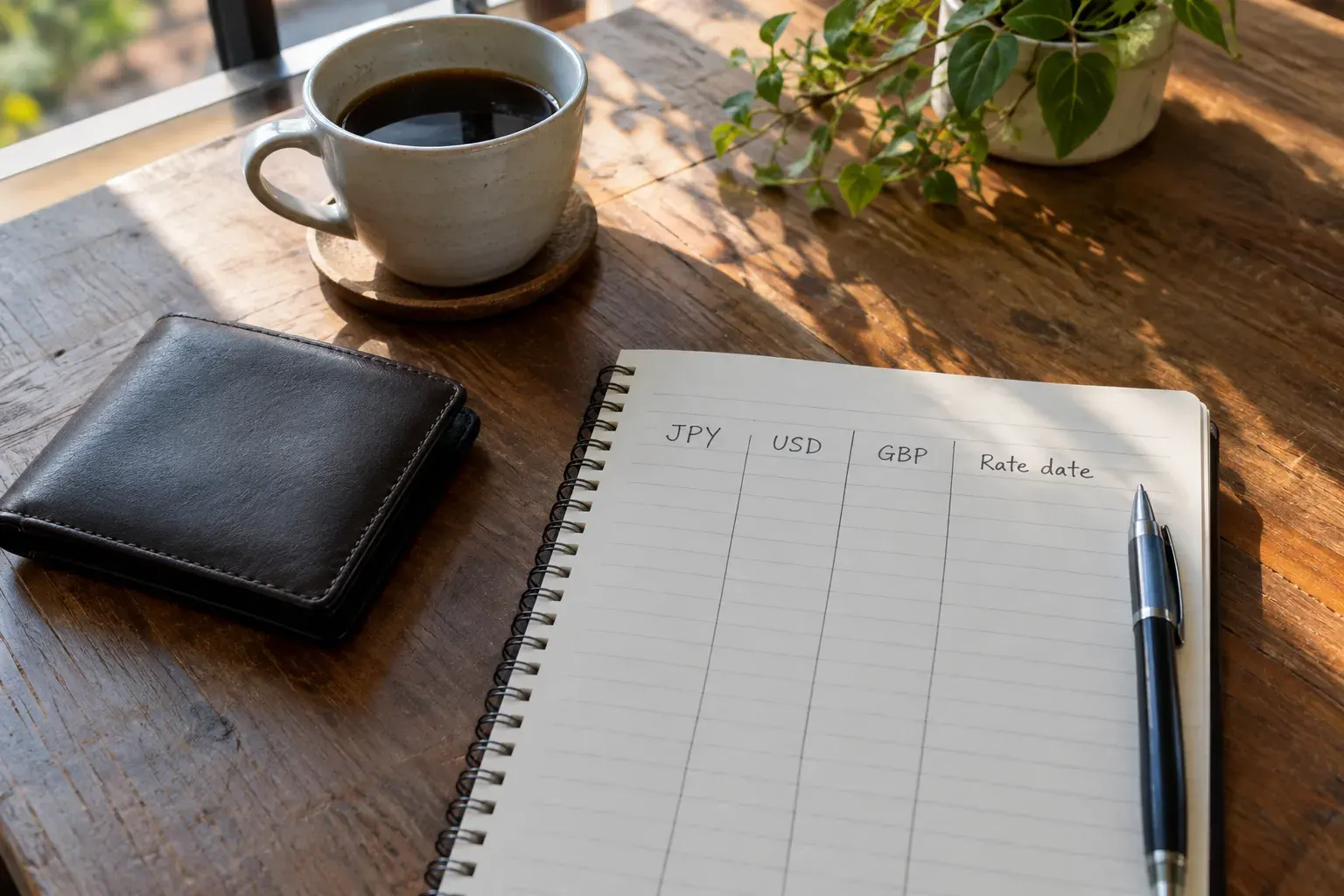
Build and compare the plan in yen before converting it. Then use a dated exchange rate and check the charges applied by your card or payment provider. An old conversion can make a current yen price look artificially cheap or expensive.
Keep the currency assumption visible in your own notes: the date, the rate and whether fees are included. You do not need to predict exchange markets to plan sensibly; you need a consistent basis for comparing choices and some room for variation.
When reviewing receipts, use the amount actually charged where available. Your payment provider's conversion may differ from a headline rate shown elsewhere. Small differences become easier to understand when you keep the yen total alongside the home-currency total.
How can shopping locally improve the estimate?
Use the first few trips as research into your own basket. Save receipts, identify repeated purchases and notice what you did not finish. A shop's reputation for low prices matters less if you buy products you cannot use or make a costly journey to reach it.
In Kinshicho, LIFE at Arcakit and SEIYU are two locations you can investigate according to your route. Check their current official information and the products you need. This guide does not claim either is always the cheapest.
LIFE — Arcakit Kinshicho
Arcakit Kinshicho B1F, 2-2-1 Kinshi, Sumida-ku, Tokyo, Japan
Open in Google Maps
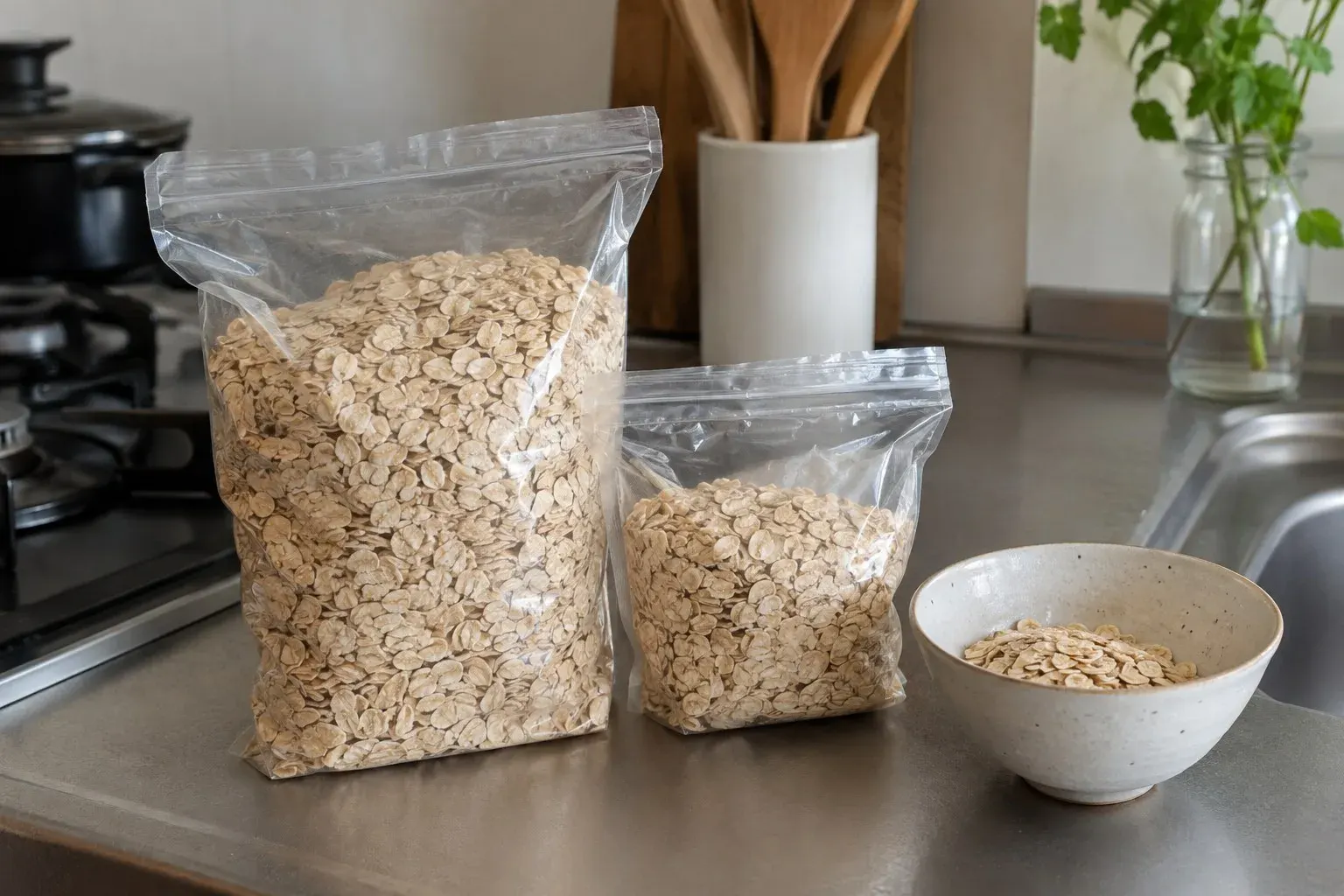
Compare like with like: pack size, final price, portions you will eat and storage. A large pack may have a lower unit price while costing more for your stay because some goes unused. The most useful comparison is the cost of the food you actually consume.
What are the easiest costs to overlook?
Drinks bought between destinations, spontaneous cafe stops and small snacks can become a substantial part of the week. Include them openly. A budget that only works if you abandon the habits you enjoy is unlikely to survive the second day.
Food waste is another quiet cost. Shopping before checking the fridge, buying for an evening you will be out, or replenishing near departure can all create avoidable leftovers. Let the calendar shape the shopping list.
Do not automatically cut the meal you most care about. Instead, look for purchases that did not add much enjoyment. The point of reviewing spending is to make deliberate choices, not to make every day feel cheaper.
How should the room enter the decision?
Ask what food preparation you genuinely want to do. For some travellers, a fridge and an easy breakfast arrangement are enough. Others want to cook regularly and should inspect the exact equipment before booking.
For a HIVEN room, verify the relevant listing details and full accommodation quote. A usable kitchen may support your preferred food pattern, but no fixed amount of savings follows automatically. Your habits determine how much you use it.
HIVEN BK Kinshicho
4-6-4 Kotobashi, Sumida-ku, Tokyo, Japan
Open in Google Maps
After the first week, adjust the budget once. If restaurant spending was higher because you were still settling in, decide whether that will continue. If the home-meal plan felt enjoyable, repeat it. A month provides enough time to learn from real spending.
Frequently asked questions
Is ¥18,400 the average weekly food cost in Tokyo?
No. It is an invented example with explicit assumptions. It demonstrates addition and categories; replace the inputs with current prices and your own meal plan.
Does the example cover a couple?
No. It is framed for one person. Two people may share some groceries, but restaurant portions and other costs do not automatically stay the same.
Is cooking always cheaper than eating out?
No. Ingredients, equipment, waste and the meals you compare all matter. Test your actual routine instead of treating cooking as a guaranteed saving.
Should alcohol and coffee be included?
Include them if you expect to buy them. State clearly when comparing budgets that exclude these categories.
How much cash should I carry for food?
Check the payment options of the places you intend to use and keep a practical backup. This article does not assume every business accepts the same cards or mobile payments.
Should I multiply one week by four?
Only for a 28-day estimate with similar weeks. Add extra days, travel days and different activities for your actual trip.
What is the best way to improve the estimate after arrival?
Review a few receipts and the food you actually used. Adjust the categories once you know your routine rather than repeatedly searching for a supposedly universal monthly number.
Sources and information check
[Arcakit Kinshicho — LIFE supermarket](https://mitsui-shopping-park.com/arcakit/shopguide/500086.html)
[SEIYU — Kinshicho store information](https://www.seiyu.co.jp/shop/西友錦糸町店/)
[Consumer Affairs Agency — food labelling resources](https://www.caa.go.jp/en/policy/food_labeling/)
[HIVEN — current Residence offer](https://www.hivenstay.com/?lang=en)
Information checked: 30 October 2026. Recheck time-sensitive details before publication and before booking or visiting, including prices, opening hours, transport, entry requirements and the selected room’s terms. Suggested routines and sample itineraries are editorial planning examples, not guest testimonials.


