Why Tokyo Eats Standing Up
A first standing soba meal in Kinshicho: how to order, where to stand, why nobody lingers, and how a fast bowl of noodles can become part of local life.

Written by Hive Heaven
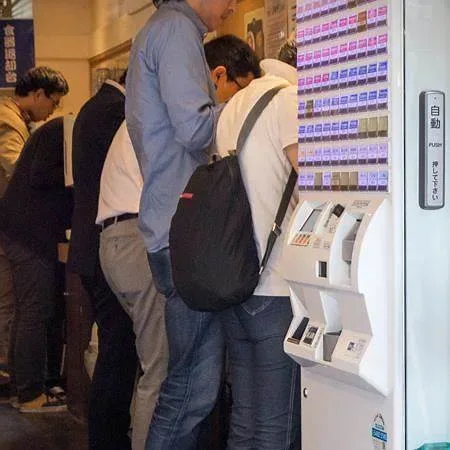
Tokyo does not always ask you to sit down. Sometimes it asks you to eat, return the bowl, and move. Standing soba is one of the clearest ways to feel that rhythm. The meal is warm, cheap, fast, and structured. You choose from a machine, hand over a ticket, wait close to the counter, eat without spreading out, and leave before the space has time to become yours. At first, this can feel abrupt. After a few weeks in Tokyo, it begins to feel generous. Not every meal needs a table, a reservation, a conversation, or an hour. Some meals exist to repair the day quickly: before work, between trains, after errands, before going home. From HIVEN in Kinshicho, a first standing soba meal is less about chasing a famous shop and more about understanding how the city makes room for short hunger. The room is narrow. The system is clear. The city keeps moving around the bowl.
Your First Standing Meal Should Be Simple
Start with the easiest version. Soba-dokoro Metro-an at Kinshicho Station is a good first stop because it sits inside the station environment where this kind of meal makes immediate sense. Tokyo Metro describes Metro-an as serving firm fresh noodles and seasonal tempura, and frames it as a quick, satisfying meal that supports people moving through busy time. The Kinshicho location is listed with eat-in available and no regular closing day. Do not make your first order complicated. Choose a basic hot soba, a tempura soba, or something with an egg if you want the bowl to feel more complete. The goal is not to decode every button. The goal is to learn the pace. Watch once before ordering. Notice where people line up, where they collect food, where used bowls go, and whether customers are standing, sitting, or doing both. Many modern “standing soba” shops now include stools or short counters, but the spirit remains the same: quick order, quick meal, quick exit. You are not being rushed personally. The meal itself is designed for movement.
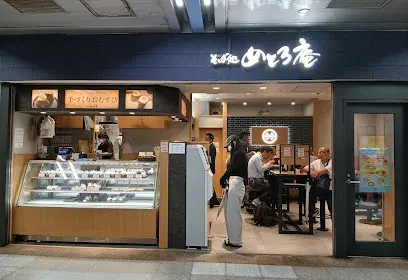
SOBA-DOKORO METRO-AN KINSHICHO
Inside Tokyo Metro Hanzomon Line Kinshicho Station, around 3-14-6 Kotobashi, Sumida City, Tokyo
Open in Google Maps
How to Order Without Freezing
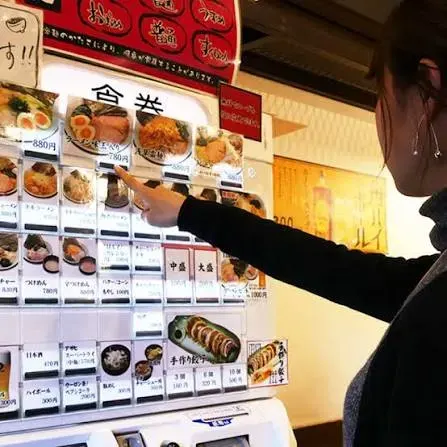
The ordering system is not there to test you. It is there to remove conversation from a high-speed meal. At a ticket-machine restaurant, the usual pattern is simple. Choose the dish on the machine. Pay. Take the ticket. Hand the ticket to the staff or follow the shop’s collection system. Wait nearby. Take the bowl. Eat. Return the bowl or tray if the shop uses a return counter. JAL’s Tokyo soba guide describes this kind of ticket-machine restaurant as one where customers select and pay in advance, then eat sitting or standing, or take the food away depending on the place. For your first time, reduce the decision. Look for these words: かけ — simple hot soba or udon 天ぷら — tempura topping 月見 / 温玉 — egg topping 冷し — cold version そば / うどん — soba or udon choice If there is a line behind you, choose something familiar and move. You can study the full menu another day. A standing soba shop rewards rhythm more than perfection.
Where to Stand
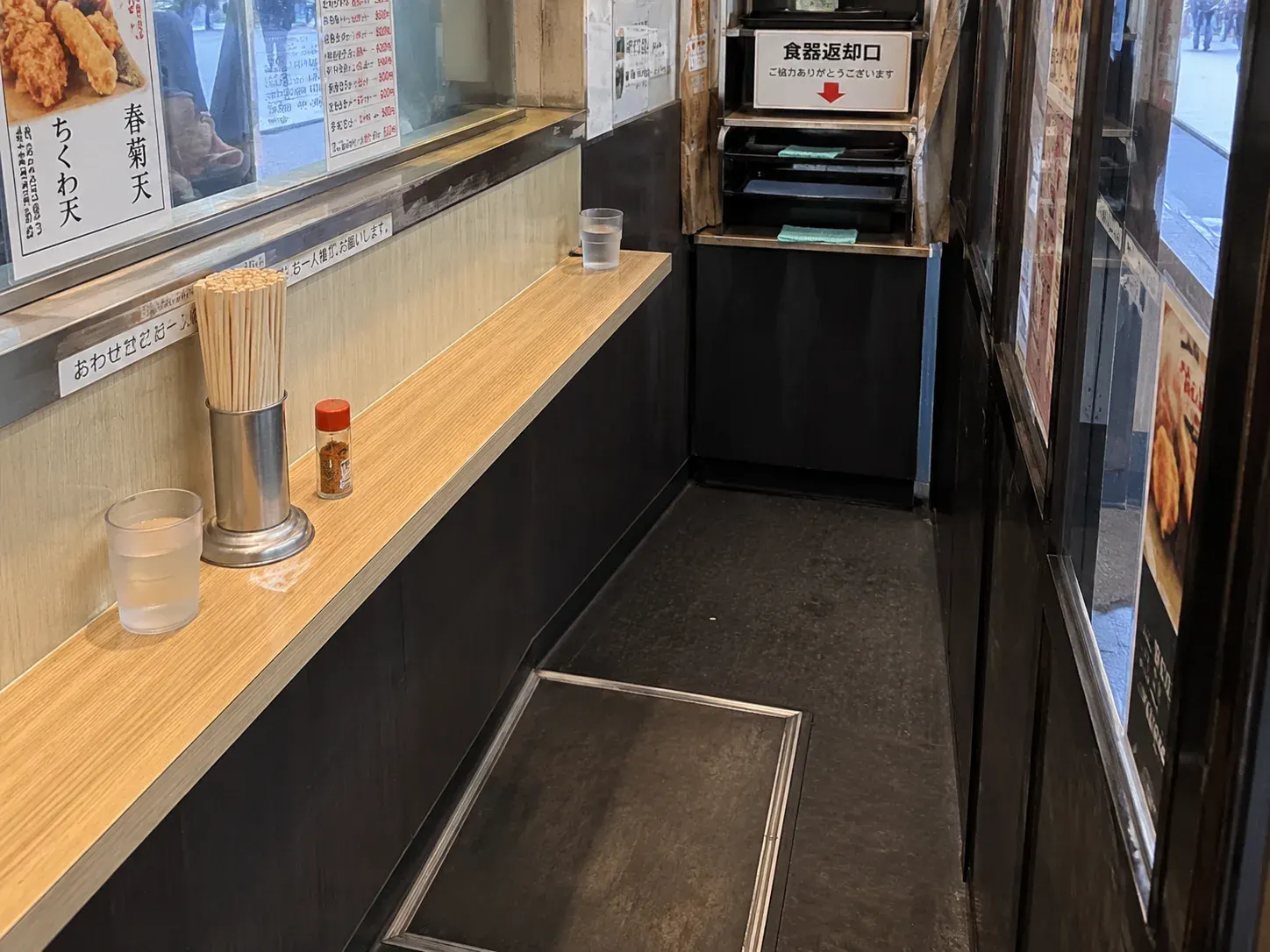
Where you stand matters. Not because there is a secret etiquette code, but because the room is small and everyone is trying to use it without friction. Do not block the ticket machine after ordering. Do not stand in the doorway after receiving your bowl. If there is a narrow counter, take a clear spot, keep your bag close, and leave space for someone else’s elbow. If condiments are shared, use them and move them back. If there is water, take only what you need. If there is a return shelf, return the bowl when you are done. The logic is spatial. A standing soba shop has almost no extra room for indecision. That is part of its design. The speed is not only in the cooking; it is in the way bodies move through the space. Once you understand that, the meal becomes calmer. You are not trying to look local. You are simply trying not to interrupt the flow.
Why People Do Not Linger
Nobody is asking the soba to become an afternoon. That is the important difference. In another kind of café or restaurant, staying is part of the value. You pay for the seat, the mood, the conversation, the table, the ability to slow down. Standing soba reverses that. Its value is that it does not ask for your time. Yoshi Soba’s explanation of tachigui soba describes its roots in Edo-period street soba stalls and notes how railway development helped station soba stands grow from the Meiji to Showa eras. It also summarizes the appeal as speed, affordability, and flavor. That history matters because the format still carries the city’s commute inside it. People do not linger because the meal has already done its job. Hunger is solved. Warmth is restored. The train can be caught. The workday can continue. The evening can resume. This is not cold hospitality. It is hospitality built for a city that keeps moving.
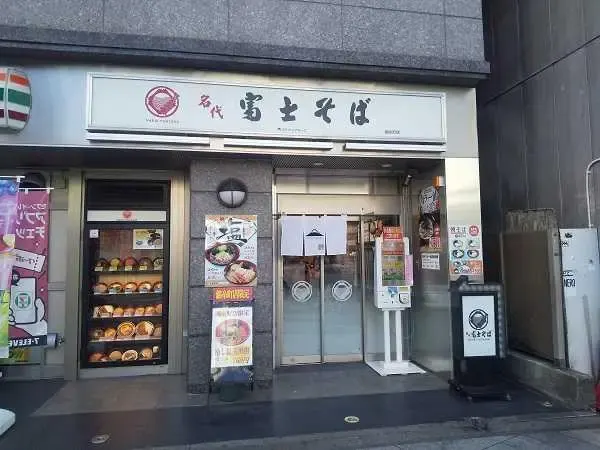
FUJI SOBA KINSHICHO
KS15 Building, 3-13-1 Kotobashi, Sumida City, Tokyo 130-0022
Open in Google Maps
“The point is not to eat quickly because you are rushed. The point is to understand a meal designed for movement.”
When Fast Food Feels Local
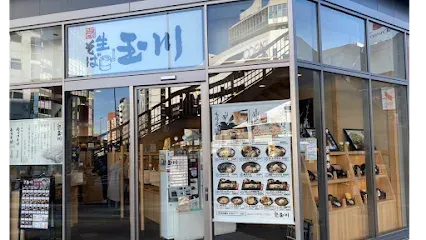
Fast food becomes local when it stops feeling interchangeable. At first, every station soba shop may seem like a version of the same thing: machine, ticket, counter, bowl. But a longer stay changes the scale. You begin to notice which shop is better before work, which one is easier after groceries, which one has the entrance that does not make you hesitate, which one feels calmer on a rainy afternoon. This is why it helps to compare. Metro-an teaches the station version. Fuji Soba teaches the street-front version. Nama Soba Tamagawa, inside Kinshicho Station Plaza, is another quick-meal variation: not exactly the same “standing” atmosphere, but still part of the short-stay food ecosystem. The official Kinshicho Station Plaza page lists it on the first floor, with 28 seats, hours of 8:00–22:30, last order at 22:00, takeout available, and a listed budget around ¥500 for lunch and dinner. The lesson is not that one is best. The lesson is that Tokyo gives you several kinds of short meal. Some are for standing. Some are for sitting briefly. Some are for late transit. Some are for the morning before the day has fully started. Once you can tell the difference, fast food stops feeling anonymous. It becomes part of your map.
NAMA SOBA TAMAGAWA KINSHICHO STATION PLAZA
Kinshicho Station Plaza Building 1F, around 3-8-7 Kotobashi, Sumida City, Tokyo
Open in Google Maps
After the Bowl, Keep Walking
Do not treat the meal as the whole route. Step back into the station flow. Walk one block before checking your phone. Notice how different the body feels after a hot bowl eaten quickly: warmer, more settled, less interested in making a large plan. That is part of why standing soba belongs in a long-stay guide. It is not a destination meal. It is a hinge. It turns one part of the day into another. Before work, it turns hunger into focus. Between errands, it turns fatigue into another hour of usefulness. After transit, it turns arrival into recovery. At night, it can turn “I should find dinner” into “I can go home now.” This is where fast food feels local. Not because it is exceptional. Because it fits the day without asking the day to change shape.
“During a longer stay, the useful meal is often the one that lets the rest of the day continue.”
The City Teaches You Its Tempo
Your first standing soba meal may feel too short. That is natural. You may wonder whether you ordered correctly, where to put your bag, whether to return the bowl, whether you ate too slowly, whether everyone else knows something you do not. Then, by the second or third time, the system begins to disappear. You enter. You press the button. You hand over the ticket. You stand where there is room. You eat while the broth is hot. You return what needs to be returned. You step outside. Nothing dramatic happens. That is the point. Tokyo’s speed is not only in trains, crossings, and schedules. It is also in the small spaces that help people pass through the day without collapsing it: a counter, a ticket, a bowl, five minutes of warmth. From HIVEN, standing soba is not something to “try once” and check off. It is a small tool for living near the station. When you understand that, fast food stops being the opposite of local life. It becomes one of its clearest forms.