Solo in Tokyo for a Month: Building a Routine That Feels Like Yours
Plan a solo month in Tokyo with enough structure to feel settled and enough freedom to follow your interests, without expecting every day to be social.

Written by Hive Heaven

A solo month in Tokyo works well when you create a few reliable routines and leave the rest flexible. Know how to get home, feed yourself comfortably and organise practical tasks. Then choose activities and social contact deliberately rather than expecting either constant company or perfect independence.
Travelling alone can make a small decision feel wonderfully yours: take another street, stay with a book, leave an exhibition early. It can also make choosing dinner at the end of a tiring day feel like one decision too many. A routine is useful because it saves your attention for the choices you enjoy.
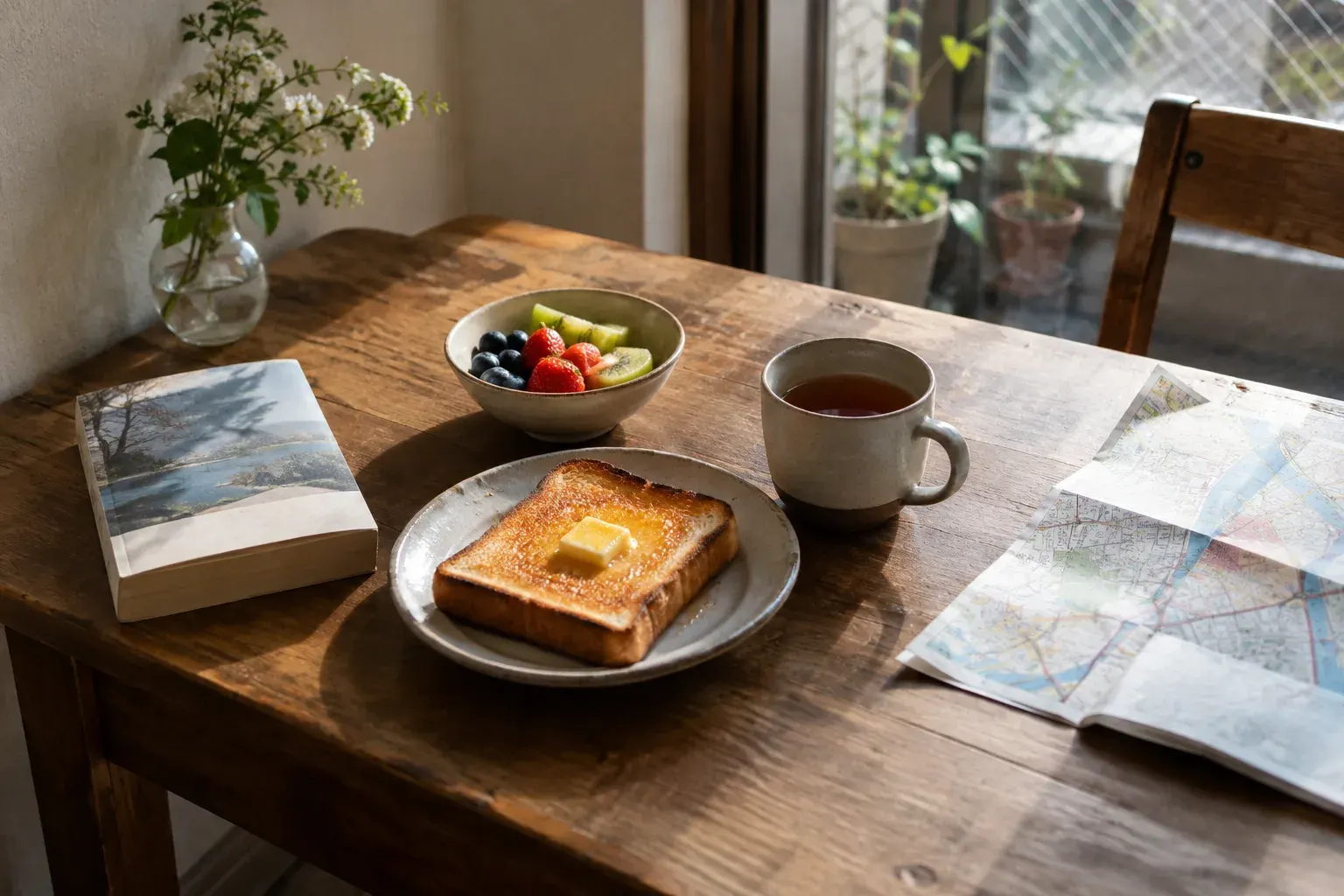
What should your first few days accomplish?
Learn the room, the route back and a small set of useful nearby places. Save the accommodation address offline, check access instructions and make sure you know how to request help. These tasks are easier before you are tired or dealing with a problem.
Keep the first food shop small. Buy a breakfast and a fallback meal that suit the equipment and your needs. You do not have another traveller's preferences to accommodate, but you also do not have someone automatically noticing that there is nothing for tomorrow morning.
Plan one manageable outing at a time. You can become more ambitious after seeing how the journeys and the pace feel. A solo trip does not need to begin with a test of how much you can do without help.
How much structure is enough?
Use a few anchors: a morning start that suits you, a practical task at a sensible interval, and several activities you care about each week. Leave room between them. Structure becomes helpful when it removes repetitive decisions, not when it controls the whole day.
An illustrative week might include two substantial outings, a hobby afternoon, a local day and an optional group activity. The remaining time can respond to weather, energy and discoveries. You can change that balance after the first week.
Notice the difference between resting and feeling stuck. If a quiet day restores your curiosity, it is doing its job. If you repeatedly want to go out but cannot decide where, choose one small destination in advance and make leaving easier.
Independence feels better when you have a few dependable ways to begin the day.
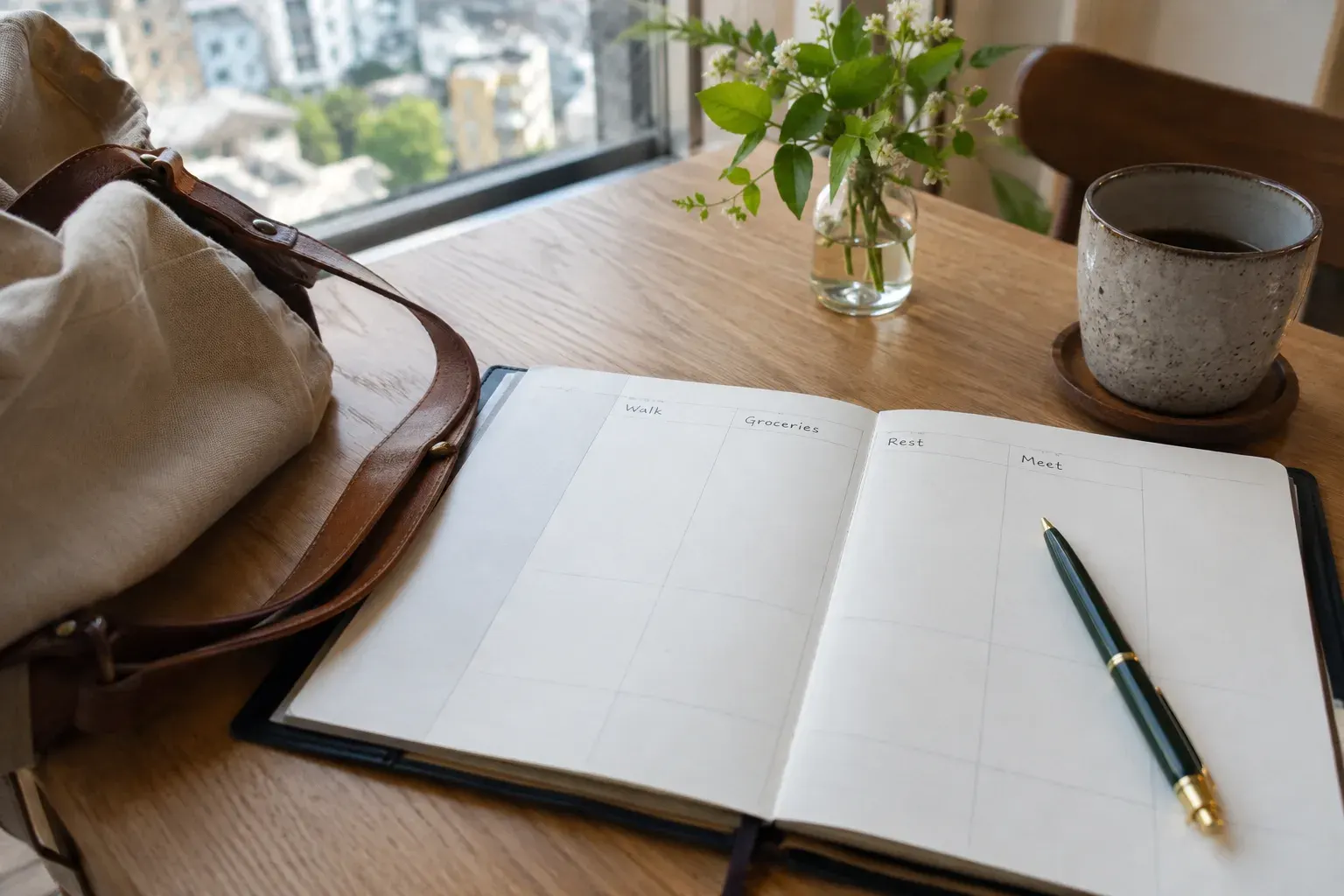
How do you keep meals from becoming a daily puzzle?
Choose two or three reliable meal patterns rather than searching for a new favourite restaurant every night. One might be a simple breakfast in the room, another a suitable nearby meal, and another prepared food you can handle according to its instructions.
Use portions that fit one person. Buying ingredients for an imagined week of elaborate cooking can produce more waste than enjoyment. The [Kinshicho supermarket guide](https://www.hivenstay.com/guides/lifestyle/supermarkets-you-will-actually-use-kinshicho) can help you identify shopping options if that is your base.
Make room for meals that are experiences. Being alone does not mean you should only eat quickly or inexpensively. Check reservation policies and seating arrangements for the particular venue instead of assuming every business handles solo diners in the same way.
Where can optional company fit into the month?
Consider an activity with a purpose you genuinely like: a guided walk, a class, a tour or another organised event. Check the provider, current dates, language, group size and cancellation conditions. The activity should still feel worthwhile if you do not make a lasting friendship.
Do not expect accommodation to provide a social programme unless it explicitly offers one. A private residence may be attractive precisely because it gives you independent space. Social plans can be made separately and on your own terms.
Keep ordinary precautions when meeting people. Use suitable public meeting places, protect personal and booking information, and maintain your own way home. Feeling comfortable saying no is part of travelling independently.
How can you enjoy returning to the same places?
Pick a few places for what they give you: a pleasant walk, a useful shop, an interesting area to browse. Familiarity can be reassuring even without a conversation. You do not need to be recognised to benefit from knowing how a place works.
Kiyosumi-Shirakawa is one possible direction for a coffee-and-art outing, as described by GO TOKYO. Choose an individual venue, check it and let the surrounding area provide the rest of the afternoon. A repeat visit can be just as valid as a new district.
Kiyosumi-Shirakawa neighbourhood
Kiyosumi-Shirakawa, Koto City, Tokyo, Japan
Open in Google Maps
Respect the boundaries of the places you use. Buying a coffee does not necessarily make a small cafe an all-day workspace, and a quiet street is still someone's neighbourhood. Follow signs and staff guidance rather than assuming that a comfortable routine gives you special access.
What helps when you feel lonely?
First identify what you miss. It might be conversation, shared meals, familiarity or simply hearing a familiar voice. Different needs suggest different responses: call someone, book a suitable activity, or arrange a low-pressure shared outing.
Do not treat every solitary afternoon as a problem. Equally, you do not need to prove that you can enjoy a month without support. Set up ways to contact friends or family before leaving and agree on a pattern that suits both sides across time zones.
If the feeling is persistent or affects your wellbeing, seek appropriate support rather than expecting sightseeing to resolve it. A travel plan can improve logistics; it is not a substitute for care you may need.
What matters most in a room for one?
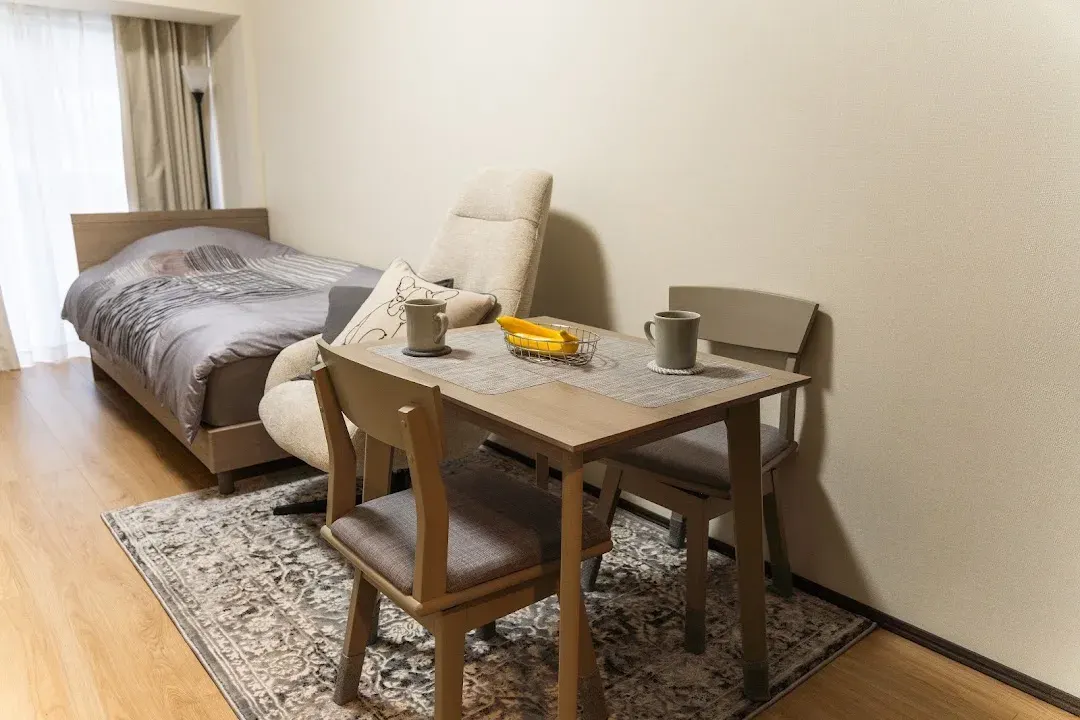
Look beyond occupancy. Consider seating, storage, light, access and the practical arrangement of food and laundry. A room marketed for one person can still be uncomfortable if all activities happen on the edge of the bed.
Read the support and arrival arrangements. Save the contact route and understand what is included. For a solo traveller, knowing whom to ask when something is unclear can matter as much as the list of appliances.
If considering HIVEN in Kinshicho, inspect the actual available unit and the full terms for your dates. Residence currently starts at 29 nights. Choose because the room supports your routine, not because a general long-stay label guarantees your preferred experience.
HIVEN BK Kinshicho
4-6-4 Kotobashi, Sumida-ku, Tokyo, Japan
Open in Google Maps
How do you plan help without making the trip feel anxious?
Keep practical details together: accommodation address, insurance contact, transport information and the official resources you may need. JNTO's Japan Visitor Hotline page is a useful reference to save and review for its current service scope.
Do not assume visitor assistance replaces emergency services or your accommodation's own contact route. Match the problem to the appropriate service. Preparation is about reducing confusion, not anticipating that everything will go wrong.
Leave a trusted person the information they need about your trip, with an agreed check-in pattern. Then enjoy the independence you planned for. A sensible backup can remain unused and still be worthwhile.
Frequently asked questions
Is a month too long to travel alone?
It depends on your interests, budget and comfort with independent days. Plan both activities and routines before deciding that the duration is right.
Do I need a social activity every day?
No. Choose a level of contact that suits you. A few meaningful plans can be more enjoyable than constant social commitments.
Will HIVEN organise a community for me?
Do not assume a social programme or introductions unless specifically offered. Plan activities independently and use the room as the private base described in the booking.
How can I avoid overspending as a solo traveller?
Track accommodation, meals and activities separately, and buy grocery quantities you can use. Shared-cost assumptions from a couple's budget may not apply to one person.
Should I tell people I meet where I am staying?
Protect detailed room and access information. You can discuss the general area without sharing keys, codes or other private booking details.
What if I feel lonely during the trip?
Use the support and contact plans you prepared, consider a suitable organised activity, and seek appropriate help if the feeling is persistent. You do not have to solve it by doing more sightseeing.
What is a good first solo outing?
Choose one manageable destination with a clear route back. Let it help you learn the city rather than turning it into a test of endurance.
Sources and information check
[JNTO — planning a visit to Japan](https://www.japan.travel/en/plan/)
[JNTO — Japan Visitor Hotline](https://faq.japan-travel.jnto.go.jp/en/plan/hotline/)
[Tokyo Metro — Kinshicho Station and Hanzomon Line](https://www.tokyometro.jp/lang_en/station/kinshicho/index.html)
[GO TOKYO — Kiyosumi Shirakawa](https://www.gotokyo.org/en/destinations/eastern-tokyo/kiyosumi-shirakawa/index.html)
[HIVEN — current Residence offer](https://www.hivenstay.com/?lang=en)
Information checked: 30 October 2026. Recheck time-sensitive details before publication and before booking or visiting, including prices, opening hours, transport, entry requirements and the selected room’s terms. Suggested routines and sample itineraries are editorial planning examples, not guest testimonials.


