A Day in Your Tokyo Life: Groceries, Breakfast and Family Evenings
Imagine everyday family life during a month in Tokyo: easy breakfasts, shared shopping, manageable outings and evenings together after exploring.

Written by Hive Heaven

A month in Tokyo with your family works best when ordinary tasks become simple enough to leave room for the holiday. Keep breakfast easy, share the small chores and plan one main outing at a time. A kitchen and laundry arrangement can support that rhythm when they match your actual needs.
This is an imagined day to help Australian families plan a longer stay, not a guest testimonial or a description of an included programme. Your family's best day might look quite different—and that is the point of having time.
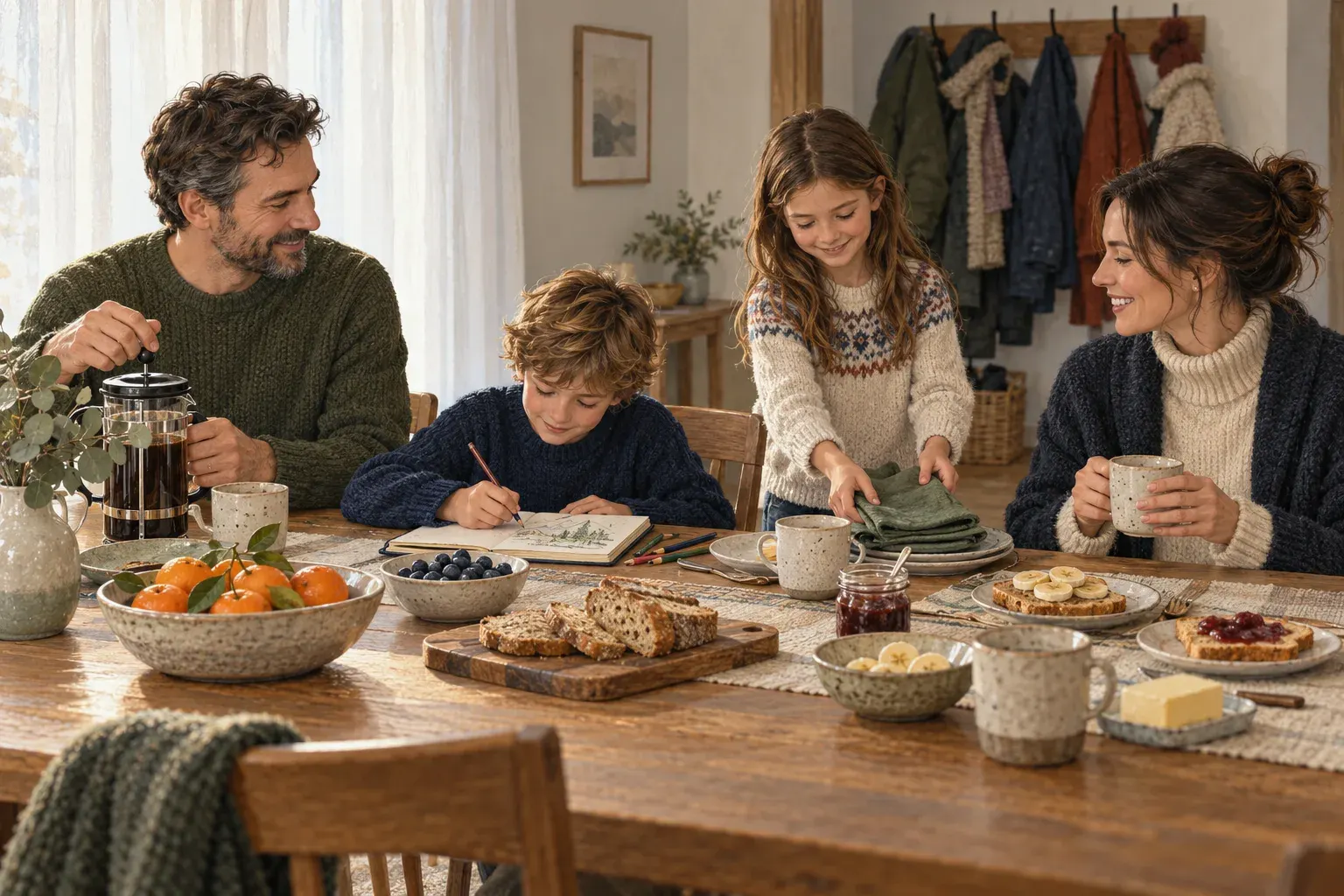
What could the morning look like?
One parent makes breakfast while the other helps the children prepare. Or everyone takes a small task: cups, fruit, clearing the table. Choose a routine that suits your household rather than importing the most demanding version of home life.
Keep the meal uncomplicated. You do not need a new recipe every day to enjoy being in Japan. Familiar food can make space for trying something new later, especially if a child is adjusting to different surroundings.
Before leaving, decide on the day's main outing and the easiest way home. Agree that an early return is allowed. That simple permission can remove pressure from the rest of the day.
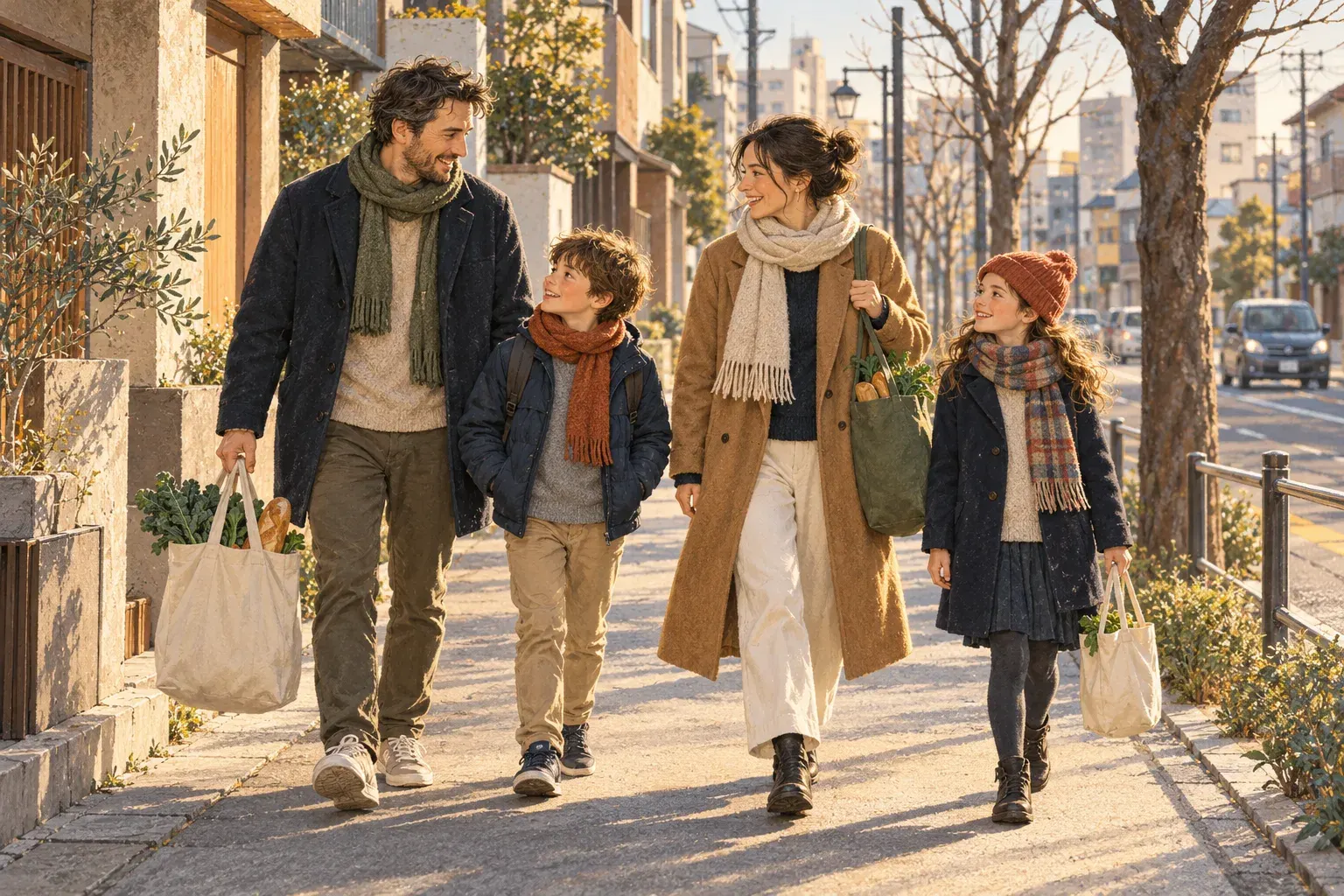
Can grocery shopping be part of the experience?
Yes, if it is kept small and unhurried. Let a child choose a snack within a clear budget or help find ingredients for one easy meal. Shopping can become a shared discovery rather than a long errand.
Avoid buying for the entire month on the first day. Learn the room's storage space and your family's preferences first. Buy what you can realistically use, and check food information carefully where dietary needs matter.
You do not need to claim that a particular shop is the cheapest or closest. Find the one that fits your route and supplies what your family will actually eat.
How much should we fit into the afternoon?
One anchor activity is often enough for a relaxed day. Add a second stop only if it is nearby and everyone wants it. Keep a food or warm-up break in mind rather than waiting until the children are exhausted.
On another day, the afternoon might simply be laundry and a short walk. That does not make the trip less worthwhile. A 29-night stay gives you permission to have days that would look too ordinary on a seven-day itinerary.
How can evenings feel like a holiday too?
Alternate between simple meals at home, takeaway and eating out. Having cooking facilities should widen your choices rather than make every evening a responsibility. Divide preparation and clearing up so that one person does not do all the work.
Choose a small ritual after dinner. Everyone can share one surprise, choose a photograph or suggest something for tomorrow. Leave room for separate interests as well; constant togetherness is not the only measure of a good family trip.
Keep noise and household rules in mind. You are staying in a building shared with other people, even when the room feels familiar.
What should we confirm before imagining this life?
Check the dining arrangement, supplied kitchen equipment and laundry process for the room you book. Ask how cleaning and rubbish disposal work. A generic amenity label cannot answer every everyday question.
HIVEN can be part of the planning conversation, but the lifestyle in this article is a suggested way to use your time, not a promise of particular appliances, furnishings or services in every room.
What will we remember after returning to Australia?
Perhaps a famous view. Perhaps the way your child learned the route home or insisted on buying the same breakfast again. A longer stay makes room for both kinds of memory.
You do not have to manufacture a perfect month. Give the family a workable base, a few shared routines and enough open time to discover what you enjoy together.
Frequently asked questions
Do we have to cook to make a month in Tokyo worthwhile?
No. A kitchen can be used for breakfast or occasional meals. Build the budget around your real preferences.
Is this a real guest's daily routine?
No. It is an illustrative planning example, not a testimonial.
How can parents avoid doing chores all holiday?
Keep tasks simple, share them where practical and budget for meals out or any optional services you choose.
Should every day include a major attraction?
No. Rest, shopping and a short neighbourhood outing can be a complete day during a longer stay.
Planning your family's Tokyo stay?
Tell HIVEN your preferred check-in and check-out dates, the number of adults, each child's age and the sleeping arrangement you need. Ask for a room-specific 29-night quote and written inclusions before booking. Enquire through https://www.hivenstay.com/
Information checked: 14 October 2026. Recheck time-sensitive prices, school dates, transport, opening hours, room conditions and seasonal arrangements before publication and again before booking or travel. Suggested itineraries are independent planning ideas, not included tours.
Sources
HIVEN — Residence and booking information — https://www.hivenstay.com/
HIVEN — BK501 room amenities and house rules — https://www.hivenstay.com/property/a-c-501


