Where to Stay in Tokyo for One Month: How to Choose Your Base
Choose a Tokyo base for a month by your repeated journeys, daily routines and room needs. Compare locations beyond sightseeing and station names.

Written by Hive Heaven

For one month in Tokyo, choose your base around the journeys and routines you will repeat most often. Start with work, study or your main activities, then compare the room, station access and everyday errands together. The best-known district is not automatically the best place for your particular month.
A short holiday can tolerate some inconvenience for a favourite view or landmark. Over several weeks, the same walk home, food shop and sleeping arrangement become much more important. Choose for the ordinary days as well as the exciting ones.

Which journeys should shape your shortlist?
List the places you must visit repeatedly and how often you will go. A workplace visited five days a week deserves more weight than a museum you might visit once. If your plans are mostly leisure, identify a few likely areas rather than pretending every day is fixed.
Compare door-to-door trips at realistic times. Include the walk to the station, transfers and the walk at the other end. A direct train can be convenient without being the fastest available route.
For couples sharing a room, compare both people's schedules. One person's excellent commute may create a difficult daily journey for the other.
How much does the room matter compared with location?
Consider them together. A convenient station cannot give a small room more storage or create privacy after bedtime. Equally, an attractive interior may become less appealing if the daily journey is awkward.
Write down three non-negotiables before browsing: perhaps a workable desk, separate sleeping space or a suitable kitchen. Then use location to compare rooms that already meet those needs.
Avoid paying for a feature that only looks useful in a photograph. Think through when you would actually use it during a normal week.
What should you look for around the building?
Choose a few practical errands: groceries, an uncomplicated dinner and a route for a short walk. Check actual opening times and walking access rather than assuming every business near a station serves your needs.
Look at the final stretch with luggage in mind. The nearest station exit may not be the most convenient one for lifts or crossings. Ask for an arrival route when access matters.
A neighbourhood is not uniformly quiet or busy. Assess the specific street and building instead of relying on a broad description of an entire district.
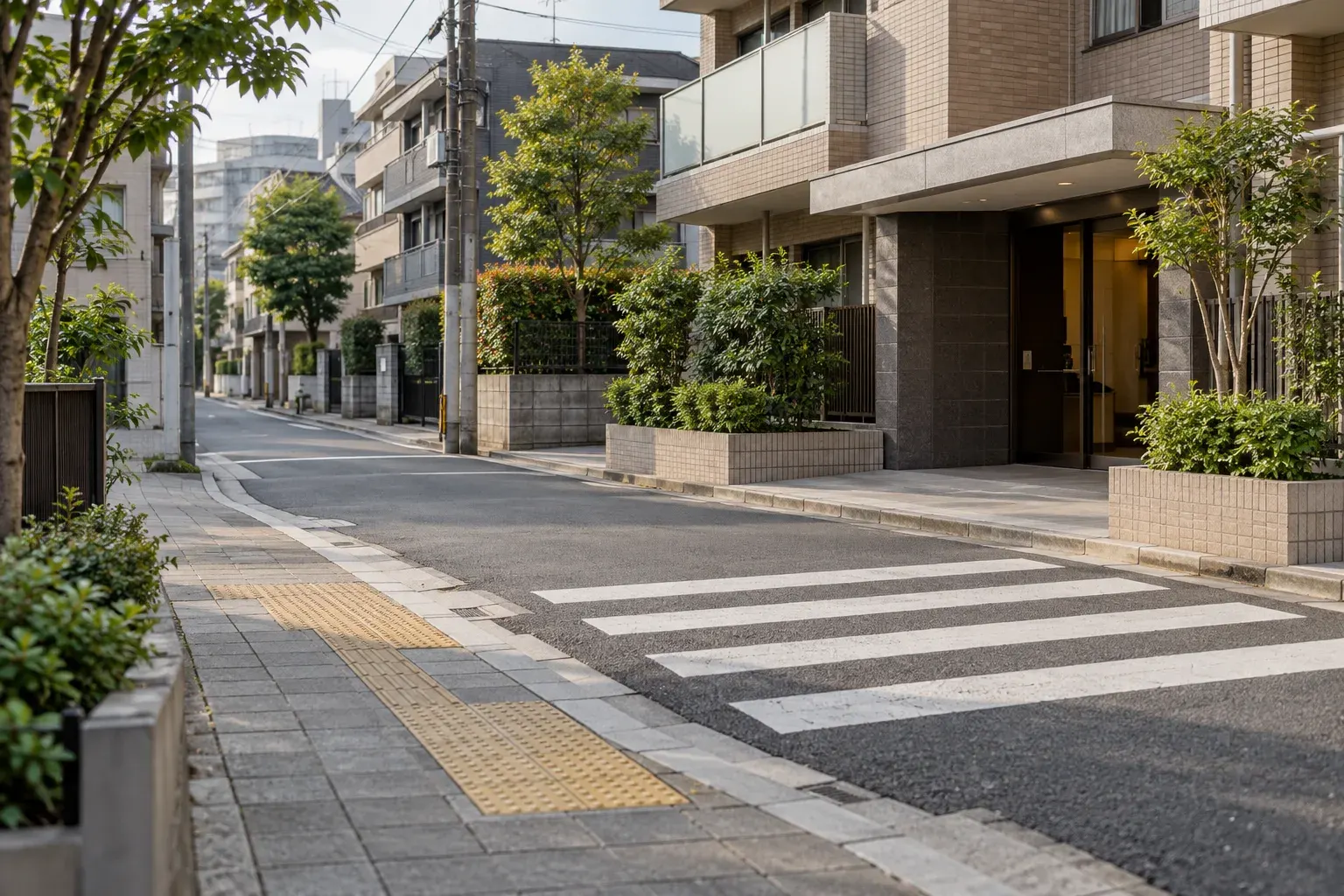
When might Kinshicho make sense?
Kinshicho offers JR and Hanzomon Line connections that can suit a range of Tokyo plans. Check your own destinations against the official networks rather than assuming one base works equally well for every part of the city.
It can be worth shortlisting when you want an eastern Tokyo residence and its railway connections match your routine. HIVEN offers a Kinshicho base, but the exact room, arrival route and quote still need their own assessment.
If most of your fixed commitments are elsewhere, compare an alternative closer to them. A good accommodation decision can acknowledge that another location is a better fit for some itineraries.
How can you compare two neighbourhoods without overthinking?
Sketch an ordinary weekday and a free day for each option. Include breakfast, your main journey, an errand and the return. Then compare the complete accommodation cost and the room arrangement.
This small exercise is usually more useful than trying to rank every Tokyo district. You are choosing a base for your month, not naming the best neighbourhood in the city.
What should you decide last?
Once the practical options work, let preferences matter. You might value a certain atmosphere, a favourite type of café or a route you enjoy walking. Those details help make an unfamiliar place feel like somewhere you can settle.
A successful month-long stay needs both convenience and a reason to enjoy coming home.
Frequently asked questions
Should I stay in the busiest sightseeing district?
Only if it fits your routine and room needs. Famous locations are not automatically the most practical monthly bases.
Is a direct train always the best commute?
Not always. Compare the complete journey, transfer effort and actual schedule.
Can I choose by station name alone?
No. Check the building's walking route and the room itself.
Do I need a fixed itinerary before choosing accommodation?
No. Identify repeated commitments and likely areas, then leave room for the month to develop.
Continue planning your Tokyo stay
Related HIVEN guide: Where to Stay for One Month in Tokyo: Hotel, Airbnb, Monthly Apartment, or HIVEN? — https://www.hivenstay.com/guides/tips/options-for-a-month-living-in-tokyo
For a room-specific HIVEN quote, share your check-in and check-out dates, number of guests, required sleeping arrangement and any essential equipment or services. Confirm the complete price and terms before booking: https://www.hivenstay.com/
Information checked: 19 October 2026. Prices, availability, facilities, services, transport and booking terms can change. Recheck time-sensitive details before publication and before booking. Operator examples describe their own published offers, not universal conditions for Tokyo accommodation.
Sources
Tokyo Metro — Kinshicho station and line information — https://www.tokyometro.jp/lang_en/station/kinshicho/index.html
JR East — metropolitan railway route map — https://www.jreast.co.jp/e/downloads/pdf/majorrailsub_e.pdf
HIVEN — Residence terms and published inclusions — https://www.hivenstay.com/


