Bicycle Parking Is the Real Skill
In Tokyo, riding a bicycle is only half the lesson. For a longer stay, the real skill is knowing where you can legally park, how to read station-zone signs, what happens if a bike is removed, and how to return safely.

Written by Hive Heaven
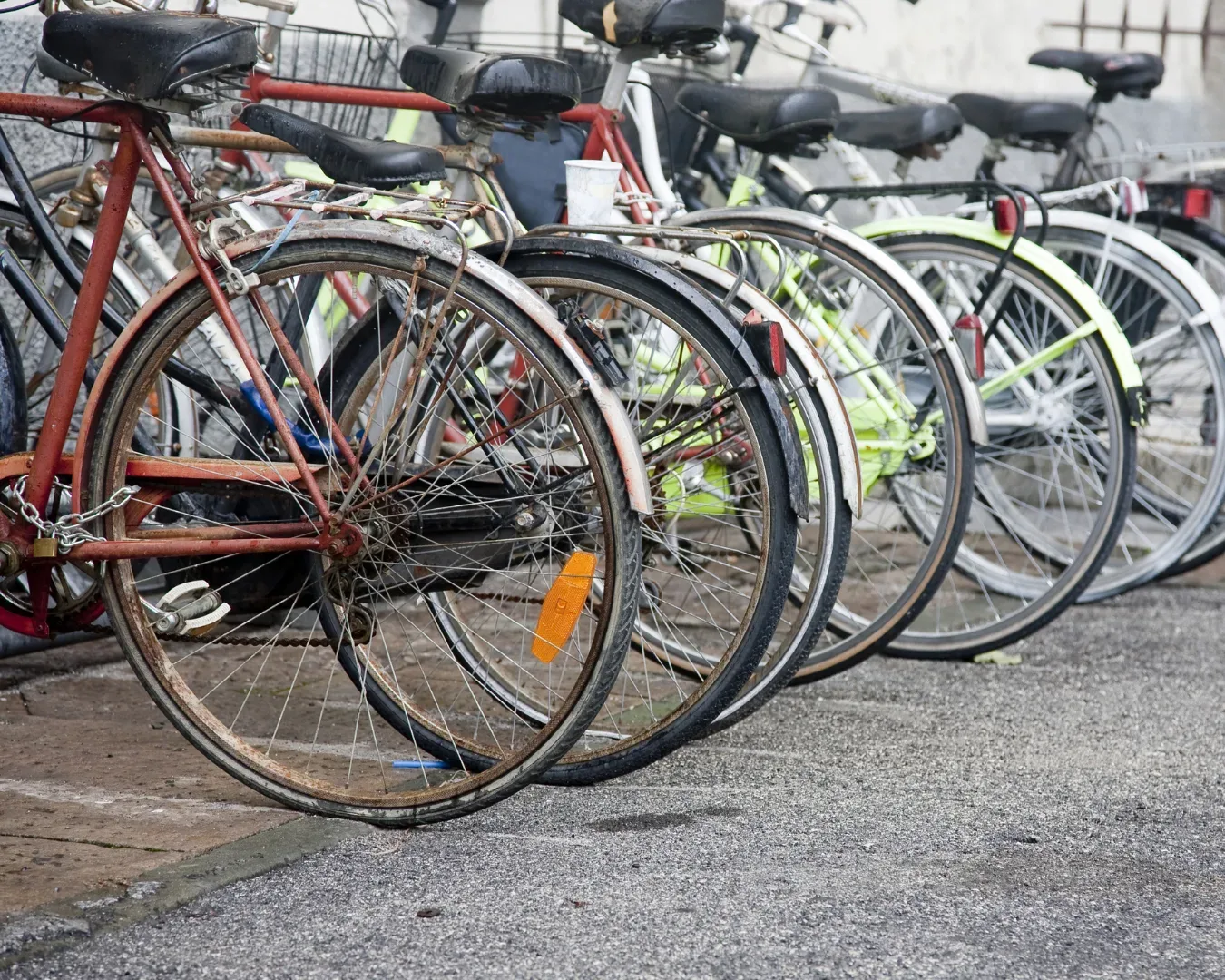
Tokyo makes cycling look easy. The streets are short enough for errands. The station areas are close. A supermarket, coffee shop, shrine, park, or riverside path may be only ten minutes away by bicycle. From HIVEN in Kinshicho, it is tempting to think the main question is whether to ride. It is not. The real question is where the bicycle will legally stop. For a longer stay, bicycle parking is not a small detail. It is the difference between a useful local habit and a stressful recovery errand. A bicycle left on the wrong sidewalk can block pedestrians, frustrate local residents, and be removed. A share bike returned to the wrong place may still be counted as in use. A station area that looks full of bicycles may still be a no-parking zone. The skill is not speed. The skill is ending the ride properly.
Rent or Borrow Only After You Know the Return
Before using a bicycle in Tokyo, decide where the ride ends. This is the first rule. Not the route. Not the café. Not the river path. The end. If you borrow a bicycle from a residence, ask where it may be stored when you return. If you rent from a shop, confirm whether it must return to the same shop and by what time. If you use a share bike, check the port before you ride, not after you arrive. Docomo Bike Share’s app guide explains that the app shows the number of bikes available at ports and the number of returnable slots; it also notes that some ports cannot accept returns because there are no returnable racks, because the port is outside business hours, or because that port limits the number of bicycles that can be parked. (docomo-cycle.jp) HELLO CYCLING also frames the system around stations: users can return at stations with the HELLO CYCLING logo, but they must place the bike in an empty rack, lock it, and complete the return operation through the app or smart lock. (mybike.hellocycling.jp) A ride without a return plan is not freedom. It is a parking problem waiting to happen.
Legal Parking Is a Place, Not a Guess
In Kinshicho, the safest habit is simple: use a designated bicycle parking area. Sumida City lists several public bicycle parking types. Some are registration-based. Some allow same-day use. Some are time-based and do not require advance registration. The city explains that third-type bicycle parking is used by time unit and does not require registration in advance. (city.sumida.lg.jp) Around Kinshicho Station, the practical anchors are the North Exit Underground Bicycle Parking and South Exit Underground Bicycle Parking. Sumida City lists the north side at Kinshi 2-2-2 and the south side around Kotobashi 3-14-4. For same-day use, the first two hours are free, and after that the one-day fee is 100 yen. (city.sumida.lg.jp) This is why bicycle parking should not be improvised. If you are going to the station, mall, supermarket, or café, the right question is not “Can I leave it here for a moment?” The right question is “Where is the nearest legal parking?”
KINSHICHO STATION NORTH / SOUTH UNDERGROUND BICYCLE PARKING
North Exit: 2-2-2 Kinshi, Sumida City, Tokyo / South Exit: around 3-14-4 Kotobashi, Sumida City, Tokyo
Open in Google Maps
Read the Signs Before the Lock
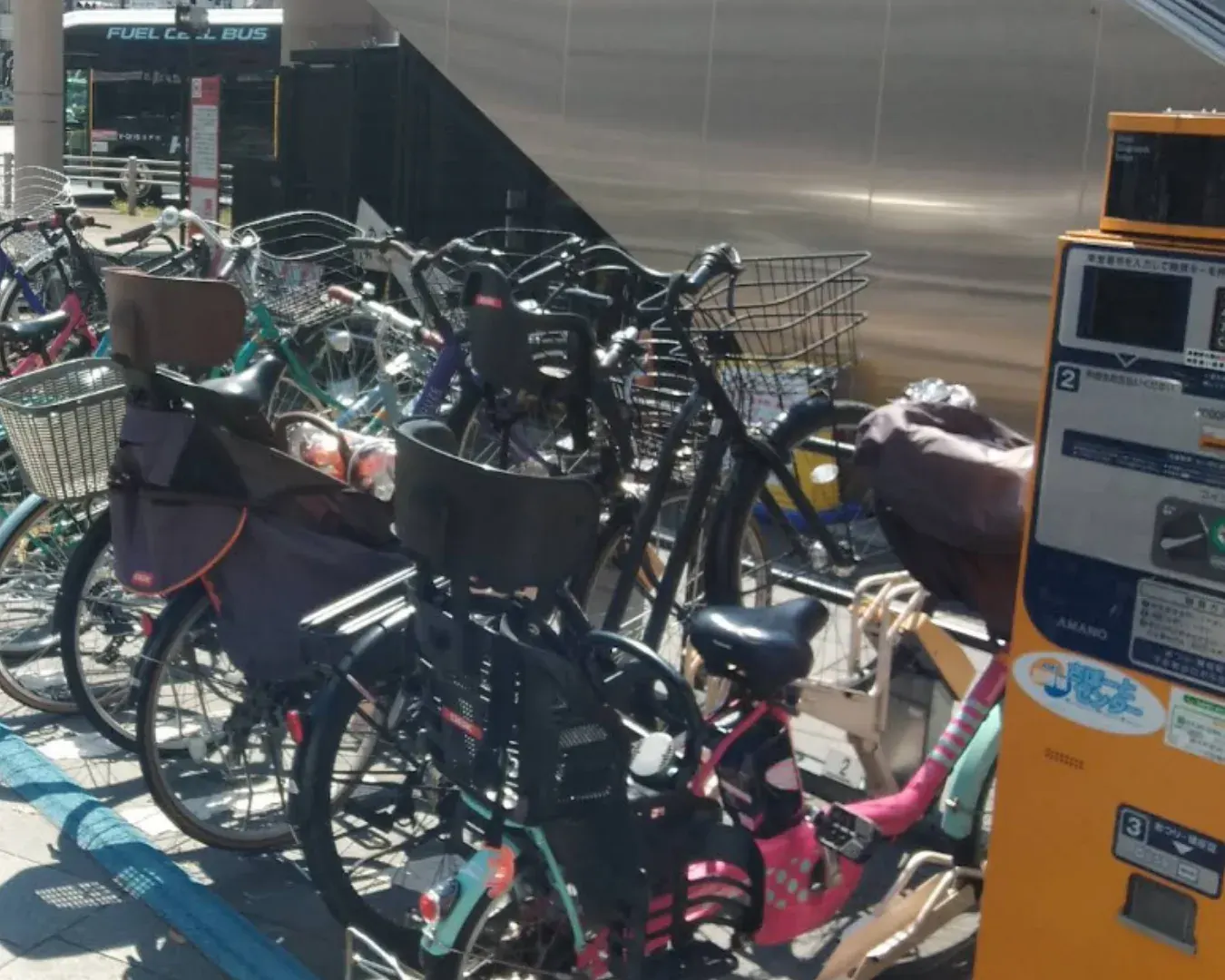
A rack is not enough. Read the sign before locking the bicycle. Around Kinshicho, Sumida City lists several time-based street parking areas, including locations along Yotsume-dori, Hokusai-dori, the South Exit station plaza, Keiyo Road, and Yotsume-dori second area. The listed fee pattern for Kinshicho street bicycle parking begins with one free hour, then 200 yen for one to two hours, 400 yen for two to twelve hours, 600 yen for twelve to twenty-four hours, and increasing fees up to the maximum 48-hour use period. (city.sumida.lg.jp) The sign tells you the real rule: how long it is free, when payment starts, whether there is a maximum time, whether overnight use is allowed, and whether the rack is for bicycles only or also for specific small motorized bicycles. Sumida City also recommends connecting the bicycle to the parking equipment with a wire lock for theft prevention. (city.sumida.lg.jp) Do not lock first and read later. The sign is part of the parking space.
Station Zones Are Serious
Station areas are where mistakes become expensive. Sumida City defines abandoned bicycles as bicycles left in a public place outside a bicycle parking area when the user is away and cannot immediately move them. The city’s FAQ says the judgment does not depend on the length of time or the purpose of parking; even leaving a bicycle on a public road for about one minute while you shop can make it subject to removal. (city.sumida.lg.jp) The same FAQ explains that the ward sets bicycle no-parking zones around stations to protect the living environment, and bicycles left in those zones can be removed immediately. (city.sumida.lg.jp) That means the most common long-stay mistake is not a long mistake. It is a short one. “I only went inside for a minute.” “I left it beside the shop.” “Other bikes were already there.” None of these are a parking plan.
“In Tokyo, legal bicycle parking is not where the bike fits. It is where the signs say it belongs.”
What Happens After Removal
If the bicycle is removed, the day changes shape. It stops being an errand and becomes recovery. Sumida City says removed bicycles are kept at bicycle storage offices, and whether a bicycle has been removed can be checked by theft-prevention registration number or license plate number by contacting the ward’s Traffic Safety section. (city.sumida.lg.jp) For bicycles removed around Kinshicho Station, Sumida City lists the storage location as Kotobashi Bicycle Storage Office at Kotobashi 3-1. The same official page states that removed bicycles can generally be reclaimed every day except December 29 to January 3, from 14:00 to 19:00. Reclaiming a bicycle requires identification, the bicycle key, and the removal fee; the fee is 5,000 yen for bicycles and specified small motorized bicycles. (city.sumida.lg.jp) This is the real cost of “just for a minute.” Not only the money. The time, the embarrassment, the paperwork, and the lost rhythm of the day.
Shared Bikes Are Not Free-Return Bikes
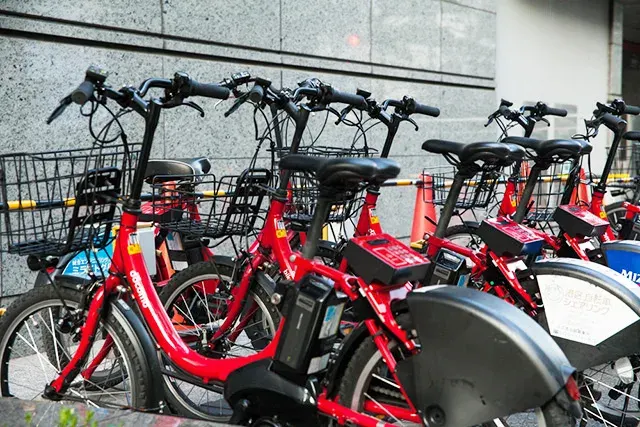
Bike share can make Tokyo feel easy, but it has its own parking rule. You are not returning the bicycle to “somewhere nearby.” You are returning it to a valid port. Docomo Bike Share’s first-time user guide says to park the bicycle in the cycle port, manually lock the rear lock, then press the required return button or ENTER process until the return is completed; after return, the app sends a push notification and the user can check the usage history. (docomo-cycle.jp) The app guide also explains that port icons show available return capacity, closed or after-hours ports, and ports that cannot accept returns because there are no returnable racks. (docomo-cycle.jp) This matters at night, in rain, and near stations. A locked share bike is not necessarily a returned share bike. Do not walk away until the app says the ride is finished.
Safe Return to HIVEN
For a longer stay, build one boring bicycle routine. If the bicycle belongs to the residence, confirm where it is allowed to stay overnight. If you ride to Kinshicho Station, use the underground or signed street parking. If you ride to Oshiage, check the station parking before entering Solamachi. If you ride to Ryogoku, use official station-area parking rather than leaving the bicycle near a park, museum, or temple entrance. Keep small coins or a cashless payment method ready. Take a photo of the parking sign if you are unsure of the time limit. Save the location of the rack before walking away. Lock the bicycle to the parking equipment when possible. Do not rely on memory after a long dinner, a rainy errand, or a crowded event. The return is not an afterthought. It is part of the ride.
The Real Skill Is Boring
Bicycle parking is not the romantic part of Tokyo. That is why it matters. Anyone can imagine the ride: crossing a bridge, buying groceries faster, reaching a café before the rain, using the city with less dependence on trains. The long-stay skill is quieter. You learn the legal rack near the station. You read the fee board before locking. You know the free time and the maximum time. You understand that a sidewalk is not safe just because other bicycles are there. You confirm the share-bike return before walking away. You come back to HIVEN without wondering where the bicycle went. That is what makes cycling usable. Not speed. Not distance. Not the idea of freedom. The ordinary confidence that the bicycle will still be exactly where it should be when the day is ready to continue.