One Month in Tokyo or Two Weeks Across Japan? Which Trip Fits You?
Compare a Tokyo home base with a multi-city Japan holiday through travel time, luggage, budgets and the days you most want to remember.

Written by Hive Heaven

Choose a month in Tokyo if you want a stable base, repeat visits and time for everyday life. Choose two weeks across Japan if experiencing different regions is central to your trip and you enjoy moving between them. Neither format is automatically better value: compare the complete cost and the time each asks you to spend in transit.
Picture two different holiday mornings. In one, you already know where your socks are and you can leave after breakfast. In the other, the suitcase is open and a train departure determines when you must finish packing. Both can lead to a wonderful day. The question is how often you want the second morning.

What are you hoping to bring home from Japan?
If your wish list includes several distinct landscapes or regional traditions, spending the entire trip in one city may not satisfy it. Write down the experiences first, then decide where to sleep. Do not squeeze everything into Tokyo simply because a monthly room looks convenient.
If your wish list sounds more like “spend afternoons in bookshops, practise ordering lunch, return to a favourite gallery”, a stable base has advantages. Repeated small experiences become easier when each day does not require new arrival instructions.
Separate essential experiences from things included because they appear in every itinerary. Three destinations you care deeply about can make a better trip than six chosen to make the map look complete. The same principle applies to Tokyo neighbourhoods.
How much of a moving day is actually sightseeing?
A train journey is only one part of changing accommodation. There is packing, reaching the station, allowing time for unfamiliar platforms, travelling to the new property and dealing with the gap before access. Add the mental work of learning another room and its surroundings.
These tasks are not necessarily unpleasant. Watching the landscape change can be a highlight, and a new city can renew your curiosity. But they use time. Put the whole transfer day into the plan instead of counting only the fastest advertised journey.
A month in Tokyo replaces some of that work with local journeys. It does not eliminate travel: a poorly chosen base can mean long daily trips. Check the places you will visit most often and calculate realistic routes from the actual address.
Kinshicho Station — Tokyo Metro
3-14-6 Kotobashi, Sumida-ku, Tokyo, Japan
Open in Google Maps
Compare the holiday you will live, including the hours between the highlights.

What happens to the luggage?
Moving lightly can make a multi-city trip enjoyable. Check your carrier and rail service's current baggage conditions before finalising what you bring. If you want forwarding, investigate the specific provider, timing and what the receiving accommodation accepts.
A fixed room gives you the option to unpack, but do not confuse that with a universal storage service. Ask what is allowed if you leave for a side trip, and keep your booking conditions in mind. Unused nights remain paid nights unless the terms explicitly say otherwise.
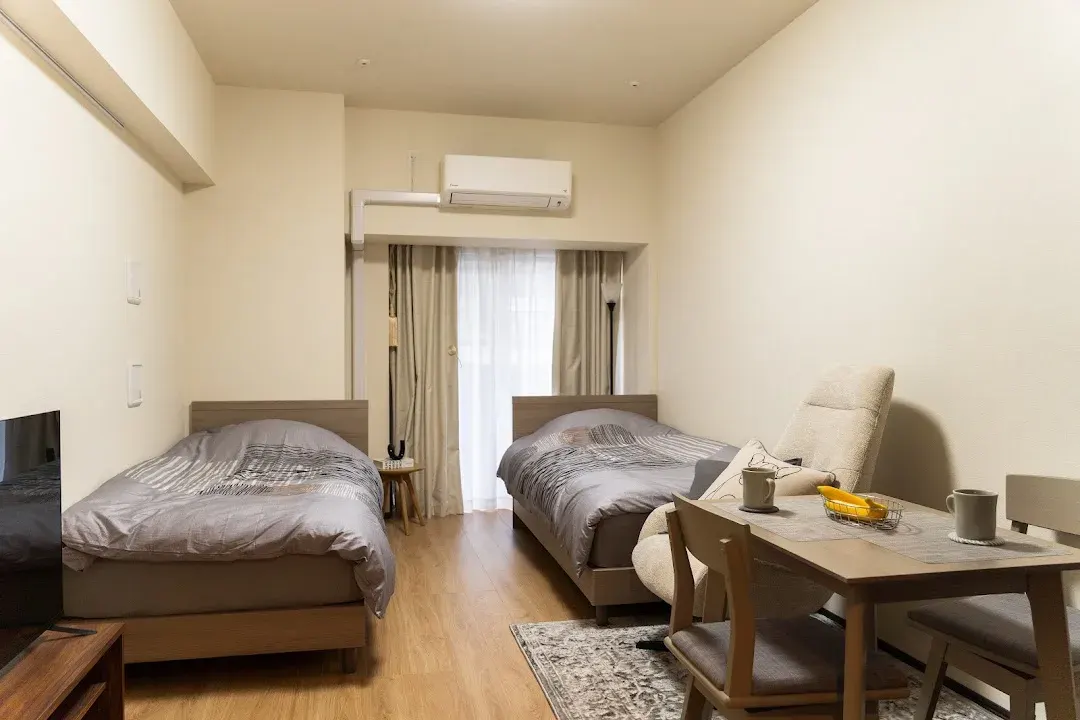
For two people, try a packing rehearsal before booking the room. Two open cases can occupy much more floor space than the listing photograph suggests. A long-stay layout should work after the luggage is opened, not just while everything is zipped shut.
Which version is likely to cost more?
Make two separate budgets. For the two-week route, include each accommodation, intercity transport, local journeys, meals and activities. For the month, include the longer accommodation total and twice as many daily living days, then any excursions.
Compare the full room quote rather than multiplying a headline nightly rate. Include relevant fees and payment charges. Convert yen to your home currency using one dated rate for both options so exchange assumptions do not quietly favour one plan.
A rail pass is another individual calculation. Add the fares for your confirmed eligible journeys, then compare the appropriate pass and its conditions. Do not assume that arriving from overseas or staying for several weeks makes a pass worthwhile.
You may discover that the longer, slower trip is affordable, or that the shorter route leaves more room for the experiences you value. Treat the result as useful information rather than a competition to make one format win.
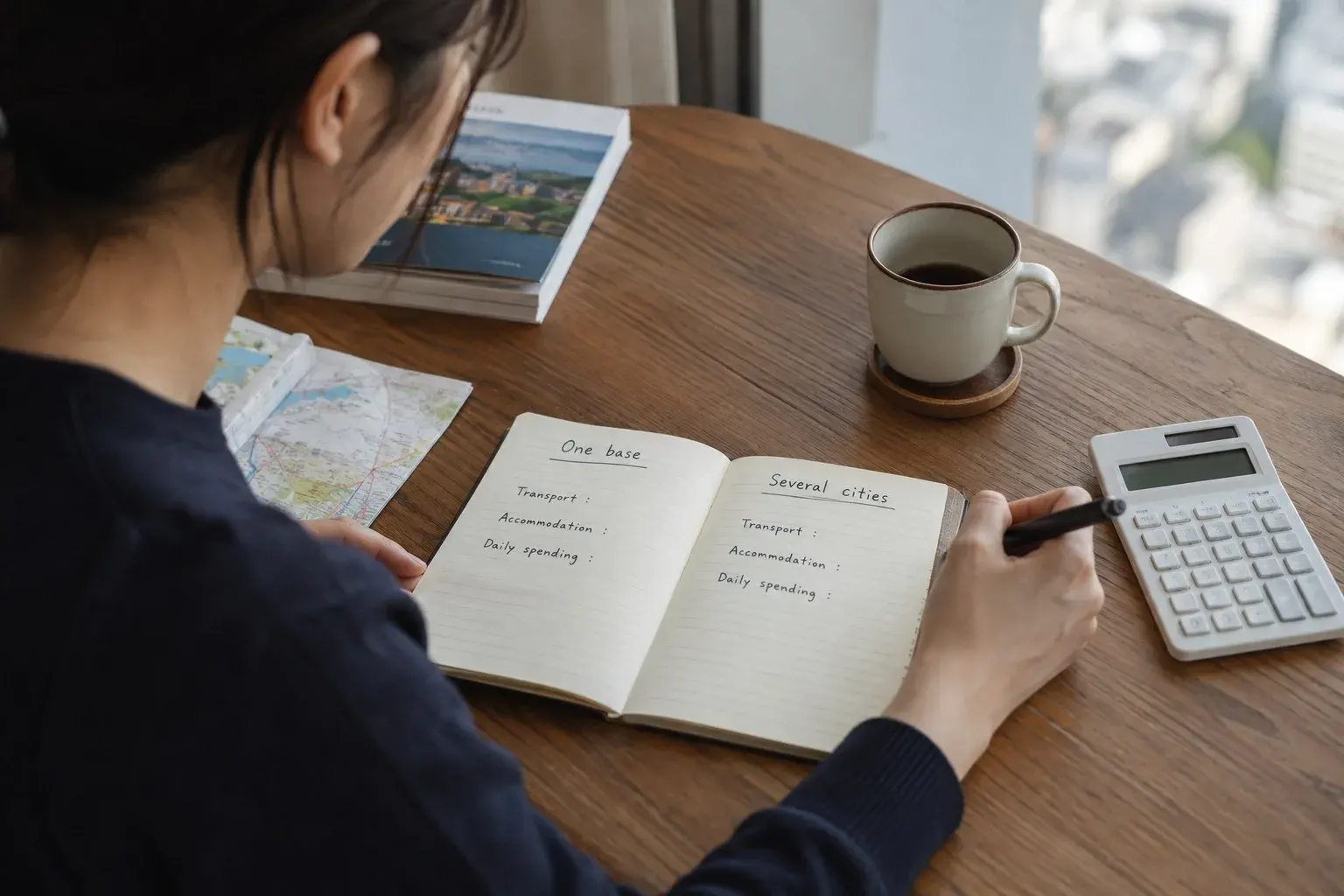
Can you combine a Tokyo base with a short trip elsewhere?
Yes, provided the dates, transport and extra accommodation work. A short break can provide variety while you keep a stable base. It also produces overlapping room costs if you retain the Tokyo booking.
Decide what that overlap buys you. It might mean carrying less luggage and returning to a familiar setup. For someone else, the duplicate expense may outweigh the convenience. Calculate it before making the side trip sound like an effortless bonus.
Allow a buffer around the return and international departure. Do not build a chain of tight connections simply to preserve one more sightseeing hour. Review current services, disruption information and the conditions of each ticket.
How does each plan feel for different travellers?
A first-time visitor with limited leave may prefer a focused route through a few places. A returning visitor might enjoy using Tokyo as a base for a specific interest. These are tendencies to consider, not rules that determine your itinerary.
Couples should compare their tolerance for moving. One person may love arriving somewhere new while the other finds packing exhausting. Discuss the number of hotel changes before debating individual attractions; it often reveals the real disagreement.
For travellers with accessibility or energy considerations, repeated check-ins and unfamiliar routes deserve particular attention. A familiar base can help, but the actual property and transport access need checking. “One location” is not automatically synonymous with “easy”.

What would a reasonable outline look like?
A two-week trip might use a small number of bases, with enough time at each to avoid spending every other day in transit. Choose the cities from your interests and actual connections. Reserve major commitments around that structure rather than adding locations just because they fit on paper.
A month-long Tokyo plan might use the first week for orientation, the next two for broader exploration and interests, and the last for revisits and departure preparation. An optional overnight trip should remain optional until its budget and logistics are clear.
These examples are planning structures, not complete transport itineraries. Use current official route information, venue schedules and your travel dates to turn either one into a bookable plan.
Where does HIVEN fit into the comparison?
HIVEN's current Residence offer starts at 29 nights, so it belongs in the month-long comparison. Examine the selected Kinshicho unit, its conditions and the total for your dates. Do not assume a two-week trip can be booked under a monthly product.
For a Tokyo base, decide whether the neighbourhood supports your repeated journeys and everyday needs. The [supermarket guide](https://www.hivenstay.com/guides/lifestyle/supermarkets-you-will-actually-use-kinshicho) gives practical context for food shopping, while the live room information determines what is actually included.
HIVEN BK Kinshicho
4-6-4 Kotobashi, Sumida-ku, Tokyo, Japan
Open in Google Maps
The point of the comparison is to choose well, even if the result is a different trip. A booking that fits your plans is more valuable than a persuasive itinerary that does not.
Frequently asked questions
Can I see all of Japan in two weeks?
No itinerary covers everything. Select the experiences and regions that matter most, and treat the route as one visit rather than a final opportunity to complete the country.
Is a month in Tokyo cheaper than travelling around Japan?
Not necessarily. Reduced moving costs may be offset by more accommodation and food days. Compare full totals for your dates and travel style.
Do I need a nationwide rail pass?
Only buy after comparing your intended journeys with the pass's current coverage, eligibility and price. A city-based month and a route with several long-distance trains are different cases.
Should I keep my Tokyo room during an overnight trip?
Calculate the overlapping nights and compare them with the convenience of returning to the same place. Confirm relevant terms; do not assume storage or refunds.
Will a Tokyo base remove the need to plan transport?
No. You still need suitable daily routes and a departure plan. Check exact addresses, access needs and the services operating on your dates.
What if my partner wants a different pace?
Agree on the number of accommodation changes and the amount of open time first. You can then discuss which destinations fit that shared structure.
Can I use HIVEN for a two-week itinerary?
The public Residence product currently requires 29 nights. Check the live offer for changes, but plan a shorter holiday around accommodation that accepts your actual stay.
Sources and information check
[JNTO — planning a visit to Japan](https://www.japan.travel/en/plan/)
[Tokyo Metro — Kinshicho Station and Hanzomon Line](https://www.tokyometro.jp/lang_en/station/kinshicho/index.html)
[HIVEN — current Residence offer](https://www.hivenstay.com/?lang=en)
[HIVEN — booking and stay FAQ](https://www.hivenstay.com/faq)
Information checked: 30 October 2026. Recheck time-sensitive details before publication and before booking or visiting, including prices, opening hours, transport, entry requirements and the selected room’s terms. Suggested routines and sample itineraries are editorial planning examples, not guest testimonials.


