Japanese Supermarket Labels: A Practical Guide for Your First Month
Learn the labels that matter on a Tokyo grocery run: final prices, package quantities, discounts, storage instructions and the limits of translation.

Written by Hive Heaven

When reading Japanese supermarket labels, start with five questions: what is the final price, how much is in the pack, when should it be used, how should it be stored, and does it meet your dietary needs? You do not need to translate every promotional sentence before making a useful first shop.
A little familiarity can make the next month easier. The aim is not to become fluent in an aisle. It is to recognise the information that changes your purchase and know when you need help rather than a guess.
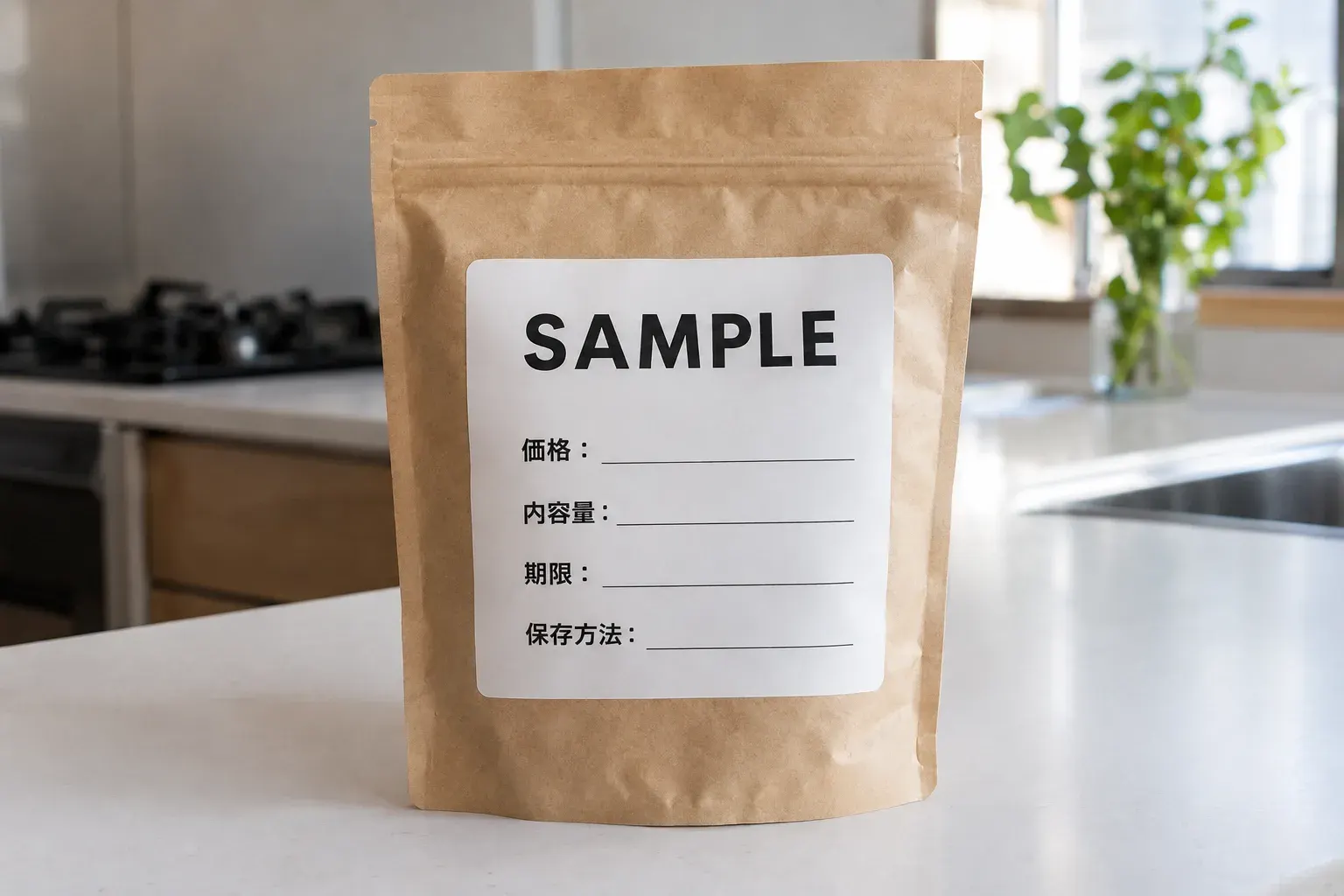
Which number is the price you will actually pay?
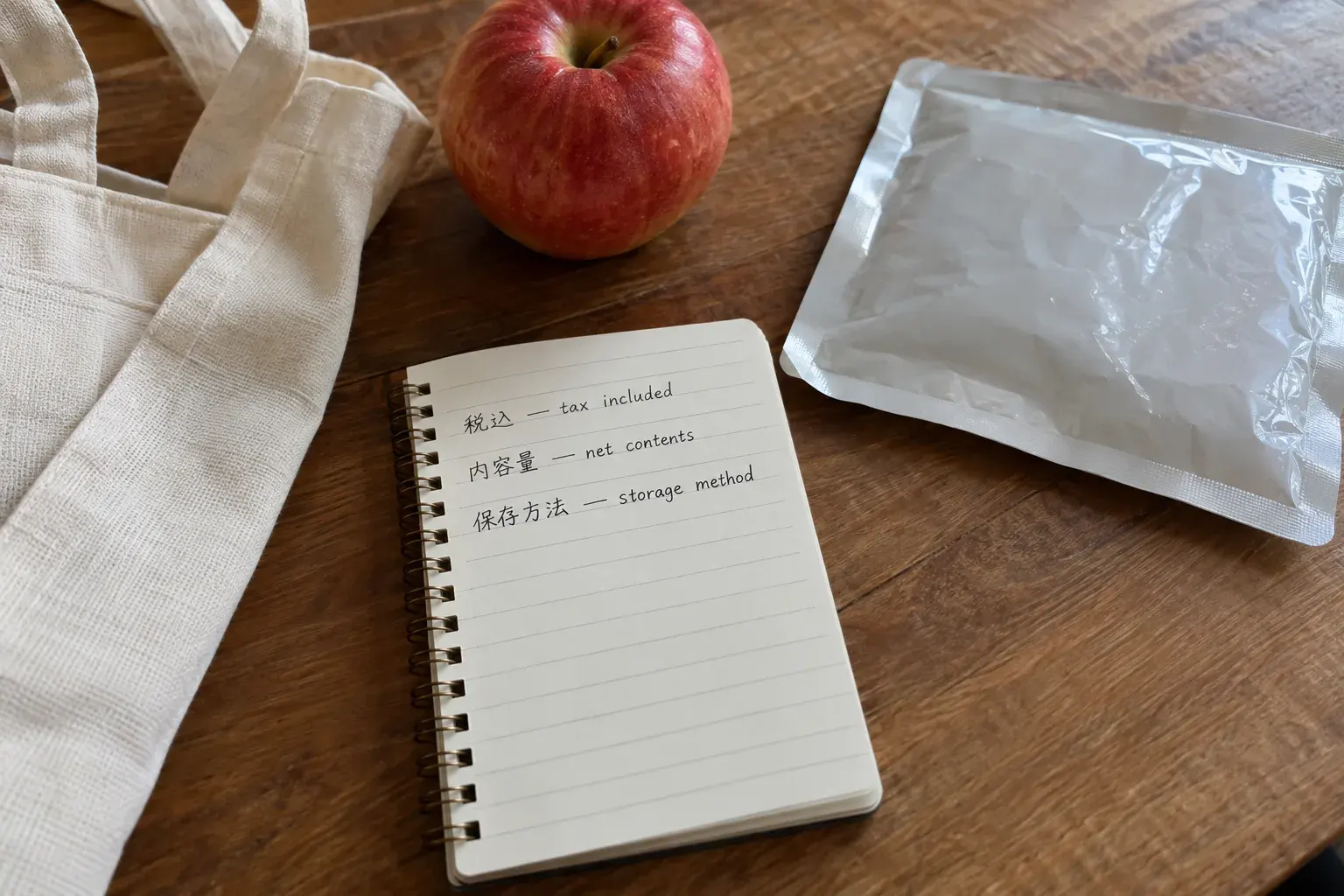
税込 means tax included. 税抜 means tax excluded. A display may show more than one number, so identify the tax-inclusive amount when comparing purchases. Japan's Ministry of Finance provides official guidance on total-price display; the final receipt is also useful for understanding what was charged.
Do not assume the largest printed number is the final total for the exact quantity you picked up. Check whether the sign refers to one item, several items, a weight or a particular promotion.
For a long stay, save the receipt from a few early shops. Matching a product to its receipt line helps you learn the pattern without repeatedly doing mental arithmetic at the shelf. Ask staff if a promotion or final amount is unclear.
Are you buying one pack or a price per weight?
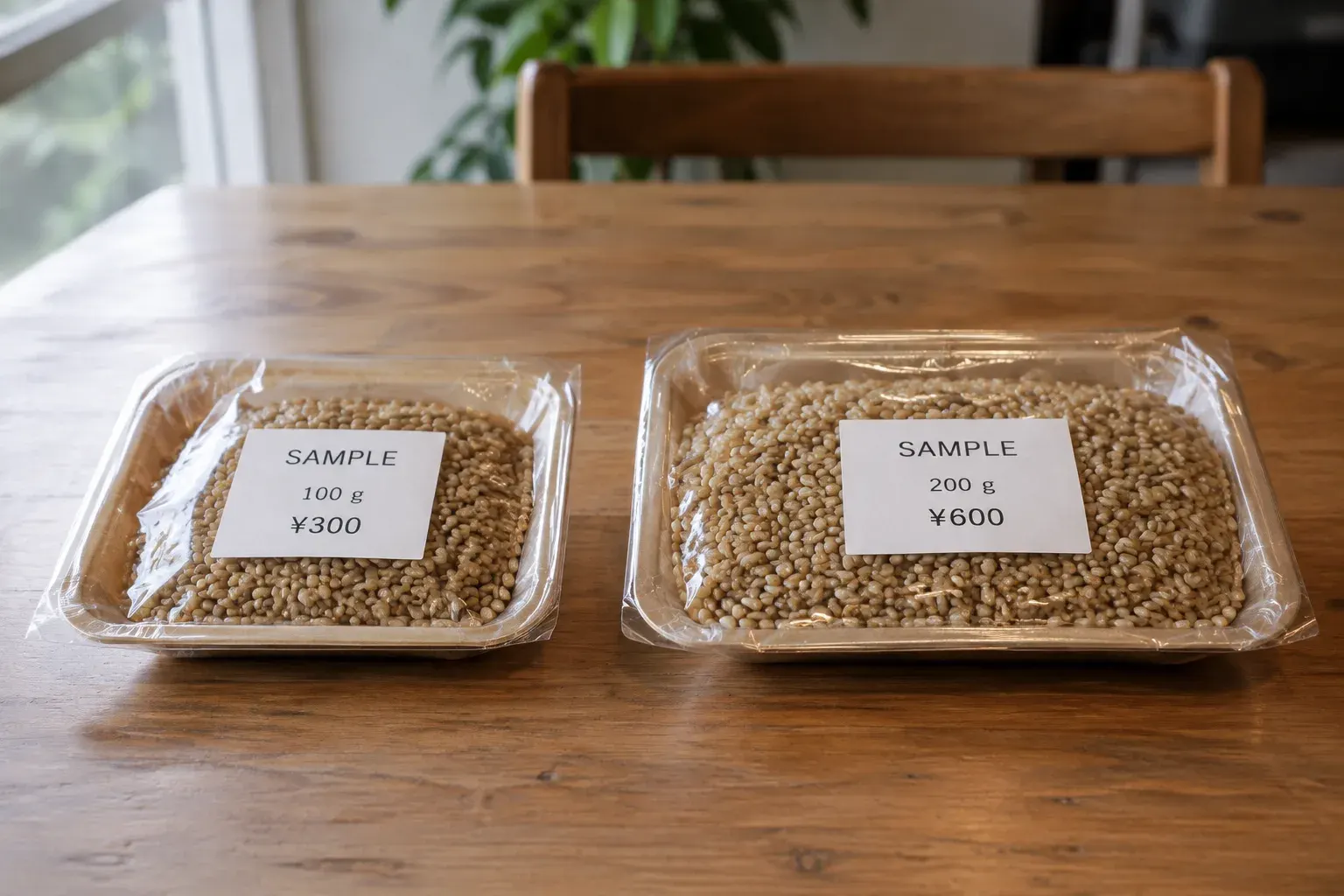
内容量 identifies net contents. Look for the number and its unit: grams, millilitres, pieces or another quantity. A familiar-looking package can contain a different amount from the one beside it.
A per-100-gram price is not the total price of every pack. For an invented arithmetic example, an item priced at ¥200 per 100 grams would cost ¥500 for 250 grams before any relevant price adjustments. This demonstrates the calculation; it is not a current product price.
Compare portions as well as unit cost. A large package that is inexpensive per gram may be inconvenient for one person with limited storage. The question is how much you will use during the stay, not whether the bigger number looks like better value.
What do common discount signs mean?
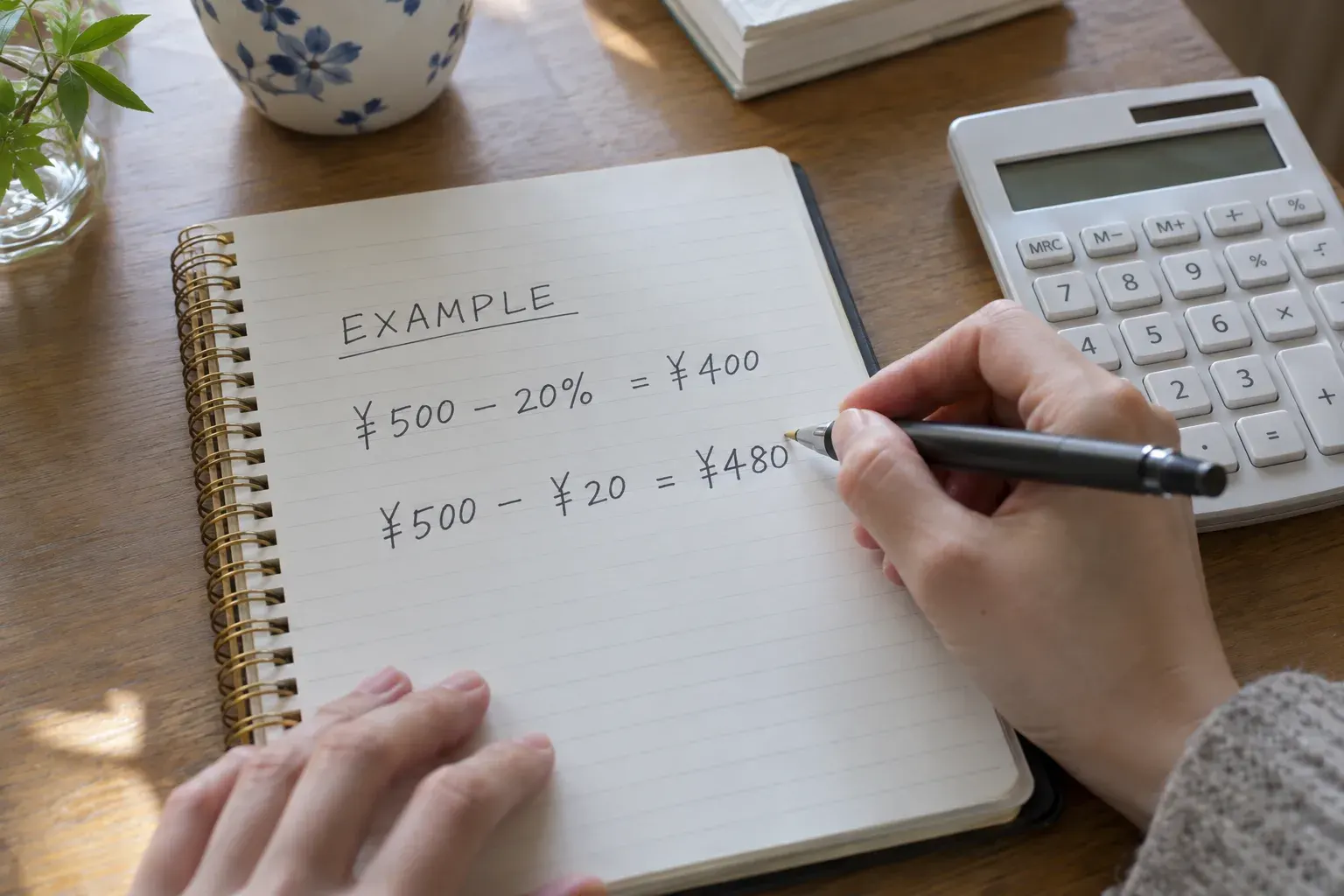
割引 means a discount. In this context, 1割 is ten percent and 2割 is twenty percent. 半額 means half price. A yen-off reduction and a percentage reduction are different calculations, so read the full label rather than spotting only a number.
Use a simple fictional example: a ¥500 item reduced by twenty percent becomes ¥400, while ¥20 off makes it ¥480. These are teaching figures, not a claim about a particular shop's promotion.
Check what the reduction applies to and whether the printed price already reflects it. Do not assume two stickers mean two discounts can be added. Ask the business when a promotion's conditions are unclear.
Most importantly, a discount does not change the product's storage or use instructions. Buy it because it suits a meal you will actually eat, not because a bright sticker has created an urgent new appetite.
Understanding one useful label is worth more than guessing at an entire package.
How are use-by and best-before labels different?
消費期限 is the use-by date; 賞味期限 is the best-before date. Tokyo's official food-safety guidance distinguishes the two and explains the importance of the stated storage conditions and unopened packaging. Do not treat them as interchangeable labels.
Follow the product instructions rather than assuming the printed date remains a guarantee after opening. If a package has a time as well as a date, read both. When you cannot identify the meaning or the relevant conditions, ask before using it.
Date formatting can differ from what you are used to in the US or UK. Read the complete date presentation and any explanatory text. A cropped translation of a few digits is a poor basis for a food-safety decision.
Where do you find storage and ingredients?
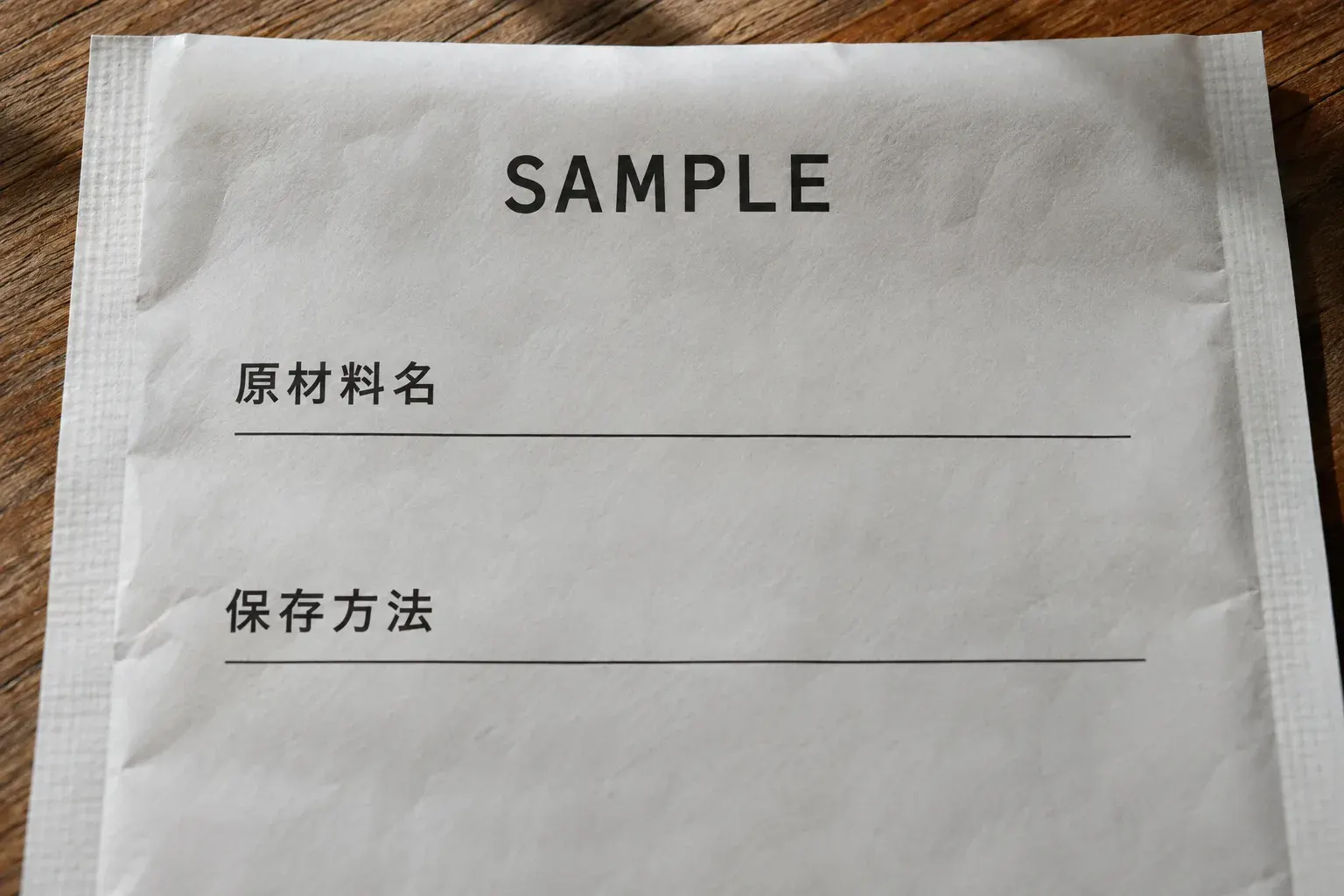
保存方法 means storage method. 要冷蔵 indicates refrigeration is required, and 要冷凍 indicates frozen storage. Read any stated temperature and other directions rather than relying on where you first saw the product in the shop.
原材料名 introduces ingredients. This is a different kind of information from a marketing description or a photograph on the front. The Consumer Affairs Agency's English food-labelling resources help explain the fields used on packaged foods.
For ordinary shopping, take a moment to identify the full product name and instructions. Products that look similar can have different uses. A package that resembles something from home is not necessarily prepared or stored in the same way.
What should you do about food allergies?
Use current official information and confirm uncertainty with the retailer or manufacturer. Do not infer safety from a dish name, an ingredient photograph or an automated translation. Prepared food and restaurant information can require a different conversation from reading a packaged product.
The Consumer Affairs Agency publishes allergen resources and communication sheets. Its current Japanese updates include changes made in 2026, so an older English infographic may not describe the latest position completely. This guide intentionally avoids presenting an old fixed allergen list as a complete current checklist.
A communication card can help explain a need, but it does not itself guarantee a product or meal is suitable. Ask specific questions and make decisions according to reliable information and your own professional medical advice where relevant.
How can you use a translation app sensibly?
Photograph or scan the complete relevant panel rather than only the unfamiliar word. Check whether line breaks, small characters or a curved surface have disrupted recognition. Keep the original visible so someone can help verify it.
Use the result to orient yourself and form a question. If a product's identity, instructions or dietary suitability remains uncertain, choose something you can confirm rather than letting the app's confident wording substitute for verification.
Avoid blocking a narrow aisle while you investigate every package. Move aside where practical, and be mindful of store photography policies and other shoppers. You will get faster as the recurring fields become familiar.
How do these labels help during a month in Tokyo?
The same information repeats across many ordinary purchases. Once you can find quantity, total and storage, shopping becomes less tiring. You can also buy smaller amounts more confidently instead of choosing a familiar-looking bulk pack every time.
At the start of a stay, practise with a few straightforward products and keep your basket modest. LIFE in Arcakit Kinshicho is one possible supermarket to use if it suits your route; check the official directory before visiting.
LIFE — Arcakit Kinshicho
Arcakit Kinshicho B1F, 2-2-1 Kinshi, Sumida-ku, Tokyo, Japan
Open in Google Maps
Keep the guide alongside the [Kinshicho supermarket overview](https://www.hivenstay.com/guides/lifestyle/supermarkets-you-will-actually-use-kinshicho). One helps you choose a shop, while the other helps you choose a product. Neither replaces the actual label on the item in your hand.
Frequently asked questions
Does 税込 mean the tax is included?
Yes. It identifies a tax-inclusive amount. Make sure the price refers to the item and quantity you are buying.
Is a per-100-gram price the price of the whole pack?
No. Check the actual weight and package total. Use the per-weight figure to compare like quantities.
Are 半額 and a fixed yen reduction the same?
No. 半額 means half price. A yen reduction subtracts the stated amount; check the exact promotion and whether it is already reflected.
Are 消費期限 and 賞味期限 interchangeable?
No. They indicate different date concepts. Read storage conditions and the package instructions, and ask when the meaning is unclear.
Can I use the printed date after opening as a guarantee?
No. The date and storage conditions generally assume unopened packaging. Follow any instructions for use after opening.
Is an older allergen chart enough for shopping in 2026?
Use current Consumer Affairs Agency information and the actual product label. Requirements change, and a historical chart should not be treated as a complete current guide.
Can a translation app prove a food is safe for my allergy?
No. Use it as an aid to understanding and communication, then obtain reliable confirmation of uncertain ingredients or preparation.
Sources and information check
[Consumer Affairs Agency — food labelling resources](https://www.caa.go.jp/en/policy/food_labeling/)
[Consumer Affairs Agency — current allergen labelling updates](https://www.caa.go.jp/policies/policy/food_labeling/food_sanitation/allergy/)
[Tokyo Metropolitan Government — use-by and best-before dates](https://www.hokeniryo.metro.tokyo.lg.jp/anzen/anzen/food_faq/hyoji/hyoji04)
[Japan Ministry of Finance — tax-inclusive price display](https://www.mof.go.jp/tax_policy/summary/consumption/a_001.htm)
[Arcakit Kinshicho — LIFE supermarket](https://mitsui-shopping-park.com/arcakit/shopguide/500086.html)
Information checked: 30 October 2026. Recheck time-sensitive details before publication and before booking or visiting, including prices, opening hours, transport, entry requirements and the selected room’s terms. Suggested routines and sample itineraries are editorial planning examples, not guest testimonials.


