Can You Spend a Month in Tokyo Without Speaking Japanese?
Prepare for everyday Tokyo situations without expecting fluent Japanese: organise addresses, ask clearer questions and learn a few useful phrases.

Written by Hive Heaven

You can plan a month in Tokyo without fluent Japanese, but prepare for everyday situations instead of assuming English will always be available. Save addresses, learn a few useful phrases, use translation carefully and confirm important arrangements in writing. The practical goal is clear communication, not perfect conversation.
Ordering one meal on holiday and managing a month of groceries, laundry and accommodation questions involve different kinds of language. You do not need to master all of them before departure. You need a small set of reliable tools and a willingness to slow a conversation down when it matters.
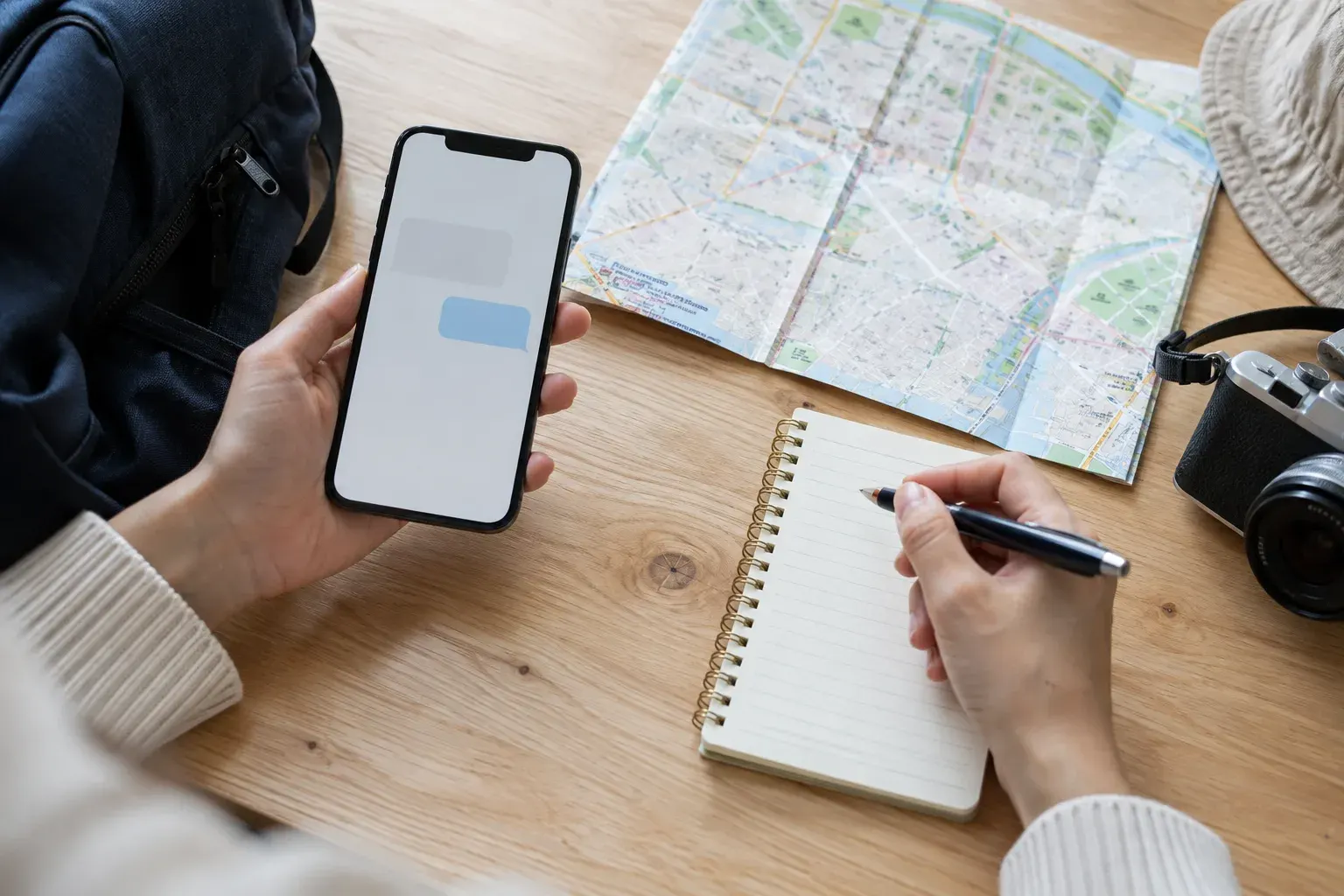
What should you save before flying?
Keep the accommodation's exact Japanese address, its name, arrival instructions and contact route in an offline folder. Add important reservations and the destination names you will need on the first day.
Do not depend on pronunciation alone. Showing a written address can resolve ambiguity that several attempts at saying a name cannot. Include the building and unit information where appropriate, while keeping access codes and private details protected.
Check how you will connect to the internet and what still works offline. A translation app is most useful when you understand its limits before you are standing at a checkout with a weak signal.
Which small phrases are worth learning?
“Sumimasen” — すみません — is a useful polite way to get someone's attention or apologise. Begin with it, then make one request at a time.
“Eigo de onegai dekimasu ka?” — 英語でお願いできますか? — asks whether English is possible. The answer may be no; be ready to show a short written message or use another method.
“Kādo wa tsukaemasu ka?” — カードは使えますか? — asks whether a card can be used. Confirm the payment options at the particular business rather than assuming one answer applies everywhere.
“Fukuro wa irimasen” — 袋はいりません — says that you do not need a bag. It is useful when you have brought a reusable one. Speak simply and follow the cashier's guidance.
“Mochikaeri de onegai shimasu” — 持ち帰りでお願いします — requests takeaway. “Koko de tabemasu” — ここで食べます — says you will eat there. These phrases help clarify your intention; the business's actual service and rules still apply.
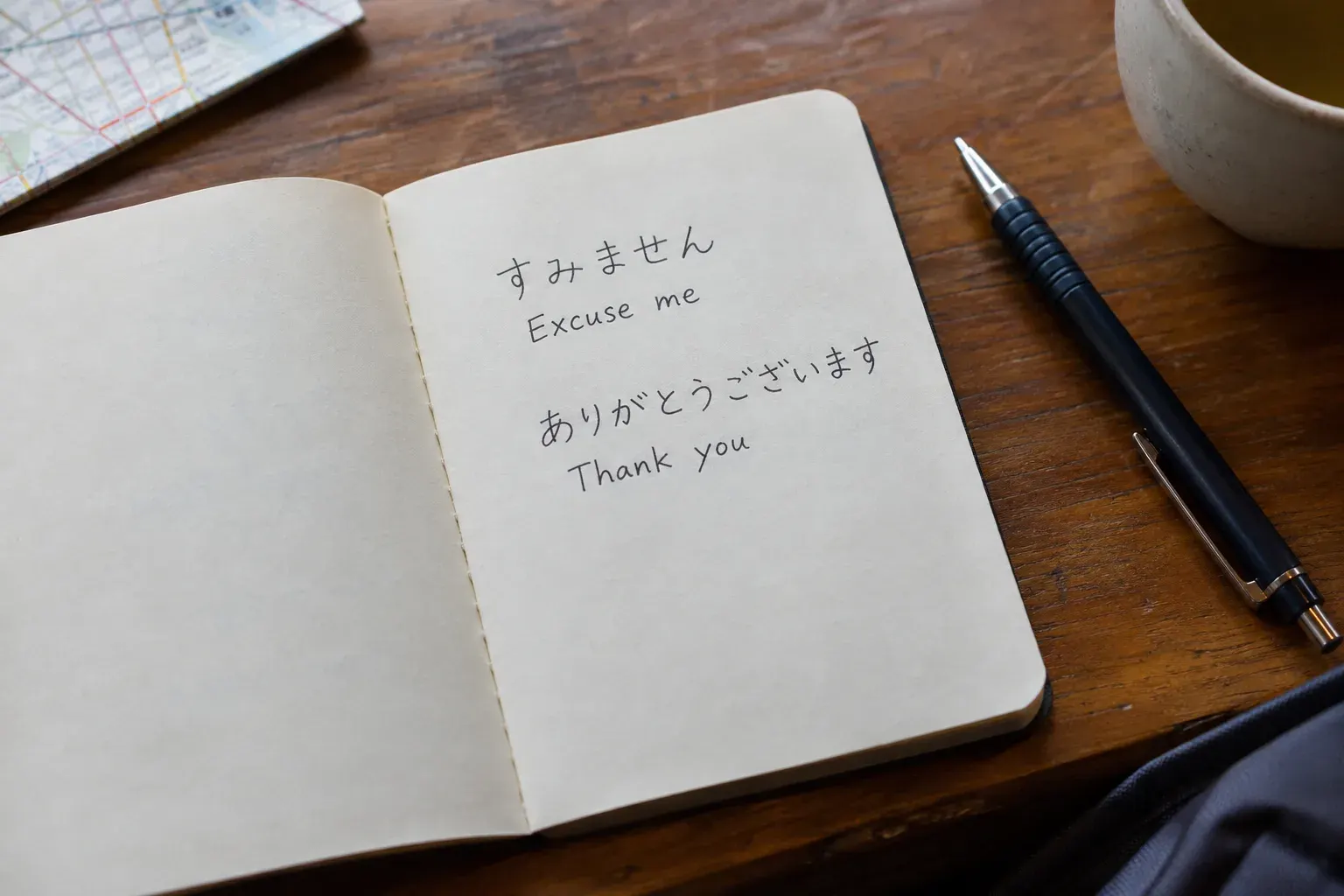
How do you ask a useful accommodation question?
Give the recipient enough context: booking number if you have one, property or room, dates and the specific issue. Ask one clear question rather than sending a paragraph that mixes several unrelated concerns.
For example: “I am considering this room for two adults from [check-in date] to [checkout date]. Please confirm the bed arrangement and whether any additional bedding charge applies.” Replace the bracketed details with your own information before sending.
A second example: “Please explain the washing and drying facilities in this specific room. Does the listing include a dryer, or should I plan another drying method?” This is more useful than asking whether laundry is available in general.
For arrival: “My flight arrives at [time] on [date]. Please confirm the check-in process and what I should do if arrival is delayed.” The accommodation can then address the situation rather than guessing what “late” means.
A short, specific question travels better than a long, vague one.
What can you do at the supermarket?
Start with products whose identity and instructions you can confirm. Locate quantity, final price, storage and dates. The Consumer Affairs Agency provides English resources on Japanese food labels that are useful to review before the first shop.
Translation tools can help you orient yourself, but scan the complete relevant panel. Small text, curved packaging and unfamiliar product names can produce errors. If you still do not understand what you would be buying, choose something clearer or ask staff.
Food allergies deserve reliable confirmation, not an inference from a photograph or a translated fragment. Use current official communication resources and check with the retailer or manufacturer as needed. A phrase card helps explain a question; it does not guarantee the answer.
LIFE — Arcakit Kinshicho
Arcakit Kinshicho B1F, 2-2-1 Kinshi, Sumida-ku, Tokyo, Japan
Open in Google Maps

How do you make transport questions easier?
Use the destination's written name and exact address, not only the attraction's English nickname. Check the route, line, direction and station exit before leaving. If asking for help, show the part you are uncertain about.
Kinshicho's Tokyo Metro station information is available through the operator's English site. Save the relevant information for your actual journey rather than assuming every entrance or transport service at the station is interchangeable.
Kinshicho Station — Tokyo Metro
3-14-6 Kotobashi, Sumida-ku, Tokyo, Japan
Open in Google Maps
Avoid building a tight arrival schedule around being able to solve every unfamiliar step immediately. A little time makes it easier to read signs, confirm a platform or ask a second question without feeling that the trip is already going wrong.
When is a translation app enough, and when should you stop?
It can be useful for ordinary orientation: understanding a sign, identifying a general product category or drafting a simple question. Check the result against context, and keep the original available.
For consequential matters such as allergies, medication, contracts, immigration or payment terms, obtain reliable confirmation through the appropriate source. A fluent-looking machine translation may omit a condition that changes the meaning.
Do not paste access codes, identity documents or sensitive booking information into unnecessary tools. Use the official channel for the task and share only what is needed. Clear communication includes protecting private details.
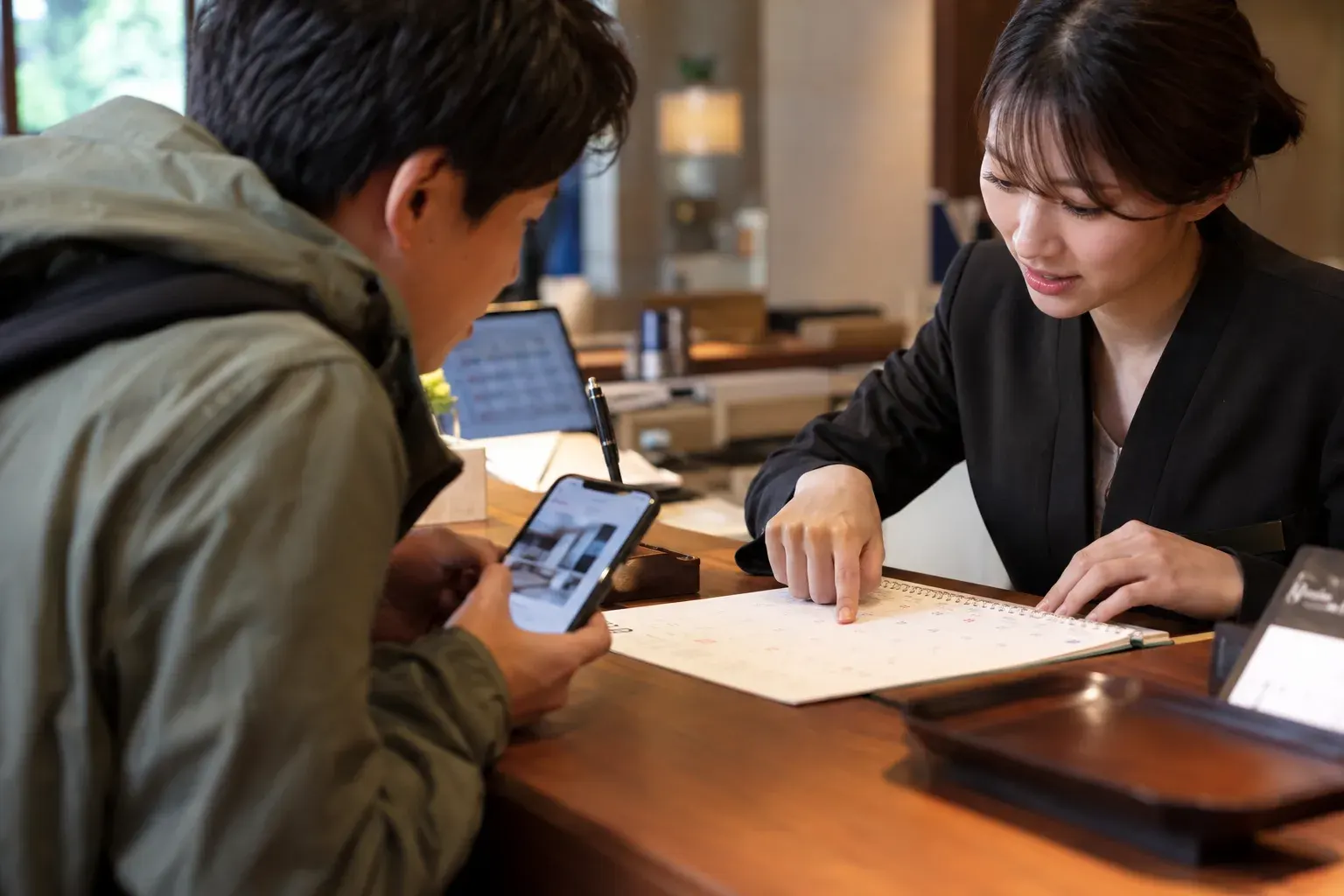
Does a multilingual website mean every service is available in every language?
Not necessarily. A translated interface, written support and in-person assistance are different services. Check the language, channel and availability of the help you actually need.
HIVEN provides multilingual public information and describes language support on its service pages. For a booking, confirm the specific assistance and contact route relevant to your stay. Do not assume every external shop, partner or activity shares the same language arrangements.
When something is agreed, keep the written confirmation alongside the booking. That is useful even when everyone speaks the same language; it reduces uncertainty about dates, equipment and expectations.
What can you learn naturally during the month?
Choose a few repeated situations. Learn the words on the washing-machine guide supplied for your room, the question you hear at a familiar checkout or the station name you use frequently. Repetition makes these more useful than memorising a large disconnected vocabulary list.
Be considerate when practising. A busy service interaction may not be the right place for an extended lesson. A short attempt, a clear request and patience can be more effective than trying to demonstrate everything you learned.
You may become more confident without becoming fluent. That is enough for this trip. The aim is to use the city thoughtfully and solve ordinary problems with less effort.
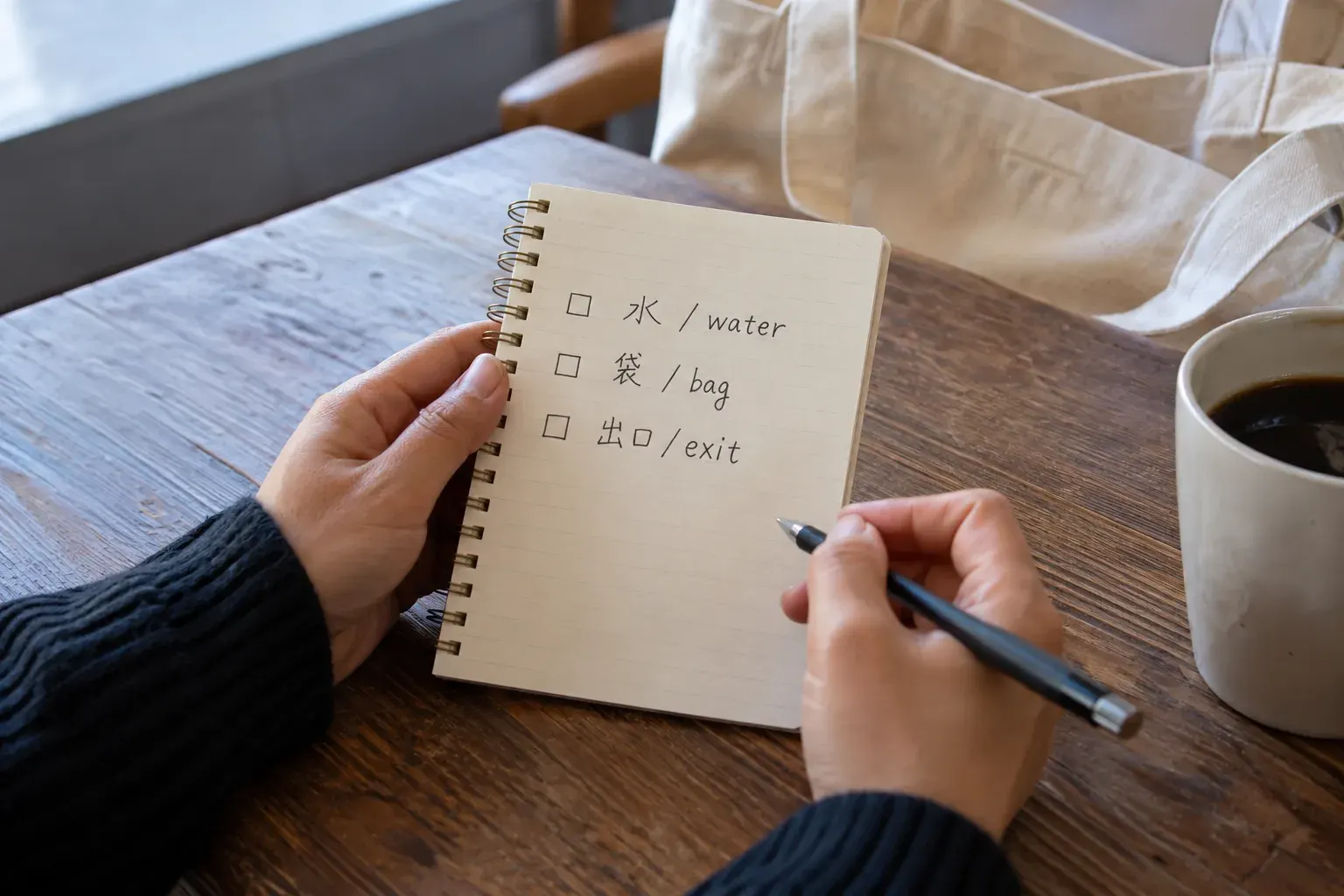
Where can you find official visitor assistance?
Save JNTO's Japan Visitor Hotline page and review its current languages, availability and scope. It is a useful official reference when preparing for travel, alongside your accommodation contact and insurance information.
Match the issue to the appropriate service. Visitor information, a room problem and an emergency are different situations. Do not assume one hotline or one host can replace all other support.
Preparing these details once can make the rest of the month feel less complicated. You can enjoy learning a little Japanese while knowing that the practical plan does not depend on suddenly becoming fluent.
Frequently asked questions
Must I speak Japanese to enjoy a month in Tokyo?
Fluency is not a prerequisite for planning a visit, but preparation helps. Language availability varies by business and situation, so have written information and backup methods.
Is English available everywhere?
No. Check individual services, classes and venues when English is essential. Do not treat a multilingual website as evidence about every interaction.
What is the most useful thing to keep offline?
Your exact accommodation address, arrival instructions, important reservations and essential contact information are good starting points.
Can I use translation software for all shopping?
It can assist with ordinary understanding, but confirm uncertain products and instructions. Allergies and other consequential questions need reliable information.
Should I write long messages to accommodation support?
Use enough detail to identify the booking and ask a specific question. Short, organised messages are usually easier to answer accurately.
Will the phrases in this guide cover an emergency?
No. They are everyday shopping and communication phrases. Prepare official emergency and assistance information separately.
How should I prepare if I am anxious about language?
Practise a few common situations, save useful written information and identify support before departure. Start with manageable outings and build confidence through repetition.
Sources and information check
[JNTO — planning a visit to Japan](https://www.japan.travel/en/plan/)
[JNTO — Japan Visitor Hotline](https://faq.japan-travel.jnto.go.jp/en/plan/hotline/)
[Consumer Affairs Agency — food labelling resources](https://www.caa.go.jp/en/policy/food_labeling/)
[Consumer Affairs Agency — current allergen labelling updates](https://www.caa.go.jp/policies/policy/food_labeling/food_sanitation/allergy/)
[HIVEN — booking and stay FAQ](https://www.hivenstay.com/faq)
[HIVEN — services and housekeeping](https://www.hivenstay.com/services)
[Tokyo Metro — Kinshicho Station and Hanzomon Line](https://www.tokyometro.jp/lang_en/station/kinshicho/index.html)
Information checked: 30 October 2026. Recheck time-sensitive details before publication and before booking or visiting, including prices, opening hours, transport, entry requirements and the selected room’s terms. Suggested routines and sample itineraries are editorial planning examples, not guest testimonials.


