Tokyo Short-Term Rentals: How to Choose for 1–3 Months
A two-week holiday and a two-month stay need different booking plans. Compare Tokyo short-term rental options by dates, contract, total cost and everyday comfort.

Written by Hive Heaven

To choose a Tokyo short-term rental, start with your exact dates and the type of stay you need. A brief holiday, a 29-night residence booking and a three-month relocation can lead to different accommodation options and terms. For a month or longer, compare furnished apartments, serviced apartments and monthly residences by full-stay cost, contract conditions and everyday usability.
If you need fewer than 29 nights, look for accommodation that explicitly accepts those dates. HIVEN’s current public Residence booking starts at 29 nights; its shorter Stay product is described as coming soon. This guide helps you decide what to search for before spending an evening comparing rooms you cannot actually book.

What does “short-term rental” mean for your trip?
People use the phrase for very different plans: a few nights in an apartment, a month of travel, a temporary base before moving into a permanent home or accommodation during a work project. Search results can mix these needs together.
Write your requirement in one sentence: “We need a private furnished place for two people from this date to that date, with cooking and laundry facilities.” Then add the most important destination, such as an office or school. That is a clearer booking brief than “short term in Tokyo.”
Treat accommodation names as starting points. The listing and agreement should tell you the minimum stay, permitted occupants, contract arrangement and included services. A 30-night booking alone does not establish what legal or contractual category an accommodation belongs to.
How should you search for fewer than 29 nights?
For a shorter holiday, start with hotels, apartment hotels or other accommodation that openly accepts your exact dates. If you want an apartment setting, check the cooking, laundry and sleeping arrangements of the actual listing. A photograph of a kitchen does not establish the full inventory.
Read the arrival and departure process, cancellation conditions and any mandatory cleaning charges before comparing totals. For a short visit, an expensive transfer or inconvenient handover can matter as much as a small difference in nightly price.
For private lodging, use legitimate operators and check the applicable listing and registration information. Japan’s official private-lodging portal explains several regulatory routes; “minpaku” is not one universal booking model. Use that official guidance if you need to understand the accommodation category.
What changes when you stay for one to three months?
You begin using the place differently. Groceries occupy the fridge, clothes need washing and the trip develops a routine. A furnished apartment or monthly residence becomes worth comparing because the room has to support ordinary life as well as sleep.
The booking questions also become more important. When are payments due? Can you extend? What happens if you leave early? Are bills included for the full stay? Ask these before choosing a room based on the lowest displayed monthly figure.
A short-term rental should fit the dates on your calendar and the life between them.

Which accommodation style should be on your shortlist?
A hotel or apartment hotel is worth checking when arrival logistics and a stated level of service are your priorities. Confirm room facilities and any long-stay rate; do not assume a kitchen, laundry or daily cleaning from the category name.
A serviced apartment is worth checking when you want an apartment layout with a defined service package. Ask what is serviced, how often and at what cost. The answer may range from limited support to more frequent housekeeping.
A furnished monthly apartment or residence is worth checking when you want a base for several weeks and are comfortable managing some everyday routines. Compare equipment, billing, contract requirements and support. If you are still weighing the labels, read monthly mansion versus serviced apartment (https://www.hivenstay.com/guides/tips/monthly-mansion-vs-serviced-apartment-tokyo).
A sharehouse or room in a shared property may be worth considering if shared facilities suit your preferences. Clarify which spaces are private, who uses the kitchen and bathroom, and what the guest rules allow. It is a different living arrangement from an entire private apartment.
How do you compare the real cost of a Tokyo short-term rental?
Request the total compulsory amount for the same dates and number of guests. Include accommodation, mandatory cleaning, utilities, internet, applicable taxes and any required administration charges. Put optional extras on a separate list.
Use the full stay total as your first comparison. If you calculate an average nightly amount, divide by the actual number of nights. A monthly headline rate multiplied by an assumed number of months may miss partial periods or the provider’s billing rules.
Record refundable deposits and card authorisations separately from final expenses. Ask which currency is charged and check any conversion or card fees with your payment provider. An exchange-rate estimate is useful for planning but is not the final amount shown on a future statement.
A worthwhile comparison also includes what the space lets you do. If you intend to cook and wash clothes, verify those facilities rather than assuming every apartment will reduce your living costs.
Can you arrange the booking before arriving in Japan?
Start by checking the provider’s process for overseas inquiries, identity verification and payment. Request the exact property or agreed room category, the agreement, the full cost and the arrival instructions before treating a booking as settled.
Keep the provider’s contact details and confirmation accessible while travelling. If arrival is late, ask how access works and what happens if the flight changes. Avoid leaving a key handover question until you are at the airport.
HIVEN advertises online contracting for its Residence offering. Use the available dates and listing requirements to assess your booking; approval of every applicant or every request should not be assumed. For a company-arranged stay, send the employer’s documentation requirements through the corporate inquiry (https://www.hivenstay.com/corporate).

How should you choose the neighbourhood?
Choose two or three places you will visit repeatedly and test the routes from each candidate building. Include walking and transfers, not only time on the train. Then consider groceries, an evening meal and how the neighbourhood feels for your own routine.
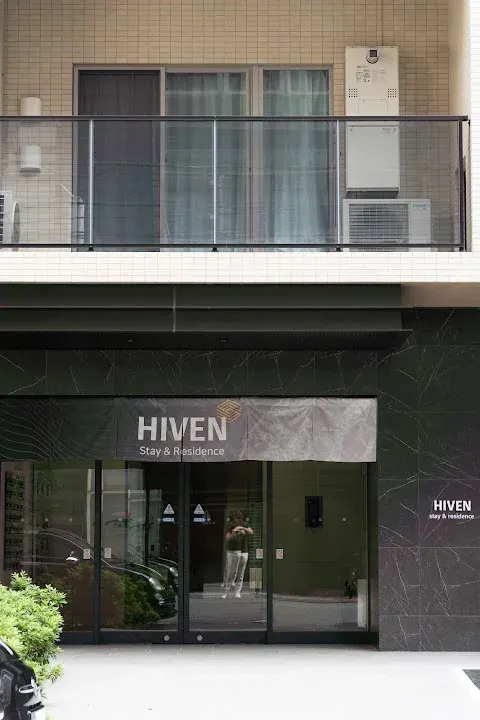
For HIVEN, the relevant base is Kinshicho in Sumida City. Tokyo Metro lists Kinshicho on the Hanzomon Line and provides journey-planning information. Check the complete route to your actual destination instead of treating an east-Tokyo address as universally convenient or inconvenient.
HIVEN Stay & Residence · Kinshicho BK
4-6-4 Kotobashi, Sumida City, Tokyo 130-0022, Japan
Open in Google Maps
A month gives you room to explore beyond your base, but it also means repeating the trip home many times. That makes a practical daily route a better decision tool than trying to stay nearest to every attraction.
What if you need to extend—or leave early?
Ask about extensions while the first booking is still a proposal. Find out when to request one, whether staying in the same room is possible and how the new price would be confirmed. Availability can change; an intention to extend is not a reservation.
For early departure, read the actual notice and cancellation provisions. Do not assume paying monthly means you can leave at any time without further charges. Keep any agreed change in writing.
If you are booking temporary housing while finding a permanent home, allow for the handover between the two. Avoid committing to an unconfirmed departure date solely because another property is expected to become available.
When is HIVEN worth considering?
Put HIVEN on your shortlist if your dates meet the current 29-night minimum and you want a furnished residence in Kinshicho. The next step is to check an available room against your occupancy, daily routine and total budget—not to assume every room or service fits every traveller.
For fewer than 29 nights, use a provider that currently accepts the shorter stay. The minimum is HIVEN’s present product condition, not a claim that all Tokyo rentals share the same rule.
Frequently asked questions
Can I rent an apartment in Tokyo for just one month?
Some providers offer stays around one month. Minimum nights, documentation and service levels vary, so search with exact dates. HIVEN’s current Residence minimum is 29 nights.
Is a 30-night booking automatically a residential lease?
Do not infer the contract or regulatory category from the number of nights alone. Read the agreement and ask the operator which arrangement applies. Use official guidance for legal questions about the accommodation.
Can tourists book furnished accommodation?
Check the selected provider’s guest and identity requirements. An accommodation booking does not itself determine entry eligibility, permitted activities or length of stay in Japan. Confirm those separately with the appropriate official sources.
Does HIVEN currently offer one- or two-week stays?
The current FAQ describes the 1–28-night Stay product as coming soon, while public Residence bookings start at 29 nights. Recheck the booking page if your plan is for a shorter visit.
Are Tokyo short-term rental prices all inclusive?
Do not assume so. Request the full compulsory charge for your exact dates, plus any usage limits, mandatory cleaning and deposit conditions. Compare optional services separately.
Can I book for a month and decide later whether to stay longer?
You can ask about that plan, but do not count on an extension until availability, dates and price are confirmed. The same room may not remain available.
Should I choose an apartment instead of a hotel?
Base the decision on the actual room and service offer. Cooking, laundry, storage and a longer daily routine may make an apartment appealing; arrival arrangements or a particular service schedule may make another option fit better.
Ready to plan your Tokyo dates?
For 29 nights or more, check HIVEN’s current residence availability (https://www.hivenstay.com/) with your exact dates and number of guests. For an assignment or relocation, send a corporate housing inquiry (https://www.hivenstay.com/corporate) with the workplace and billing requirements.
Related HIVEN guides
what a serviced apartment includes — https://www.hivenstay.com/guides/tips/tokyo-serviced-apartment-inclusions-service-scope
booking before arrival — https://www.hivenstay.com/guides/tips/book-tokyo-monthly-apartment-before-arrival
comparing the full monthly apartment cost — https://www.hivenstay.com/guides/tips/tokyo-monthly-apartment-cost-compare-quotes
Sources and information check
Information checked: 3 November 2026. Recheck current availability, prices, service scope, minimum stays and booking terms before publication and booking. Any worked cost examples and planning scenarios are illustrative, not market prices or guest testimonials.
HIVEN Residence overview — https://www.hivenstay.com/
booking FAQ and minimum stays — https://www.hivenstay.com/faq
corporate inquiries — https://www.hivenstay.com/corporate
Japan Tourism Agency: private lodging overview — https://www.mlit.go.jp/kankocho/minpaku/overview/minpaku/index_en.html
Tokyo Metro: Kinshicho Station — https://www.tokyometro.jp/lang_en/station/kinshicho/index.html


