Relocating Employees to Tokyo: HR Checklist Before Arrival
An HR relocation checklist for employees moving to Tokyo, covering housing, arrival, billing, commute, communication, official resources and day-one readiness.

Written by Hive Heaven

Relocating an employee to Tokyo is easier when HR owns the coordination points and the employee owns the personal actions. Before arrival, the company should be able to answer five questions: Where will the employee live? How will they get to work? Who pays and receives invoices? What must the employee do after arrival? Who helps if something goes wrong?
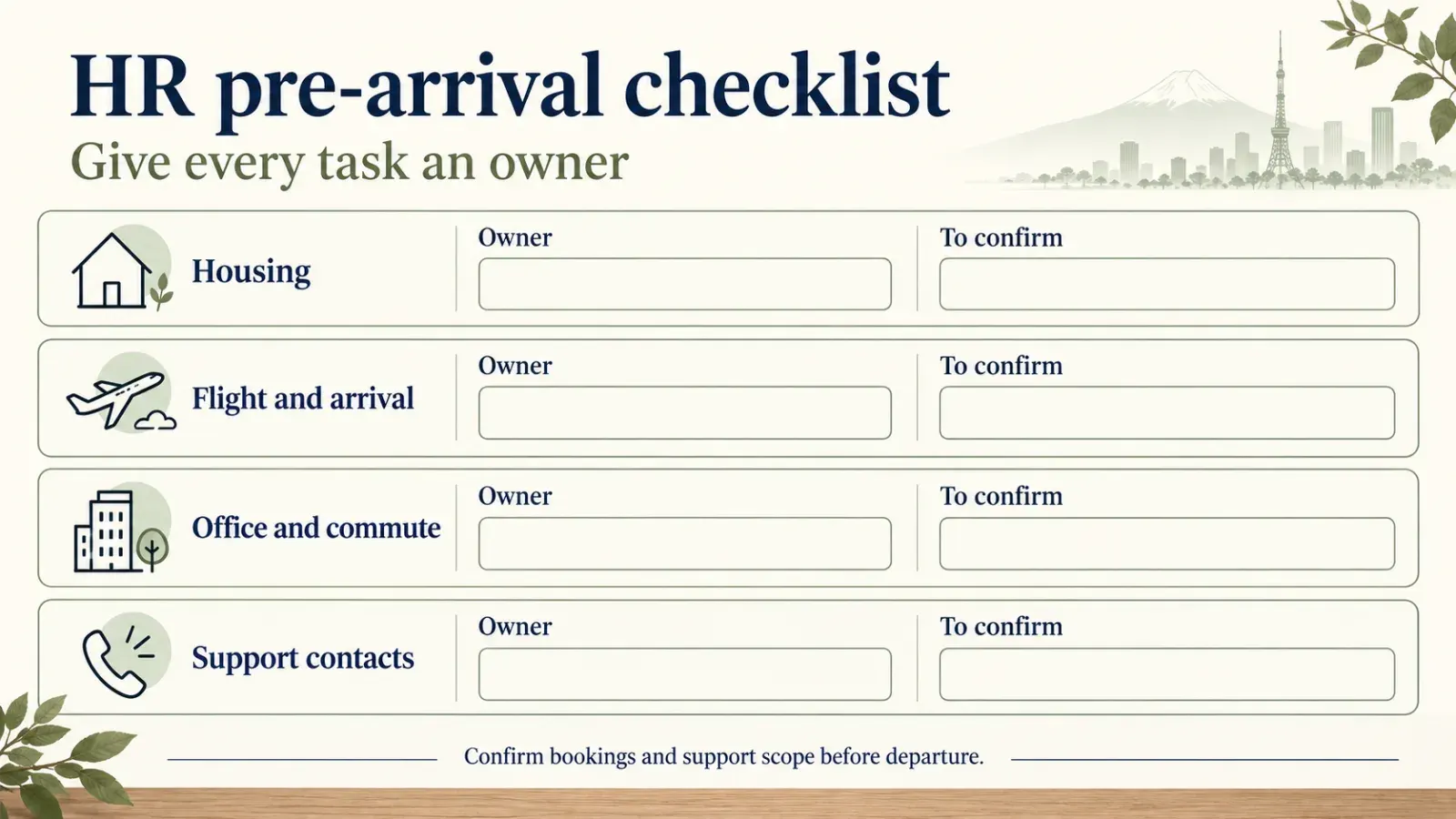
What should HR confirm 30–60 days before arrival?
Confirm assignment dates, office location, employee and family composition, housing budget, billing owner and the level of relocation support. Start housing comparison with the commute and everyday functionality, not only room appearance.
If a provider will support several employees, decide whether HR wants one corporate contact and a standardized reporting format.
What belongs in the employee handover pack?
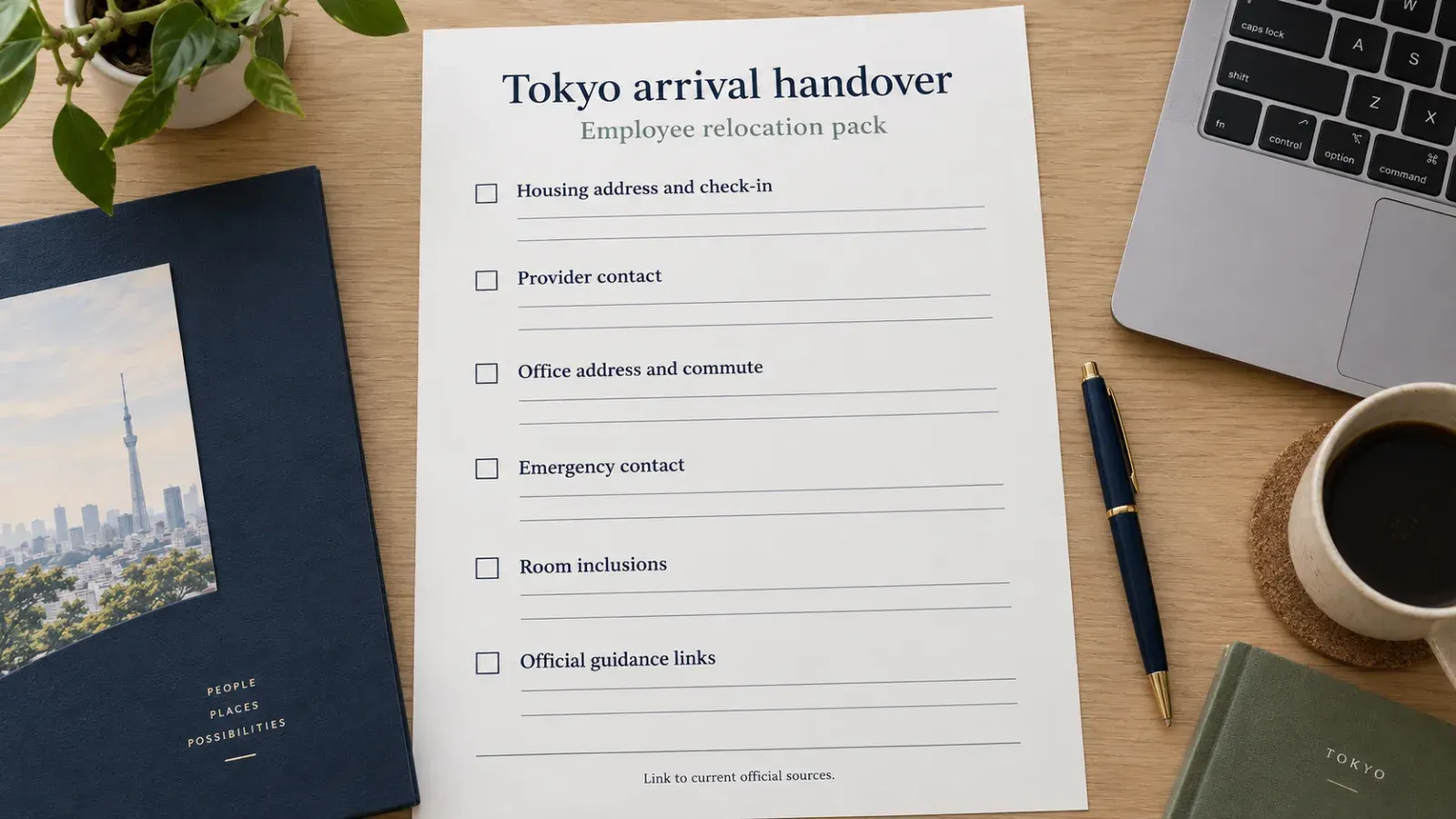
Include housing address, check-in instructions, provider contact, office address, commute notes, emergency contact, what is included in the room and links to official government guidance for procedures that may apply after arrival.
Do not rewrite immigration or banking rules from memory. Link employees to the current Immigration Services Agency, municipal and Financial Services Agency resources.
How should HR handle billing and approvals?
Identify who signs, who approves, what documents accounting needs, payment timing, deposit handling and whether extensions require a new approval. This avoids last-minute email chains after the employee has already moved in.
Keep housing cost and employee expense policy separate. Employees should know which housing items are company-paid and which daily-life purchases are personal.
What should be confirmed one week before arrival?
Reconfirm the stay dates, guest name, move-in method, contact details, active Wi-Fi, essential room features and the first-office-day plan. If airport transport or any arrival service is being used, verify the exact booking rather than assuming it is included.
Also make sure the employee has a first-day connectivity plan and knows what to do if arrival is delayed.
The best HR relocation checklist is not the longest one. It is the one where every item has an owner.
What should HR do after arrival?
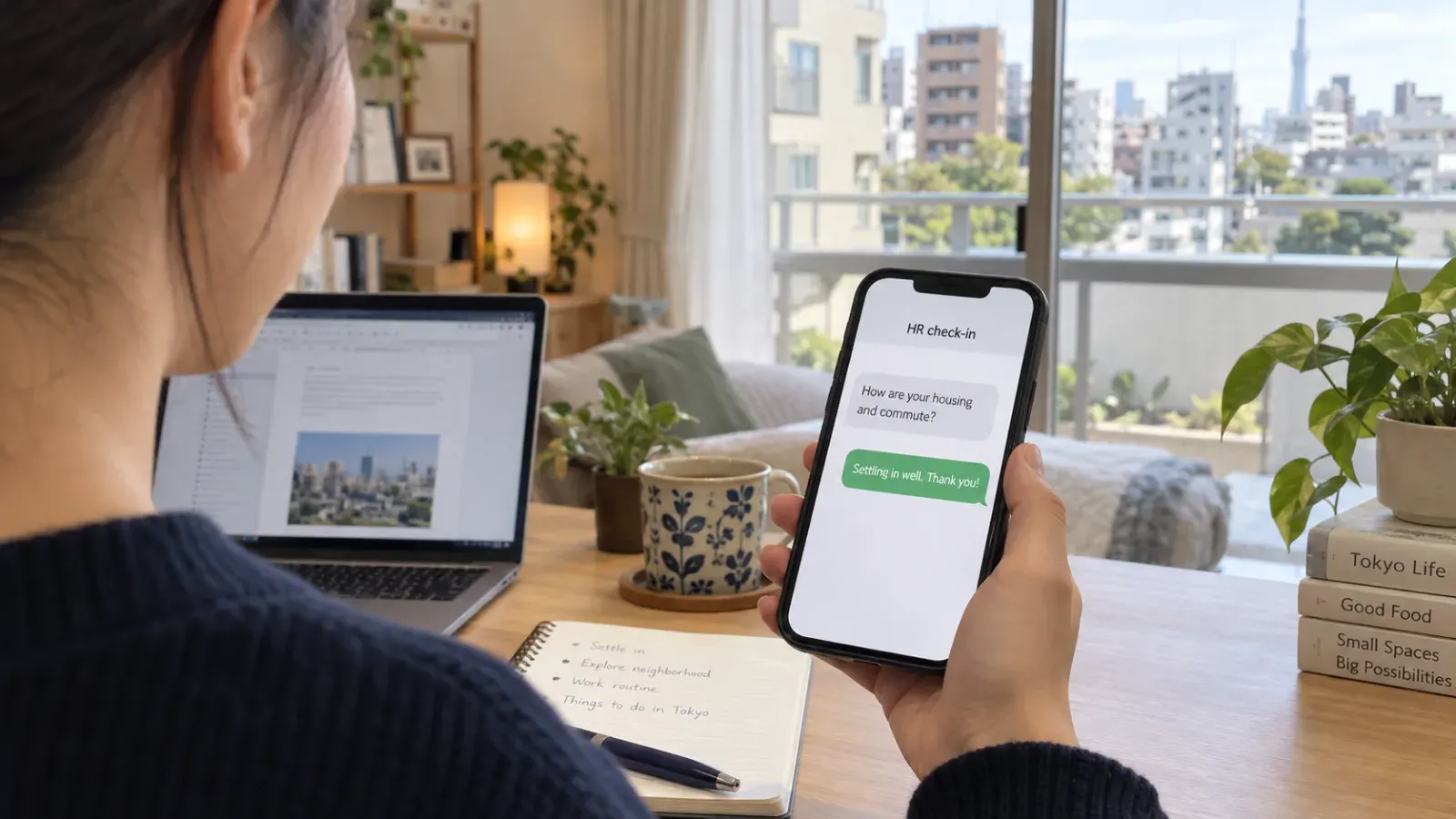
Check in briefly after the first few days and again around day 30. Ask about housing, commute, support responsiveness and any expected change in assignment length.
This creates a feedback loop for future assignees and helps HR improve preferred housing criteria over time.
How can HIVEN support HR-led relocation?
HIVEN’s Corporate page describes long-stay housing for relocating teams and corporate guests in Tokyo, including team relocation, curated proposals from HIVEN residences, bilingual support from inquiry to move-in, and corporate terms with flexible billing. Public residence information also emphasizes 29+ night stays, furnished living and practical long-stay features.
HIVEN’s corporate positioning is built around coordinating housing for team assignments, short-to-mid-term projects and leadership stays. The exact proposal, billing and support scope should be agreed for each company and booking.
Related HIVEN Guides
Read “Tokyo Housing for Assignees: What HR Teams Should Check Before Booking” and “From Airport to Move-In: A Smooth Arrival Plan for Tokyo Assignees.”
FAQ
What should HR own in a relocation?
Typically the coordination points: housing approval, billing, provider communication, assignment dates and internal contacts. Personal official procedures remain employee-specific.
Should HR give legal or immigration instructions?
HR can provide official links and company support, but status-specific immigration advice should come from the appropriate official or qualified source.
When should HR follow up after arrival?
A brief first-week check and a day-30 review are useful practical checkpoints.
What should be standardized for multiple assignees?
Housing criteria, billing fields, handover documents, support contacts and feedback questions are good candidates.
Sources
Information checked: September 20, 2026. HIVEN Corporate: https://www.hivenstay.com/corporate HIVEN Official Website: https://www.hivenstay.com/ Immigration Services Agency of Japan — Guidance for New Arrivals: https://www.moj.go.jp/isa/support/guidance/ Immigration Services Agency of Japan — Daily Life Support Portal: https://www.moj.go.jp/isa/support/portal/ Financial Services Agency — Living in Japan: How to Open a Bank Account and Send Money: https://www.fsa.go.jp/en/user/livinginjapan.html Administrative procedures, transport conditions, pricing and corporate terms can change. Recheck current official information before publication and before an employee takes action.