Asakusa After the First Photo
A slower Asakusa day from HIVEN: arrive by transit, look from above, pass through Kaminarimon without rushing, visit Senso-ji with time, and end beside the Sumida River.

Written by Hive Heaven

Asakusa is easy to visit badly. Arrive, take the photo at Kaminarimon, move with the crowd through Nakamise, glance at Senso-ji, buy something sweet, leave tired. That version is not wrong. It is simply too fast. From HIVEN in Kinshicho, Asakusa deserves a different pace. It is close enough to visit without treating the day as a major expedition, but distinct enough to feel like a shift in Tokyo’s texture. The route can begin with transit, open toward the river, rise briefly above the streets, then move slowly through the places everyone knows how to photograph. The point is not to avoid the famous view. Take the first photo. Then stay long enough for Asakusa to become more than that.
Begin Across the River
Leave HIVEN after the morning rush has softened. At Kinshicho Station, use the journey as a transition rather than a race. Tokyo Metro lists Kinshicho as a Hanzomon Line station, and Tobu Railway identifies Asakusa as a Tobu Skytree Line station with transfers to Tokyo Metro and Toei Subway lines. The exact route can change with weather, timing, and your transit app. That is fine. For this article, the important editorial choice is not the fastest connection. It is how you enter Asakusa. If the day is clear, approach from the Sumida side. Let Tokyo Skytree appear behind you or beside you. Let the river make space before the district narrows into gates, shops, lanterns, and temple buildings. A short trip often treats Asakusa as a single point on a map. A longer stay lets you arrive by degrees.
Look First, Then Enter
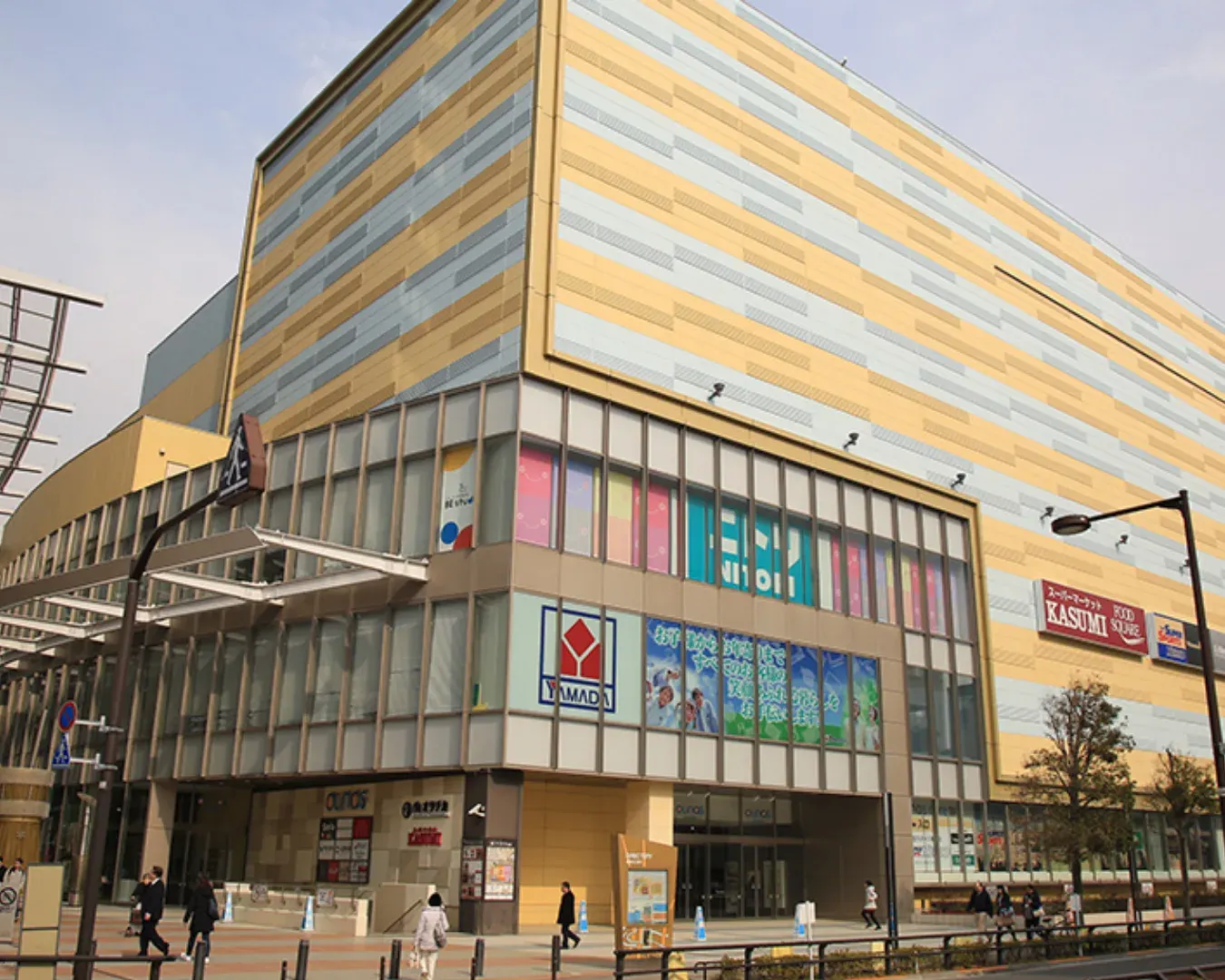
Before walking into the crowd, go up. The Asakusa Culture Tourist Information Center sits directly across from Kaminarimon, and the official facility information lists free admission, multilingual tourist support, and opening hours from 9:00 to 20:00. Its observation terrace closes later, at 22:00. This is the best first stop because it changes the scale of the district. From above, Kaminarimon becomes an entrance rather than a background. Nakamise becomes a line. Senso-ji becomes the reason the line exists. People move in currents rather than crowds. Spend a few minutes here before joining the street below. It is easier to walk slowly through Asakusa once you have seen how the pieces fit together.
ASAKUSA CULTURE TOURIST INFORMATION CENTER
2-18-9 Kaminarimon, Taito City, Tokyo 111-0034
Open in Google Maps
Pass Through the First Photo
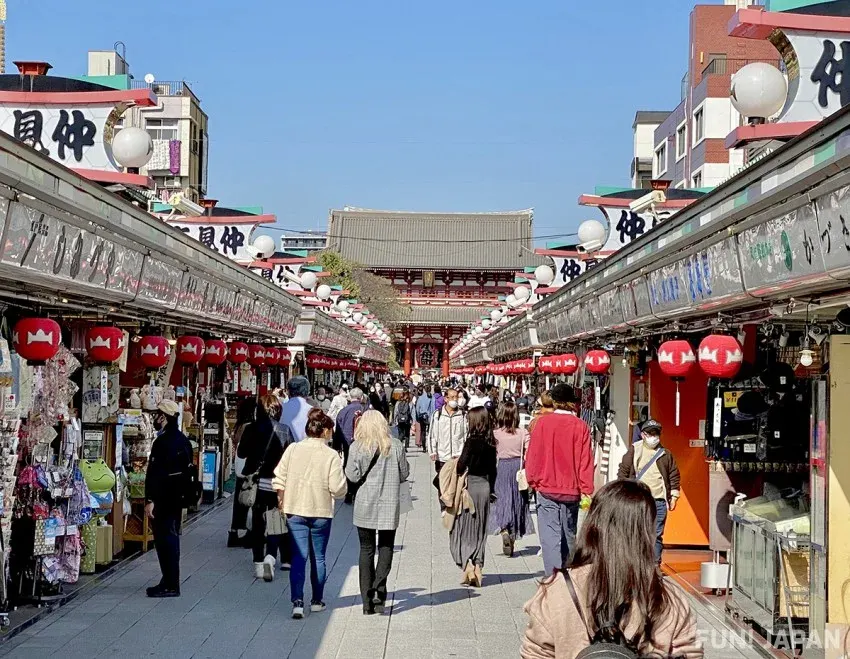
Kaminarimon is not a place to pretend you have discovered alone. It is the first image of Asakusa for a reason. The lantern, the gate, the meeting point, the photographs, the waiting, the little negotiations of space—all of it belongs to the experience. Take the photo. Then put the phone away for the first half of Nakamise. GO TOKYO describes Nakamise as the roughly 250-meter shopping avenue leading from Kaminarimon to Hozomon, lined with about 90 stalls selling souvenirs, traditional goods, and snacks. Opening hours vary by shop, so the street feels different in late morning, late afternoon, and after many shutters come down. Walk it once without trying to buy your way through it. Notice the rhythm of the roofs, the distance between the gate and the temple, the side alleys opening and closing. Asakusa is often treated as spectacle, but its best details appear when you stop demanding that every step produce a souvenir.
“The first photo proves you arrived. The rest of the walk decides whether the place stays with you.”
Give Senso-ji Enough Time
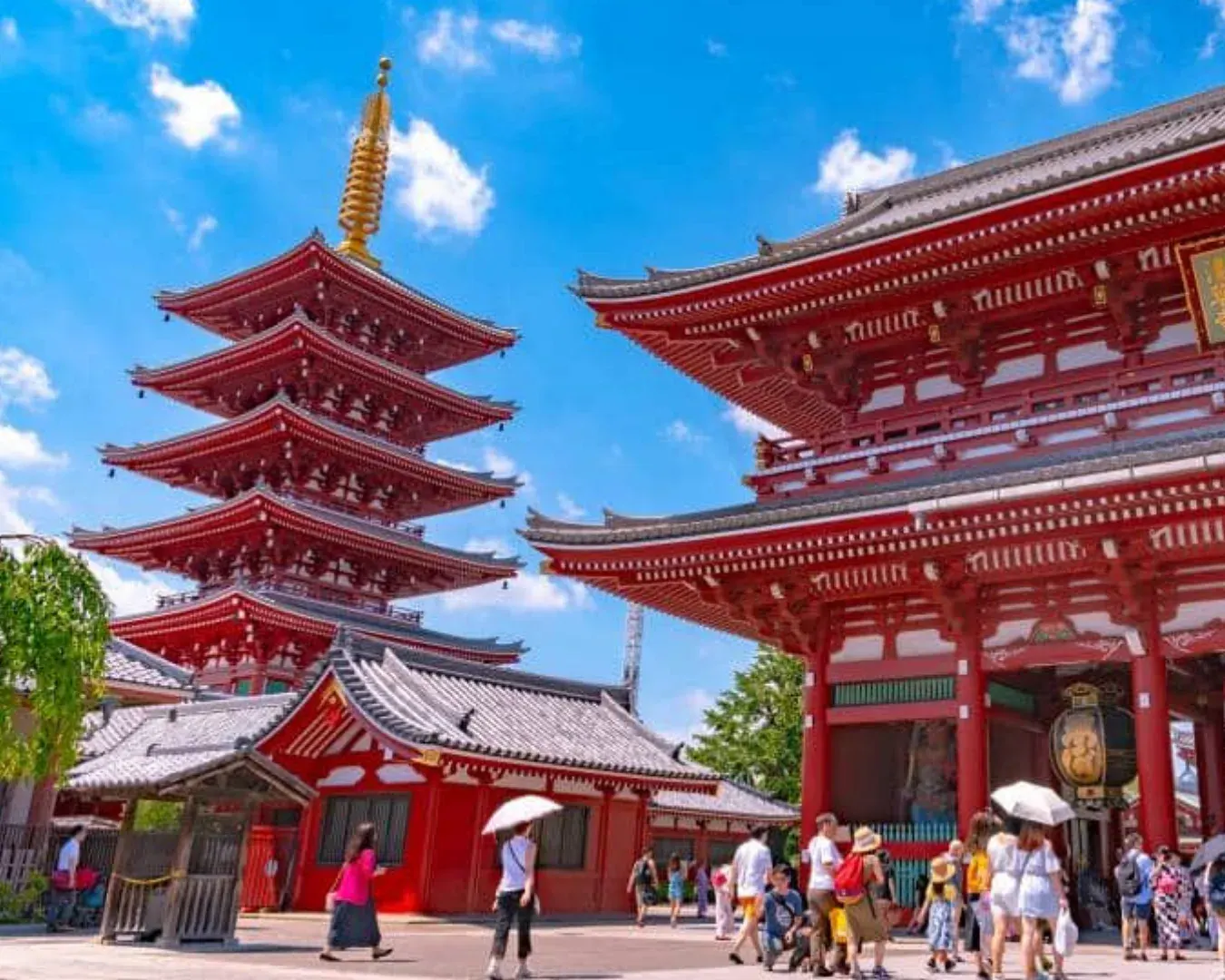
Senso-ji is not the end of the street. It is the reason the street has been pulling you forward. The official temple site lists the address as 2-3-1 Asakusa and states that the main hall is open from 6:00 to 17:00, with opening at 6:30 from October through March. If you want to enter the main hall, build the day around that window. But time here is not only about access. Stand back before approaching. Watch the incense smoke move. Let people pass. Notice the relationship between the main hall, the pagoda, the gates, and the open space that keeps the crowd from becoming only a crowd. If you are staying in Tokyo longer, you do not have to make this visit complete. You can return in the morning another day. You can come at night for the light-up, which the official temple information says runs daily from sunset to around 23:00 for the main hall, five-story pagoda, Hozomon, and Kaminarimon. That possibility changes the pressure of the visit. Today does not need to contain all of Asakusa.
SENSO-JI TEMPLE
2-3-1 Asakusa, Taito City, Tokyo 111-0032
Open in Google Maps
Let Lunch Stay Simple
Do not make lunch the main event unless you want it to be. Asakusa has enough food choices to turn hunger into research. For a first slow day, choose something close and low-friction. Asakusa EKIMISE is directly connected to Tobu Asakusa Station, and Tobu’s official page lists shops from 10:00 to 20:00, with the restaurant floor from 11:00 to 22:00. The useful part is not only the meal. The rooftop Hare Terrace gives you another view of Tokyo Skytree over the Sumida River. Tobu’s page describes the rooftop as a place to photograph Skytree, and public listings commonly note the rooftop’s 10:00–20:00 hours. After the density of Nakamise and Senso-ji, a station building may sound ordinary. That is why it works. Sit down, eat something practical, look back toward the river, and let the day become manageable again.
ASAKUSA EKIMISE / HARE TERRACE
1-4-1 Hanakawado, Taito City, Tokyo 111-0033
Open in Google Maps
Leave by the Water
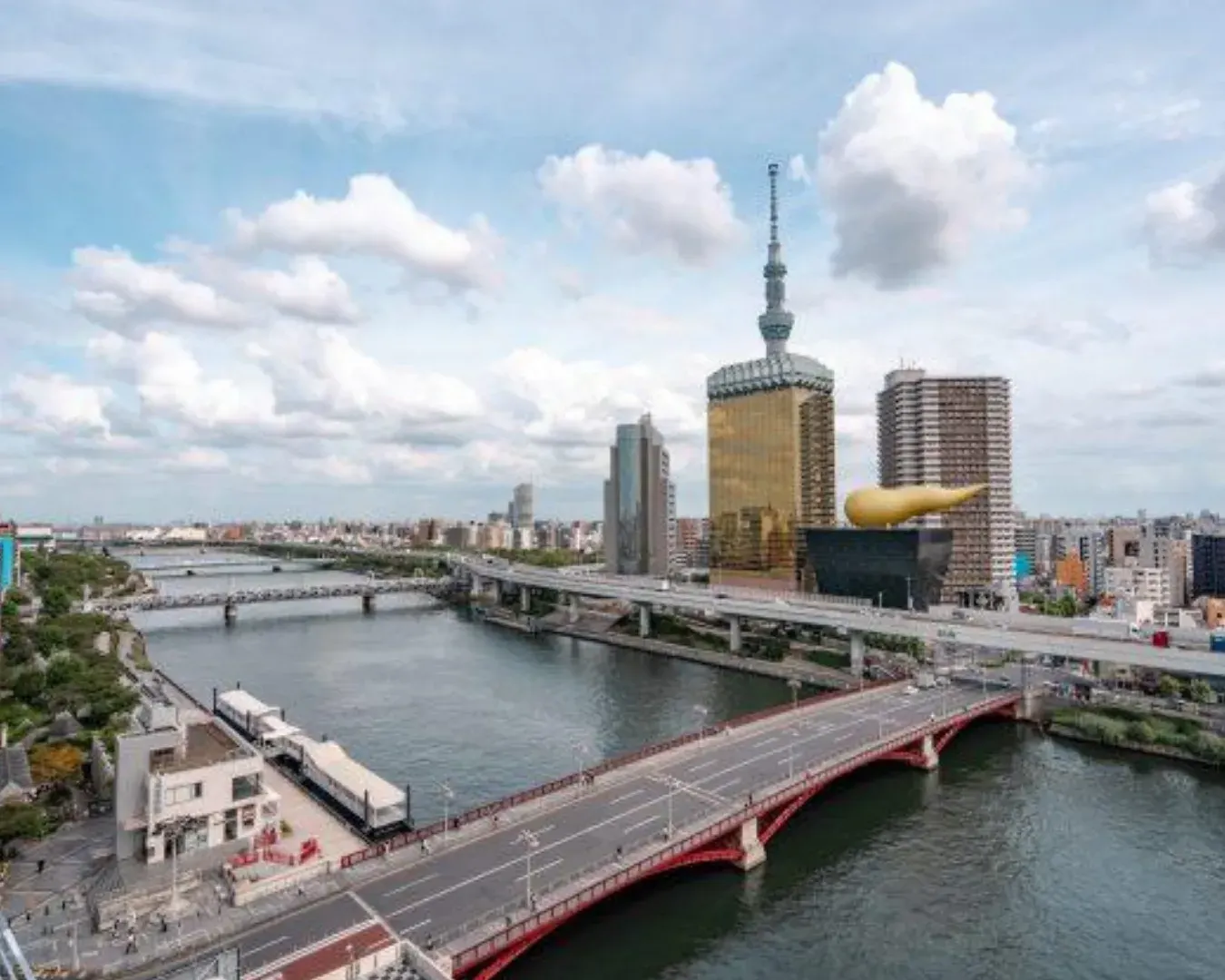
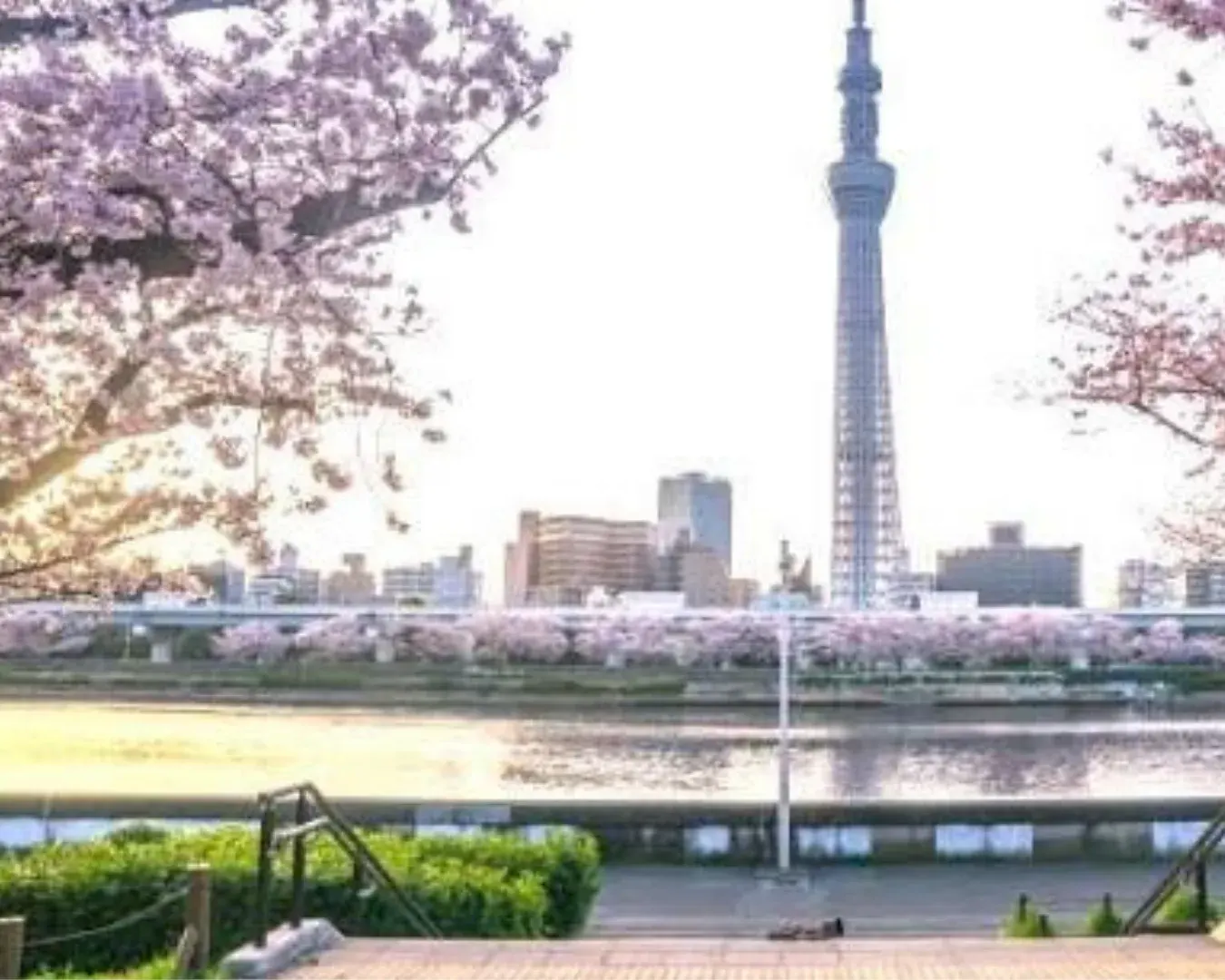
End the day beside the Sumida River. This is where Asakusa loosens again. Sumida Park on the Taito side is listed by GO TOKYO as an Asakusa waterfront spot, and public tourist information places it near Asakusa Station with access from the Tobu Skytree Line and Tokyo Metro Ginza Line. Walk without needing a destination. Bridges, riverboats, traffic, the Asahi Beer Hall, apartment windows, and Tokyo Skytree all sit in the same view. The river does not make Asakusa quieter exactly. It makes it wider. This is a good place to decide whether to go home or stay for the light-up. If you return now, Asakusa remains a complete afternoon. If you stay, the district changes again: shutters close, lanterns glow, and the first photograph of the day becomes less important than the route you made after it.
SUMIDA PARK. ASAKUSA RIVERSIDE
Around 7-1 Asakusa and 1-1 Hanakawado, Taito City, Tokyo
Open in Google Maps
“A place becomes easier to love when you do not ask one visit to contain all of it.”
Make Asakusa Repeatable
Go home before the day turns into proof. You have seen enough for one visit: the route from above, the gate, the approach, the temple, the station roof, the river. Asakusa does not need to be solved today. That is one of the quiet benefits of staying in Tokyo longer. You can return for an early morning at Senso-ji. You can come back at night for the light-up. You can skip Nakamise next time and walk the side streets first. You can bring someone to the terrace and show them the route before walking it. The first Asakusa visit is often about recognition. The second can be about rhythm. Back at HIVEN, Asakusa is no longer just a famous name on the map. It has become a route you know how to begin, pause, widen, and leave. That is enough. The rest can wait for another ordinary day.