One Train to Tokyo Station, Then Walk Slowly
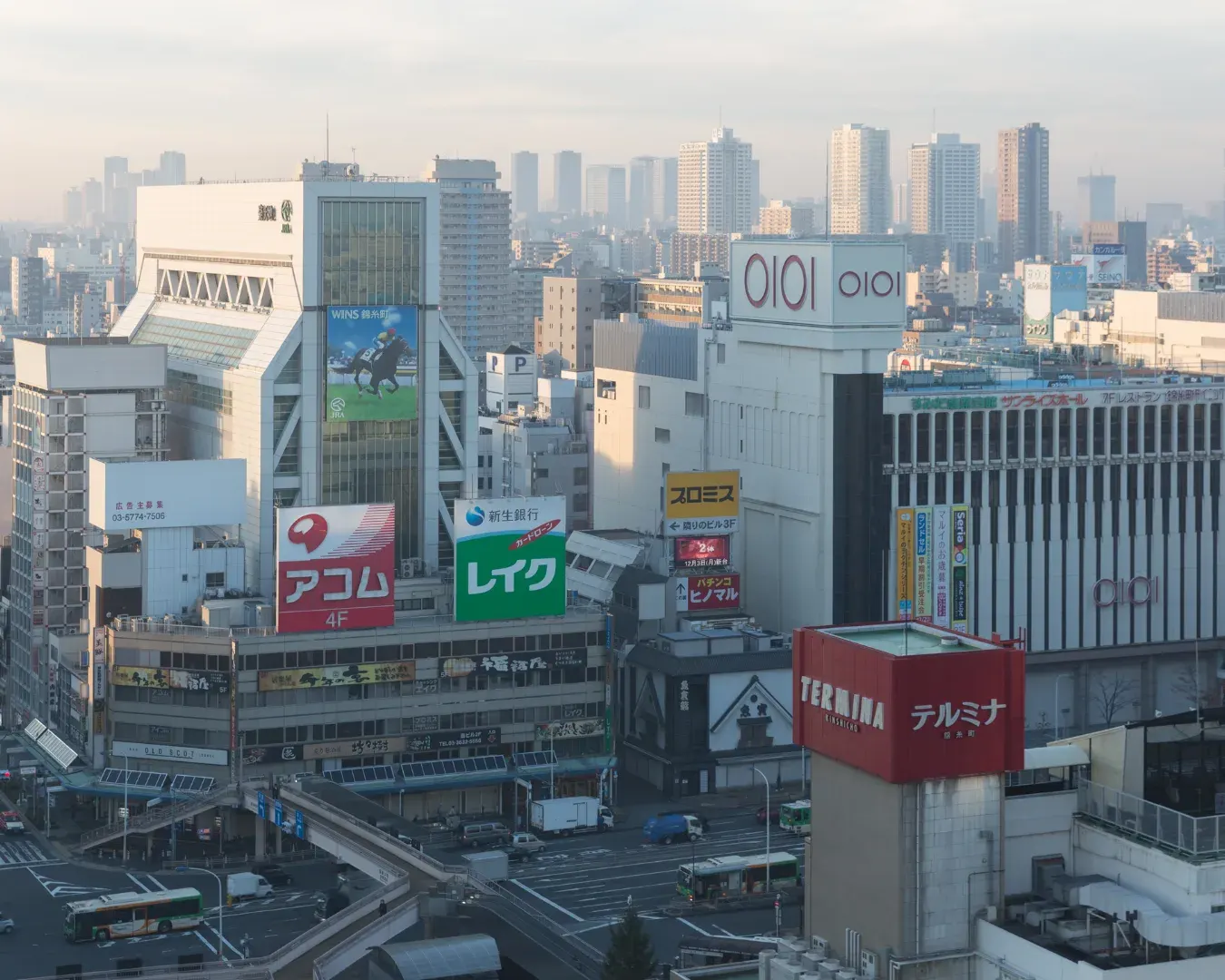
From Kinshicho, Tokyo Station is close enough for an unhurried city walk: red brick, Marunouchi streets, a rooftop view, the Imperial Palace edge, and an optional drift toward Nihonbashi.

Written by Hive Heaven
Tokyo Station is not far enough from Kinshicho to require a special occasion. That is the useful part. From HIVEN, the day can begin without drama: walk to Kinshicho Station, take one direct train toward Tokyo, and arrive in the city’s formal center before the journey has had time to feel like a trip. JR East lists the Sobu Line Rapid from Kinshicho in the Tokyo inbound direction, which makes the route simple enough to repeat. But the point of this day is not efficiency. The point is what happens after the easy arrival. Tokyo Station, Marunouchi, the Imperial Palace edge, and Nihonbashi can all become a fast central-Tokyo checklist. They can also become something better: a slow walk through the city’s public face, from brick and steel to trees, moats, office streets, and an old bridge where distances once began. A longer stay lets you choose the second version.
The Useful Luxury of One Train
The best day trips from a long-stay base are often the ones that ask for very little at the beginning. No complicated transfer. No early start. No pressure to make the whole city fit into a single route. Leave HIVEN with a small bag, not a full itinerary. At Kinshicho Station, take the Sobu Line Rapid toward Tokyo. The directness matters because it changes the mood of the day. You are not crossing Tokyo as a tourist trying to reach the center. You are using the city the way people who live here use it: one familiar station, one train, one clear arrival. When you reach Tokyo Station, resist the underground pull of the station complex. Go outside. The Marunouchi side is where the day should begin.
Start With the Red Brick
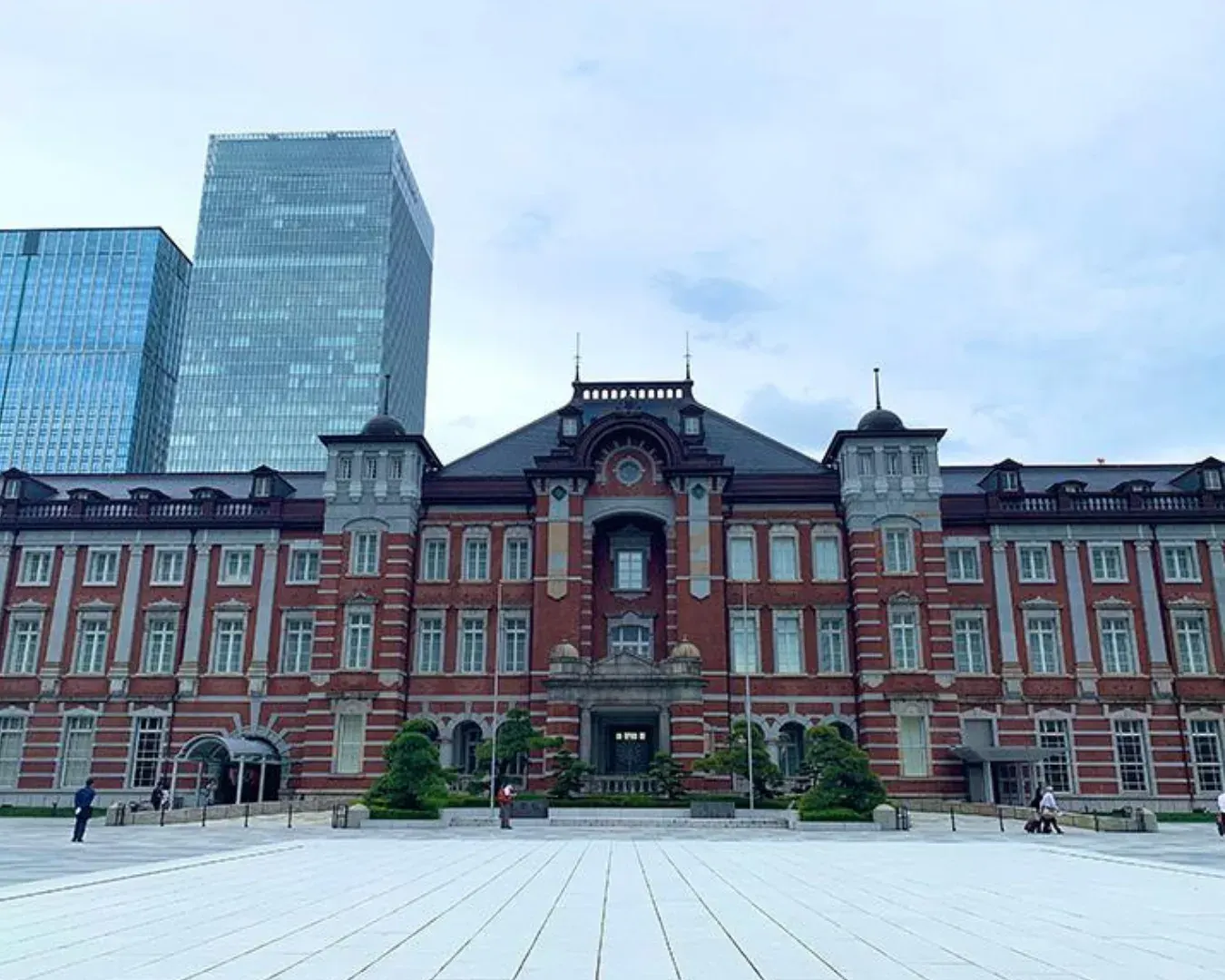
Tokyo Station’s Marunouchi façade has the confidence of a building that knows people will stop in front of it. Let them. Stand back in the open plaza and look before crossing into the next street. Tokyo Station City notes that the station opened in 1914 and that the Marunouchi Station Building, designated as an important cultural property, was preserved and restored to its original state in 2012. That restoration matters visually. The red brick, slate roof, domes, and long horizontal line of the building sit between Marunouchi’s office towers and the flow of one of the world’s busiest railway hubs. It is not a quiet place, but it gives you room to pause. This is the first trick of the route: do not treat Tokyo Station only as infrastructure. Treat it as a threshold.
TOKYO STATION MARUNOUCHI STATION BUILDING
1-9-1 Marunouchi, Chiyoda City, Tokyo 100-0005
Open in Google Maps
Walk the Office District Like a Street
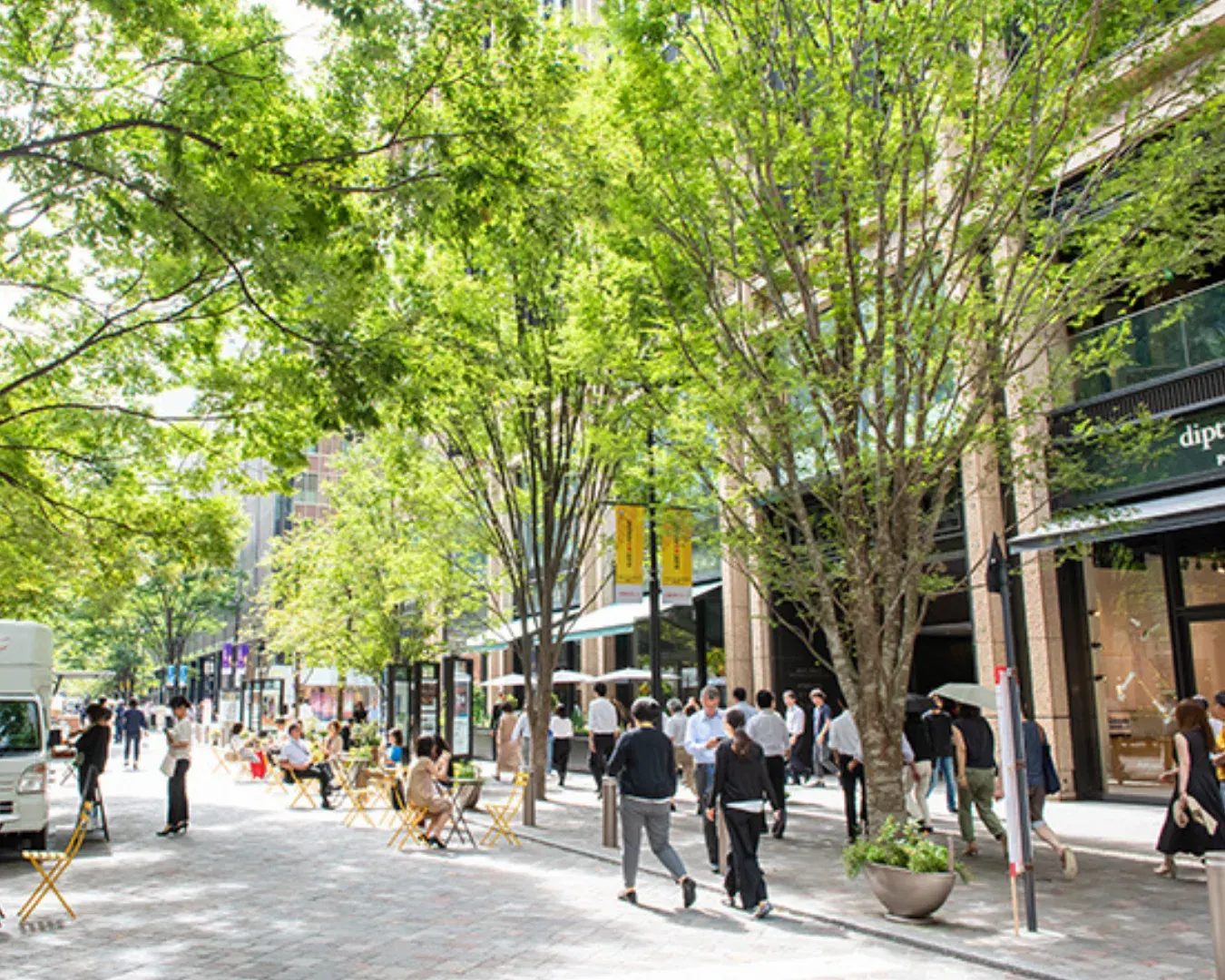
From the station, move into Marunouchi Naka-dori. It is easy to misunderstand this area if you only think of it as an office district. Yes, the buildings are large, the addresses are corporate, and the pace changes around lunch and after work. But the street itself is more generous than that. Chiyoda City Tourism Association describes Marunouchi Naka-dori as lined with roadside trees, shops, restaurants, cafés, office buildings, commercial facilities, and public artworks. It also notes that during Urban Terrace hours, the street becomes pedestrian-friendly with tables and chairs placed outside. This is where the route slows down. Do not rush toward the palace. Walk under the trees. Notice sculpture in front of office façades. Watch people eat lunch between towers as if the center of Tokyo has briefly become a courtyard. The city is still working around you. You are simply walking through it at a different speed.
MARUNOUCHI NAKA-DORI
Marunouchi 1–3 chome to Yurakucho 1 chome, Chiyoda City, Tokyo
Open in Google Maps
“Central Tokyo feels different when you stop treating it as a place to pass through.”
Go Up Before You Move On
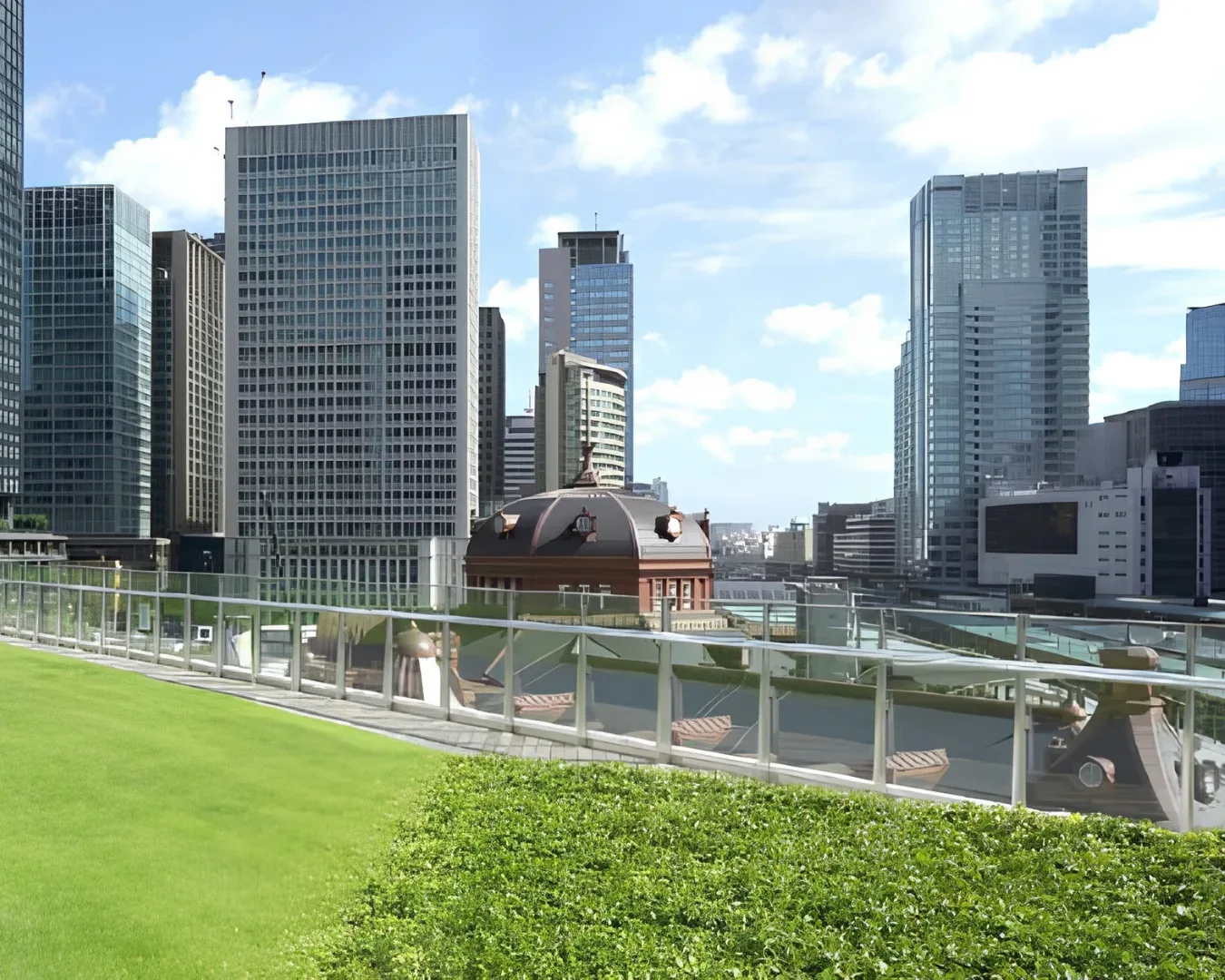
Before walking toward the Imperial Palace, go up to KITTE Garden. The rooftop is not high in the dramatic observatory sense. That is why it works. It is close enough to Tokyo Station that the tracks, roofline, domes, and surrounding towers still feel connected to the ground you just crossed. KITTE Marunouchi’s official information describes the sixth-floor KITTE Garden as a roof garden with a sweeping view of the Tokyo Station Marunouchi building. Current listed hours are 11:00–23:00 on weekdays and 11:00–22:00 on weekends and holidays, with possible closure due to weather. Use it as a pause, not a spectacle. Look back at the station you arrived through. Watch trains enter and leave. Notice how many directions Tokyo can hold at once. Then go down and keep walking.
KITTE GARDEN
KITTE Marunouchi 6F, 2-7-2 Marunouchi, Chiyoda City, Tokyo 100-7001
Open in Google Maps
Let the City Become Wider
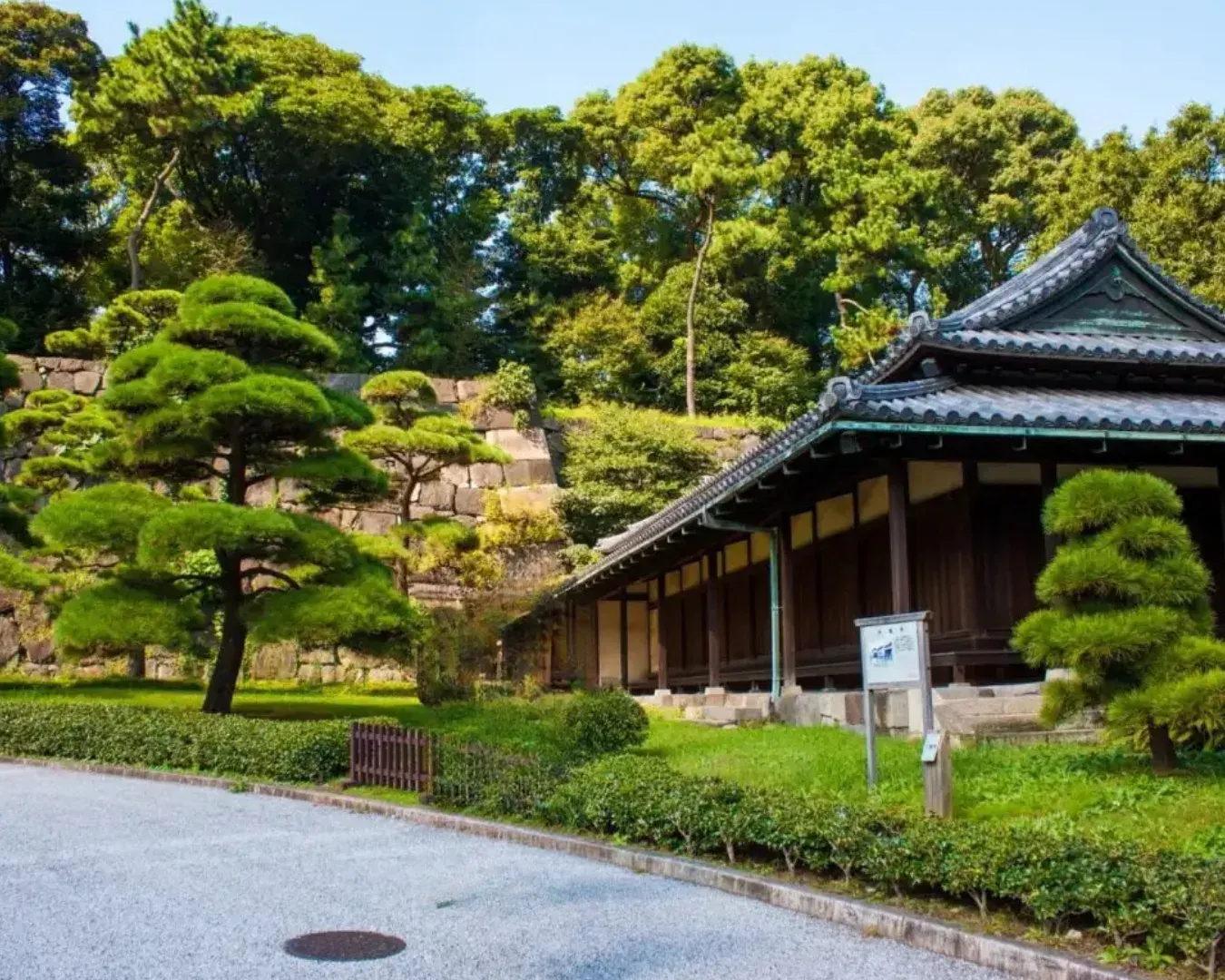
From Marunouchi, walk toward the Imperial Palace edge. The change is physical. The commercial density loosens. The sky gets larger. The surface of the city becomes trees, gravel, stone walls, moats, and long sightlines. Kokyo Gaien National Garden officially describes the area as a large lawn square with kuromatsu black pine trees, historic buildings, castle gates, and moats. It also notes that Kokyo Gaien and nearby public garden areas are popular for walking and nature observation. You do not need to enter the palace grounds for this route to work. Stay at the edge. Walk until the towers of Marunouchi sit behind the pines. Let the office district become background. The center of Tokyo is still there, but it has changed its volume. This is the quietest part of the day. Not silent. Just wider.
KOKYO GAIEN NATIONAL GARDEN
1-1 Kokyo Gaien, Chiyoda City, Tokyo 100-0002
Open in Google Maps
The Optional Extension: Nihonbashi
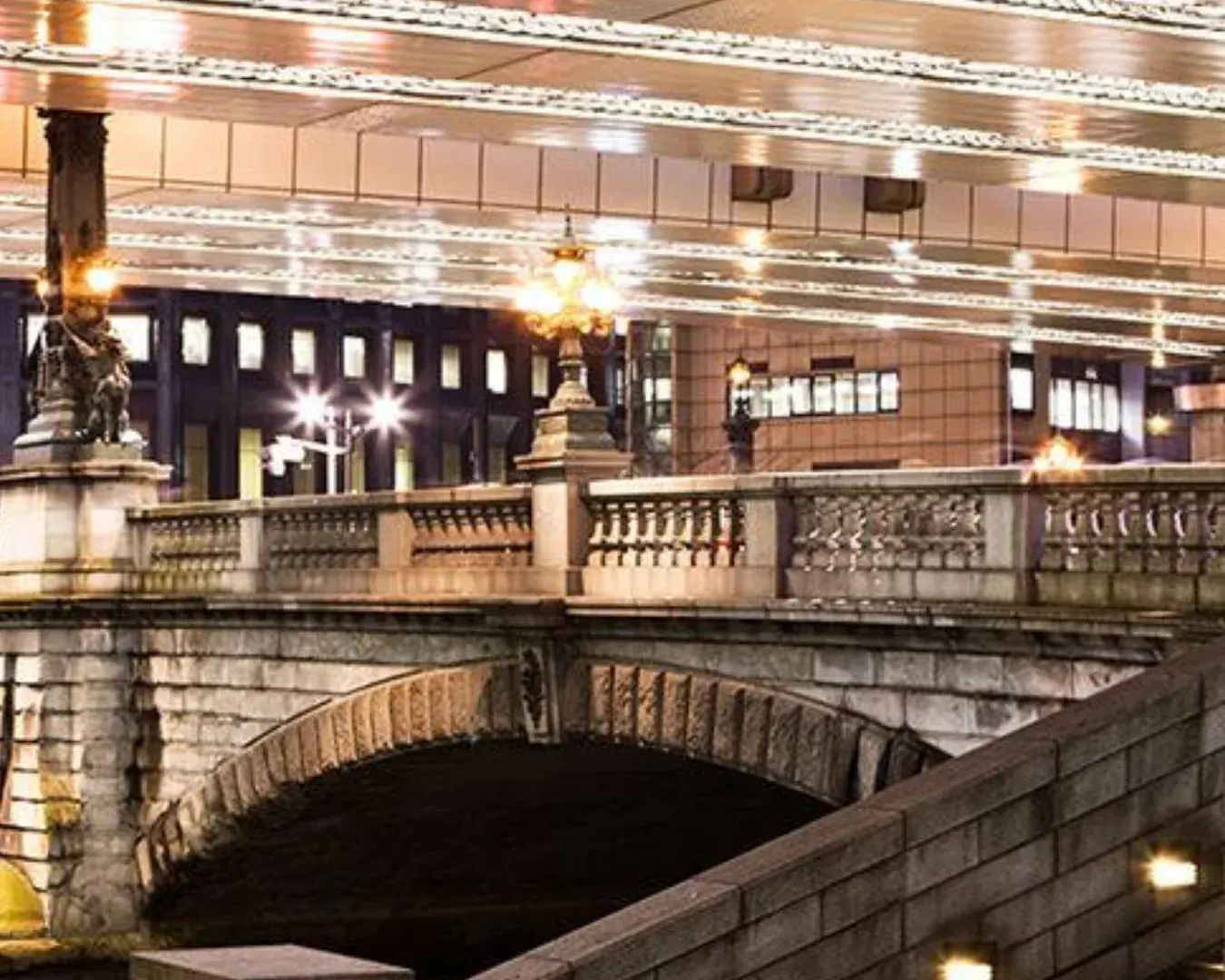
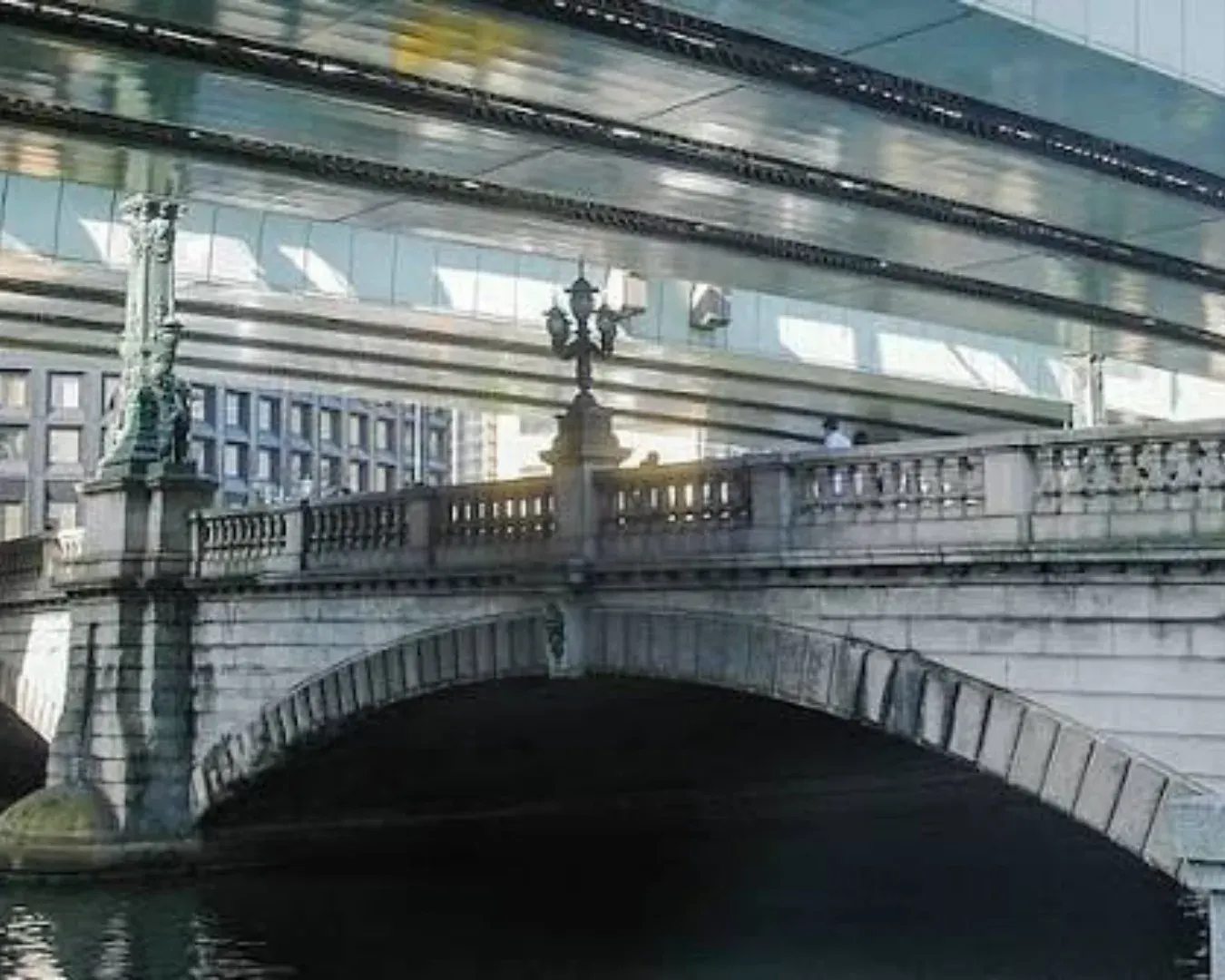
If the day still has energy, turn the walk toward Nihonbashi. This should remain optional. Tokyo Station and Marunouchi already make a complete route. But Nihonbashi adds a useful final layer: the older commercial city beneath the modern one. GO TOKYO describes Nihonbashi as close to Tokyo Station, a major commercial center in the Edo period, and the starting point of Japan’s five major roads. It also notes that distances are still measured from here. That idea is almost too perfect for a long-stay walk. After leaving Kinshicho by one train, after reading Tokyo Station, after walking Marunouchi and the palace edge, you arrive at a bridge that once organized distance itself. Do not overdo it. Stand on the bridge. Look at the lion sculptures, the stone, the elevated expressway, the river, the department stores and towers nearby. Then decide whether to stay for a meal or return while the day still feels clear.
NIHONBASHI
1 Nihonbashi, Chuo City, Tokyo 103-0027
Open in Google Maps
“A good city walk does not have to finish the district. It only has to make you want to return without rushing.”
Back to Kinshicho
Return before central Tokyo becomes too full. That is part of the routine. You do not need to eat every famous meal near Tokyo Station. You do not need to enter every building in Marunouchi. You do not need to continue from Nihonbashi to Ginza just because the map allows it. A longer stay changes the value of stopping. Today, you learned the shape of one direct route from Kinshicho: train, brick station, office street, rooftop view, palace edge, old bridge, return. Another day, you can come back only for KITTE Garden. Or only for Naka-dori at lunch. Or only for a quiet walk around Kokyo Gaien when the sky is good. The point is not that Tokyo Station is easy to reach. The point is that, from HIVEN, even the center of Tokyo can become repeatable. One train there. One walk through. One train home.