A Month in Tokyo as a Couple: You Don’t Need the Same Itinerary Every Day
Make a month in Tokyo enjoyable for two people with different interests, energy levels and routines, from independent afternoons to a room that works for both.

Written by Hive Heaven

A month in Tokyo as a couple does not require a shared itinerary for every hour. Agree on the experiences you both care about, leave space for individual interests and choose a room that supports two people's ordinary routines. The goal is a trip you both enjoy, not a month of successful negotiations over the next cafe.
One person may want to browse a bookshop for an hour. The other may be ready to leave after ten minutes. On a short holiday, you might compromise and move on. During a longer stay, you can sometimes do both: separate for the afternoon and meet with something interesting to tell each other.

What should you agree on before booking?
Each person can choose a small number of priorities independently, then compare them. Look for overlap, but also notice the experiences that matter to only one of you. Those do not automatically need to be removed.
Discuss pace before discussing destinations. How early do you want to start? How much walking feels enjoyable? How many evenings should be booked in advance? These preferences affect nearly every day and deserve more attention than the colour of the room's sofa.
Agree on the budget's boundaries too. Decide which expenses are shared and which are personal, and how to handle an activity only one person wants. Clear expectations make room for generosity without relying on mind-reading.
What might a day apart look like?
Imagine one person spending the afternoon around Kiyosumi-Shirakawa's coffee-and-art scene while the other browses Jimbocho. These are possible themes introduced by official Tokyo guides, not a promise that any particular venue is open on your dates.
Choose a meeting time and a specific place for dinner or the journey home. Make sure both people have connectivity or an offline plan, the accommodation address and whatever access arrangements the booking permits.
The point is not to maximise the distance between you. It is to give each person enough attention for something they enjoy. You may find that a few independent hours make the shared evening more lively.
Kiyosumi-Shirakawa neighbourhood
Kiyosumi-Shirakawa, Koto City, Tokyo, Japan
Open in Google Maps
Jimbocho bookshop district
Kanda-Jimbocho, Chiyoda City, Tokyo, Japan
Open in Google Maps
A good shared trip leaves room for two different versions of a good afternoon.

How do you choose a room for two actual routines?
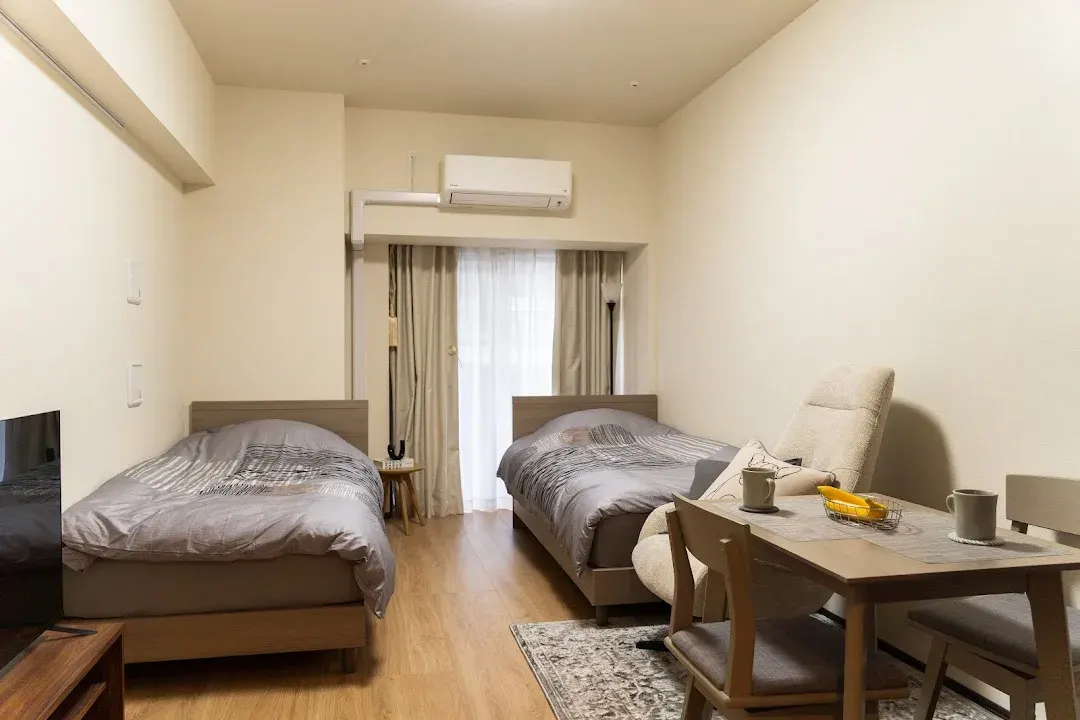
Start with sleeping arrangements, not simply the occupancy number. A room accepting two guests does not automatically mean two beds. Check bed dimensions, layout and any additional bedding arrangements in the specific listing.
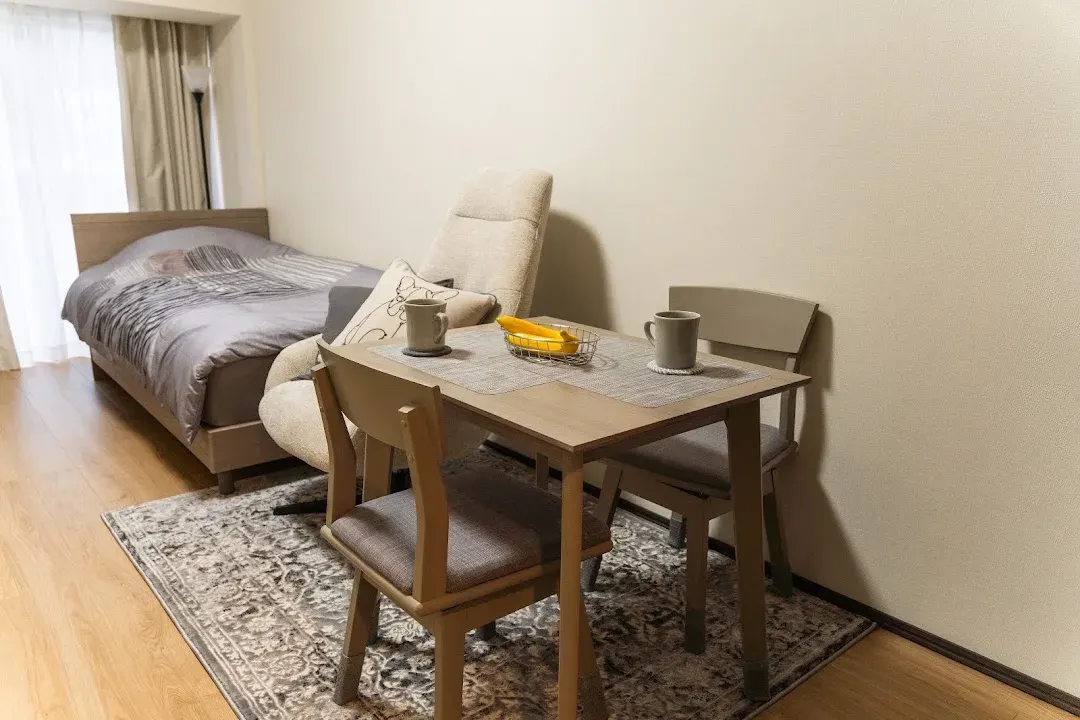
Then imagine the times when one person is awake and the other is not. Where could the early riser sit? Can a light be used without disturbing sleep? If either person needs calls or computer time, examine the workspace and separation rather than assuming two laptops fit because one desk is pictured.
If work is part of the trip, check the appropriate entry and activity requirements separately. A room feature does not establish permission to work. For leisure planning, the same furniture may simply be useful for reading, correspondence or researching the next day.
Where do the suitcases, shopping and daily objects go?
Two people produce a surprising number of small items: chargers, jackets, toiletries, shoes and the purchases that seemed modest in the shop. Look at storage and usable floor space, not only the total floor area.
Discuss what needs a permanent place. Agreeing where keys and shared items go can prevent the daily question of who last moved them. If there is only one convenient surface, decide how it will be shared before it becomes a display of both people's belongings.
Avoid buying storage equipment immediately. First unpack and see what works. Follow the accommodation's rules about furniture and fixtures, and ask before making changes.
How can you keep food from becoming a negotiation?
Agree on a few shared staples and a few meals you both want to experience. Leave the rest flexible. Different breakfast preferences are easy to accommodate if they are recognised rather than rediscovered each morning.
Share the work as well as the food. Someone choosing to cook occasionally does not automatically become responsible for shopping, preparation and cleaning throughout the trip. Discuss what feels fair, including evenings when neither person wants to cook.
The [Kinshicho supermarket guide](https://www.hivenstay.com/guides/lifestyle/supermarkets-you-will-actually-use-kinshicho) can help you plan practical shops. Buy quantities based on actual meals at home and check dietary requirements before choosing shared products.
What if one person gets tired sooner?
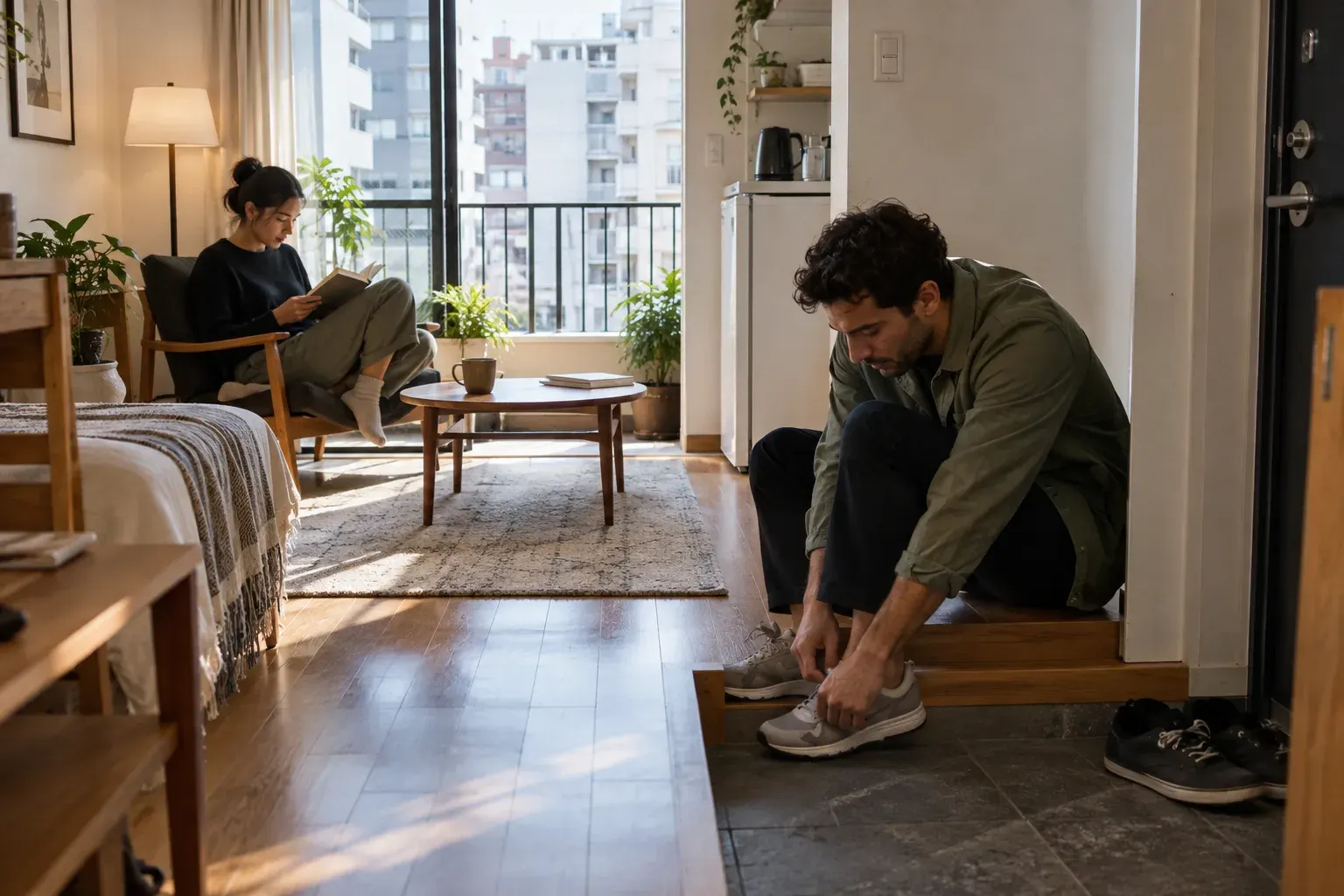
Treat energy as information. A shorter day for one person does not make the trip less successful. Plan suitable meeting points and independent return options so rest does not always require both people to stop.
Keep some activities close to the base. The lower-energy person can enjoy a smaller outing while the other continues with a longer plan. Check accessibility and transport needs for the actual route rather than assuming that a short distance is easy for everyone.
Avoid filling the following day to compensate for resting today. A month provides flexibility only if you allow it. Leave room for a pace that remains enjoyable after the first week's excitement.
How do you discuss money without reviewing every purchase?
Set the broad categories before travel: shared accommodation, food, transport and individually chosen activities. Keep a simple record if that helps, but decide together how much detail you need.
Do not assume all costs halve because two people share a room. The room total may depend on occupancy, and meals or tickets often remain individual expenses. Check the actual quote for both guests.
A brief weekly review can be more useful than constant commentary. Ask whether the plan still feels comfortable and whether there is something worth changing. The purpose is to protect the trip, not to audit each other's preferences.
How does HIVEN fit a couple's month?
Compare available units using the routines you have just discussed. HIVEN's public Residence offer begins at 29 nights, but the room's occupancy, sleeping arrangement and included services must be checked for the actual booking.
HIVEN BK Kinshicho
4-6-4 Kotobashi, Sumida-ku, Tokyo, Japan
Open in Google Maps
Use the official room information to ask specific questions: what bedding is included, how the space is arranged and what arrival preparation each guest needs. “Is it good for couples?” produces a less useful answer than explaining what the two of you require.
Choose a base that makes both shared and independent days manageable. The best room for the trip is the one that helps you enjoy each other's company without requiring you to share every minute.
Frequently asked questions
Is it strange to spend some days separately?
No. If both people are comfortable with it, independent interests can be part of a shared holiday. Agree on communication and meeting arrangements.
Does two-person occupancy mean two beds?
No. Read the exact bedding and layout information. Ask about additional arrangements before booking if separate beds are important.
Should we split every cost equally?
Choose an arrangement that feels fair to both people. Shared essentials and personal activities may be handled differently; discuss that before spending.
How can we avoid one person doing all the planning?
Divide tasks according to interest and effort, then share important information. Both people should know the address, access process and key reservations.
Can we both use the room's workspace?
Check the actual furniture, seating and space. A single workspace description does not guarantee a comfortable setup for two simultaneous users.
What if our preferred pace is different?
Build in shorter local options and independent outings. Decide on the amount of shared time that feels good rather than assuming every day must match.
What should we confirm with HIVEN?
Confirm the selected unit's guest capacity, bedding, layout, total price, arrival requirements and terms for your exact dates.
Sources and information check
[JNTO — planning a visit to Japan](https://www.japan.travel/en/plan/)
[Tokyo Metro — Kinshicho Station and Hanzomon Line](https://www.tokyometro.jp/lang_en/station/kinshicho/index.html)
[GO TOKYO — Kiyosumi Shirakawa](https://www.gotokyo.org/en/destinations/eastern-tokyo/kiyosumi-shirakawa/index.html)
[GO TOKYO — Kanda and Jimbocho](https://www.gotokyo.org/en/destinations/central-tokyo/kanda-and-jimbocho/index.html)
[HIVEN — current Residence offer](https://www.hivenstay.com/?lang=en)
[HIVEN — booking and stay FAQ](https://www.hivenstay.com/faq)
Information checked: 30 October 2026. Recheck time-sensitive details before publication and before booking or visiting, including prices, opening hours, transport, entry requirements and the selected room’s terms. Suggested routines and sample itineraries are editorial planning examples, not guest testimonials.


