Tokyo Air Quality at Home: Ventilation, Dust and Daily Habits
Manage a Tokyo apartment’s indoor air with source control, sensible ventilation and cleaning routines, without confusing cooling with fresh air.

Written by Hive Heaven
Better indoor air in a Tokyo apartment begins with managing what enters or is produced in the room, using ventilation correctly, and removing settled dust. A cool room can still need fresh air. Treat temperature, moisture and particle control as separate jobs instead of expecting one appliance to do everything.
This matters when a furnished residence is also your workplace. Several hours at a desk give you more reason to understand the room’s controls and report persistent problems, rather than simply turning the temperature down.
Which controls should you identify first?
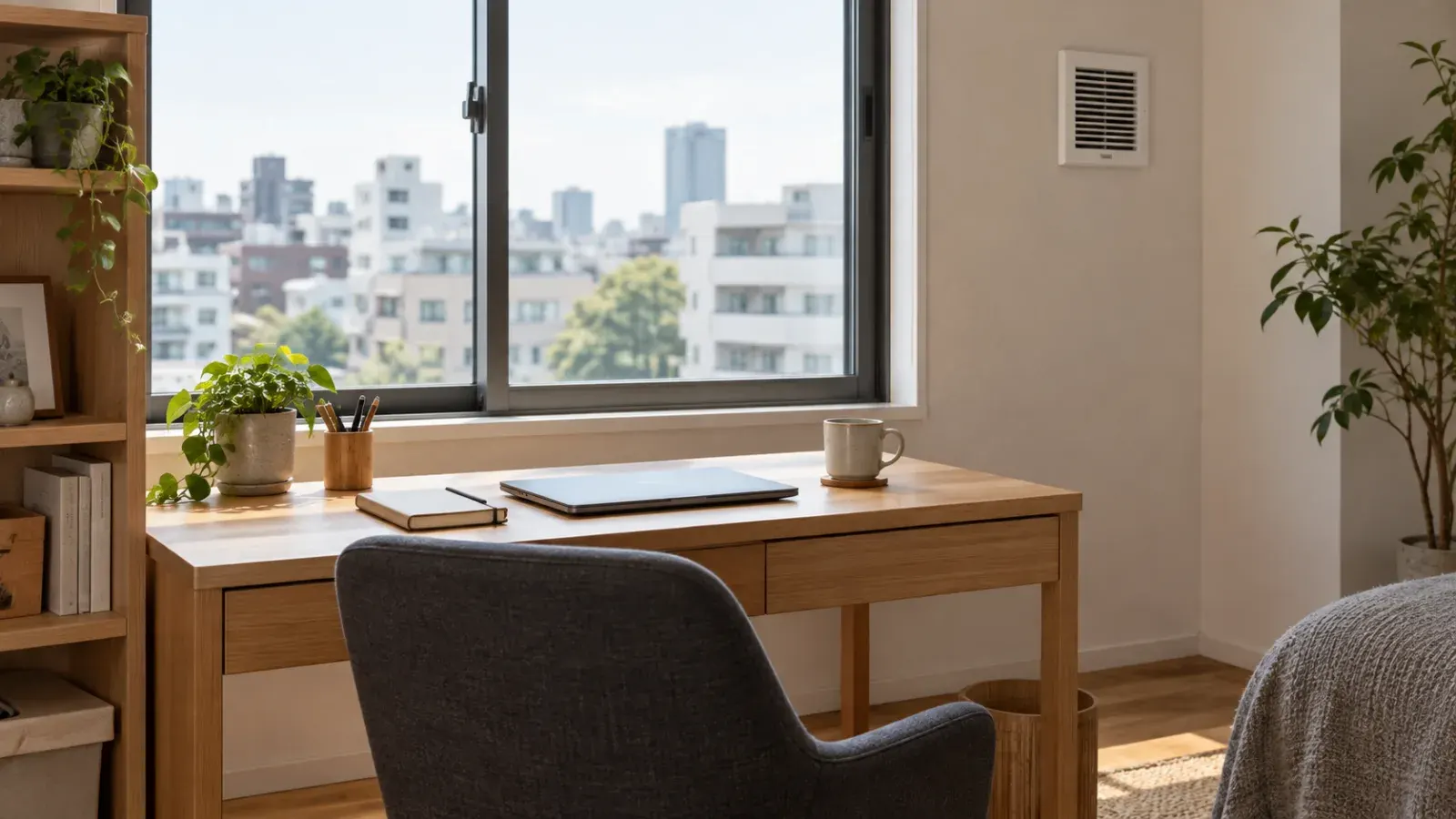
Locate the kitchen extractor, bathroom fan and any continuous ventilation system. Ask which switches should stay on and which filters are maintained by staff. Tokyo’s residential guidance specifically addresses ventilation and 24-hour ventilation equipment. [1]
Do not assume a wall-mounted air conditioner supplies outdoor air. Check the model and operating instructions. Keep vents clear of bags and drying clothes, and contact the manager if a fan appears faulty; opening a window may not be an adequate substitute for a broken system.
How can you reduce pollutants at the source?
Look at what happens immediately before a room feels smoky, dusty or strongly scented. Cooking, smoking, candles and some household products can contribute particles or other pollutants. EPA identifies multiple everyday indoor particulate sources. [2]
For your own routine, avoid unnecessary fragrance sprays, follow cooking ventilation instructions, and store cleaning products closed. If an odor is recurring, record its timing and location. Hiding it with another smell makes the original problem harder to describe.
What cleaning routine is realistic for a working week?
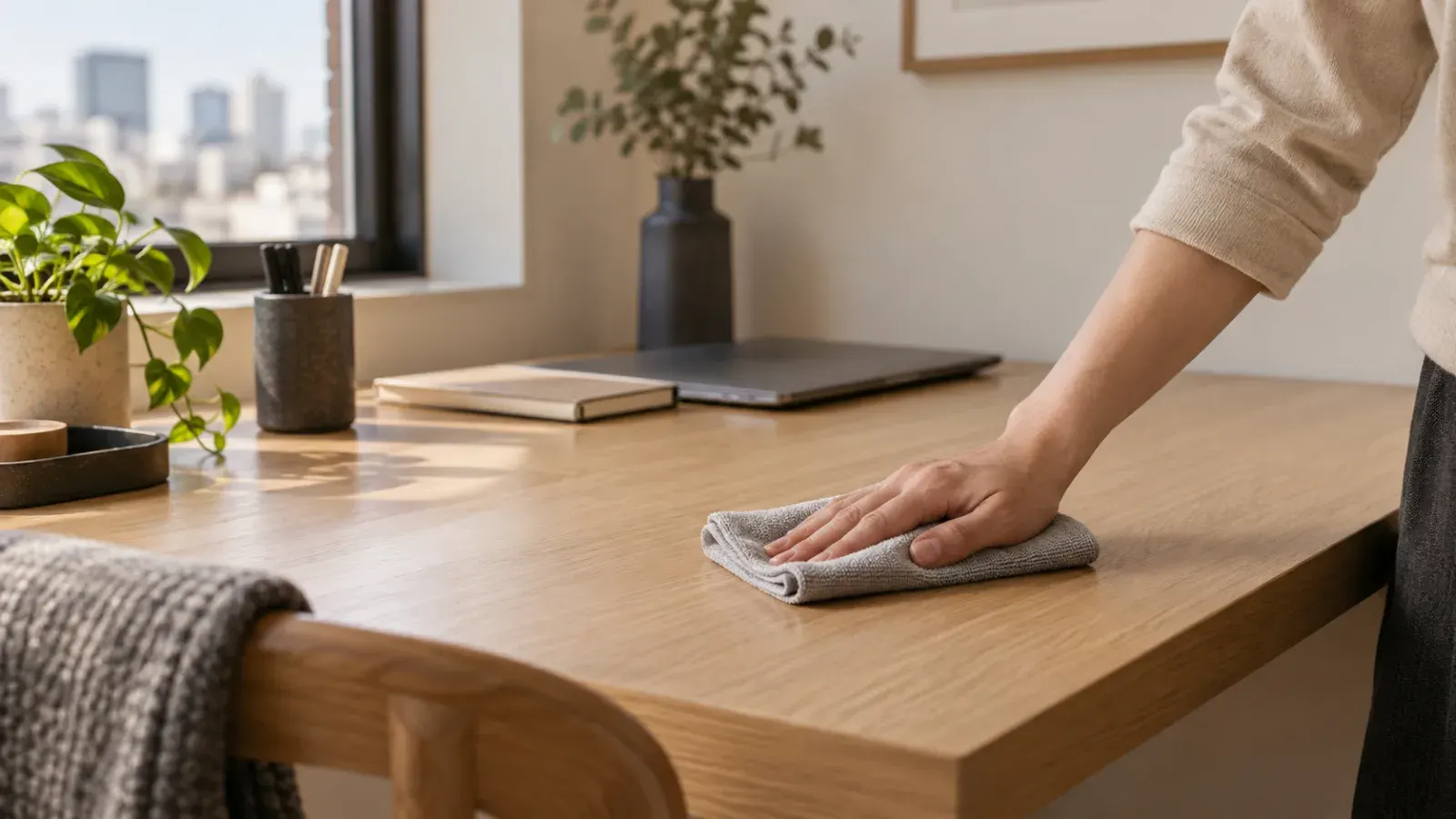
Choose a few repeatable tasks: remove food crumbs, wipe suitable surfaces, keep bedding and clothing organized, and avoid letting bags block accessible floor space. Follow surface-care instructions and ask who supplies or operates cleaning equipment.
Do a short visual check after a long work session. Is a damp towel still on a chair? Has laundry blocked a vent? Has a cooking odor persisted for hours? These observations help distinguish an everyday task from a maintenance issue without pretending to measure air quality by smell.
How do you balance fresh air with pollen or humid weather?
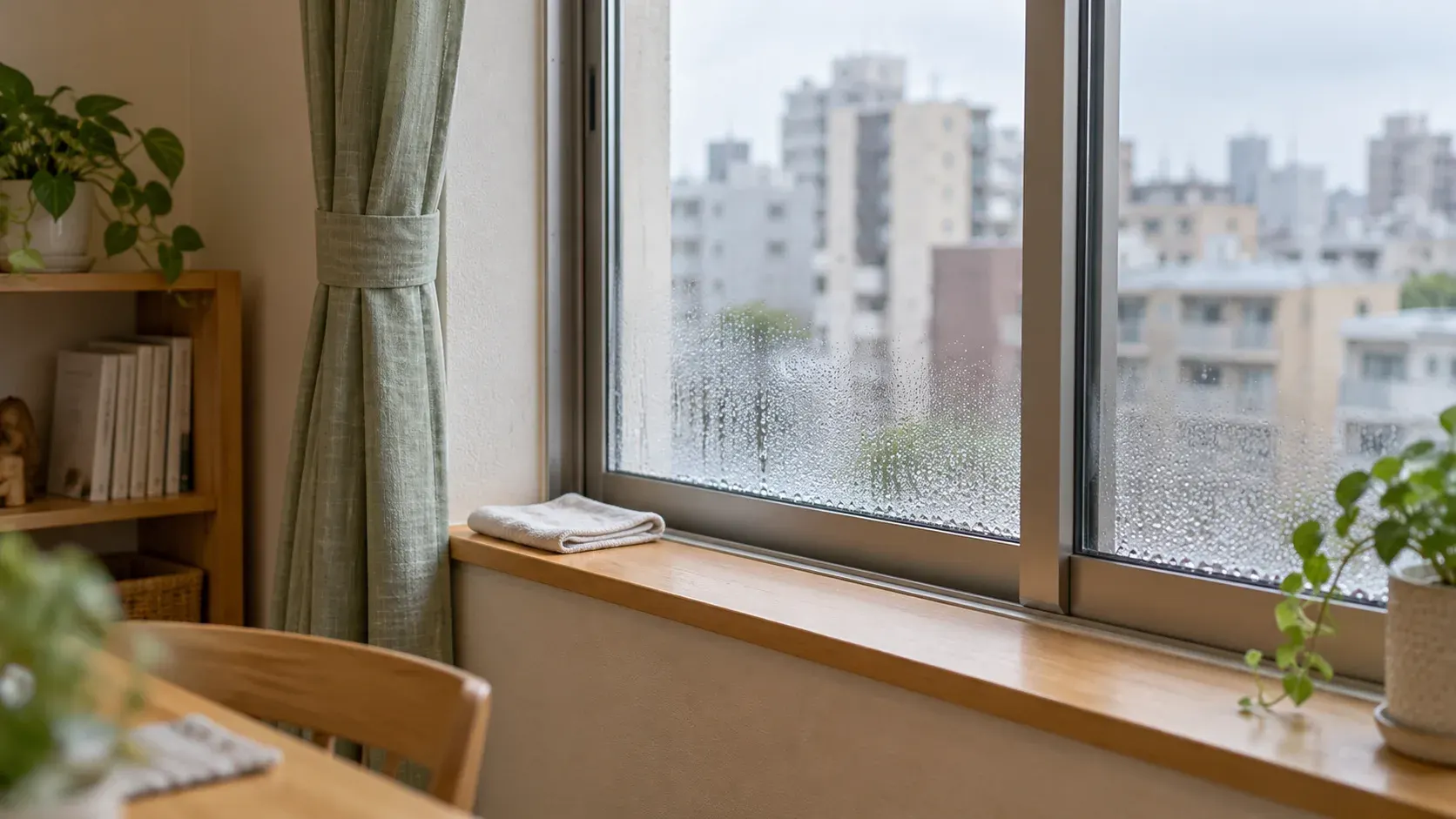
Window use should respond to conditions and building instructions. On high-pollen days, consider how outdoor air and clothing bring particles inside; Tokyo’s pollen advice includes entryway and laundry measures. [3] During wet weather, watch for moisture problems instead of assuming a longer window opening always dries the room.
Keep required mechanical ventilation operating as instructed. If it is unclear how to ventilate safely during an outdoor pollution episode or severe weather, ask the property manager for the building-specific approach. This guide does not provide a live Tokyo air-quality reading.
Does an air purifier replace ventilation?
No. EPA describes filtration as a supplement to source control and ventilation, with limits on what it removes. [4] If you choose a portable unit, check that its specifications fit the space and maintain it according to its instructions.
FAQ
Is a cold room necessarily well ventilated?
No. Cooling and outdoor-air exchange are different functions. Identify the actual ventilation system.
Should I leave windows open while working all day?
There is no universal rule. Weather, outdoor conditions, security and the building’s ventilation design all matter.
Can I judge the room’s air from its smell?
Smell can alert you to a problem but cannot confirm that all pollutants are absent. Report persistent odors or symptoms instead of relying on fragrance.
Is a purifier included at HIVEN?
It was not verified in the public amenities reviewed. Confirm the exact room’s equipment before making plans around it.