Expat Housing in Tokyo: Hotel, Serviced Apartment, or Monthly Residence?
Compare hotels, serviced apartments and monthly residences for expat housing in Tokyo, including privacy, kitchen, laundry, cost structure and stay length.

Written by Hive Heaven
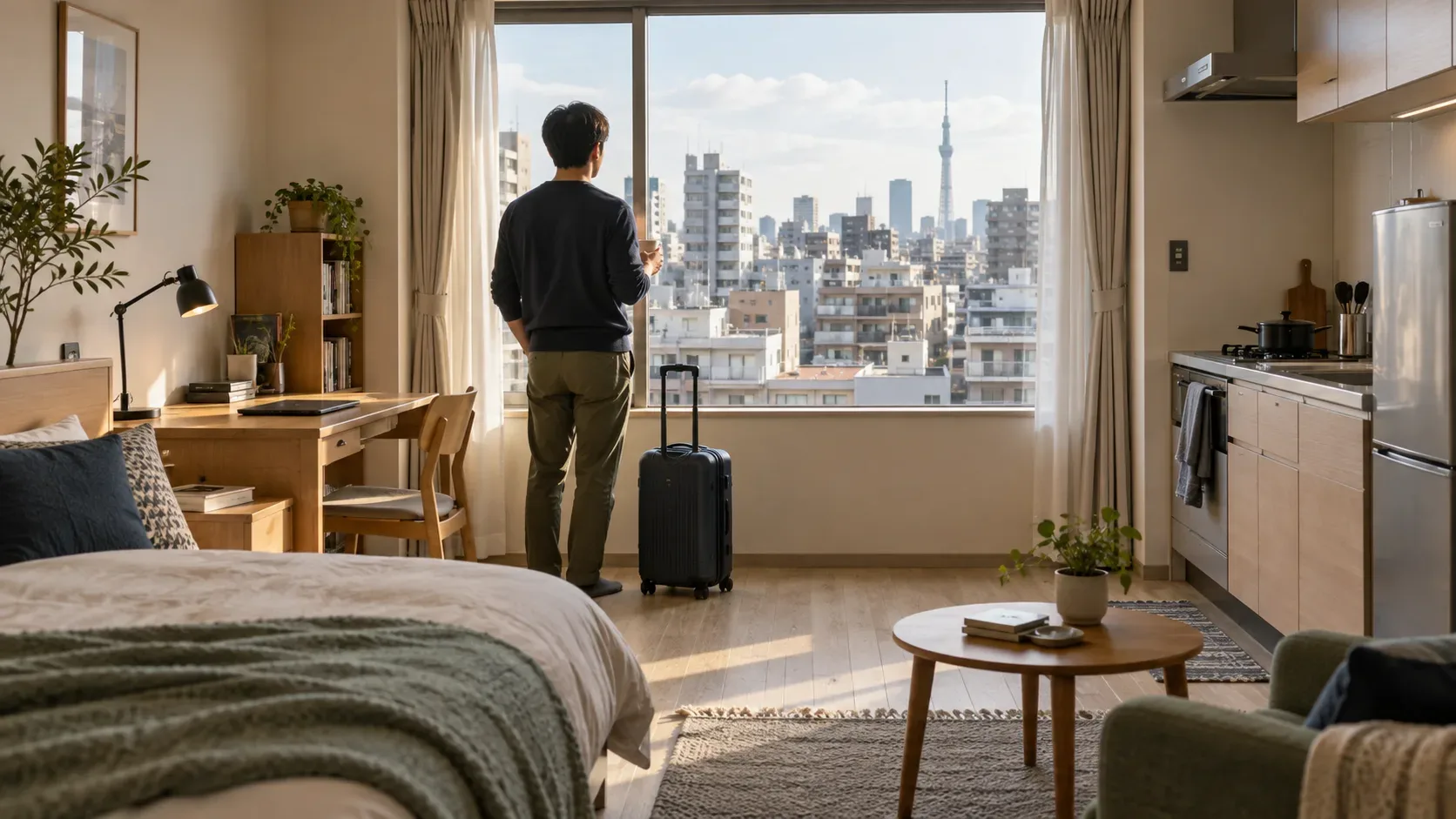
There is no single “best” expat housing type in Tokyo. A hotel can be ideal for a short arrival window, a serviced apartment may suit guests who value hospitality services, and a monthly residence can work well for people who want more private, everyday living. The right choice depends on stay length, work pattern, budget structure and how much of normal life needs to happen inside the room.
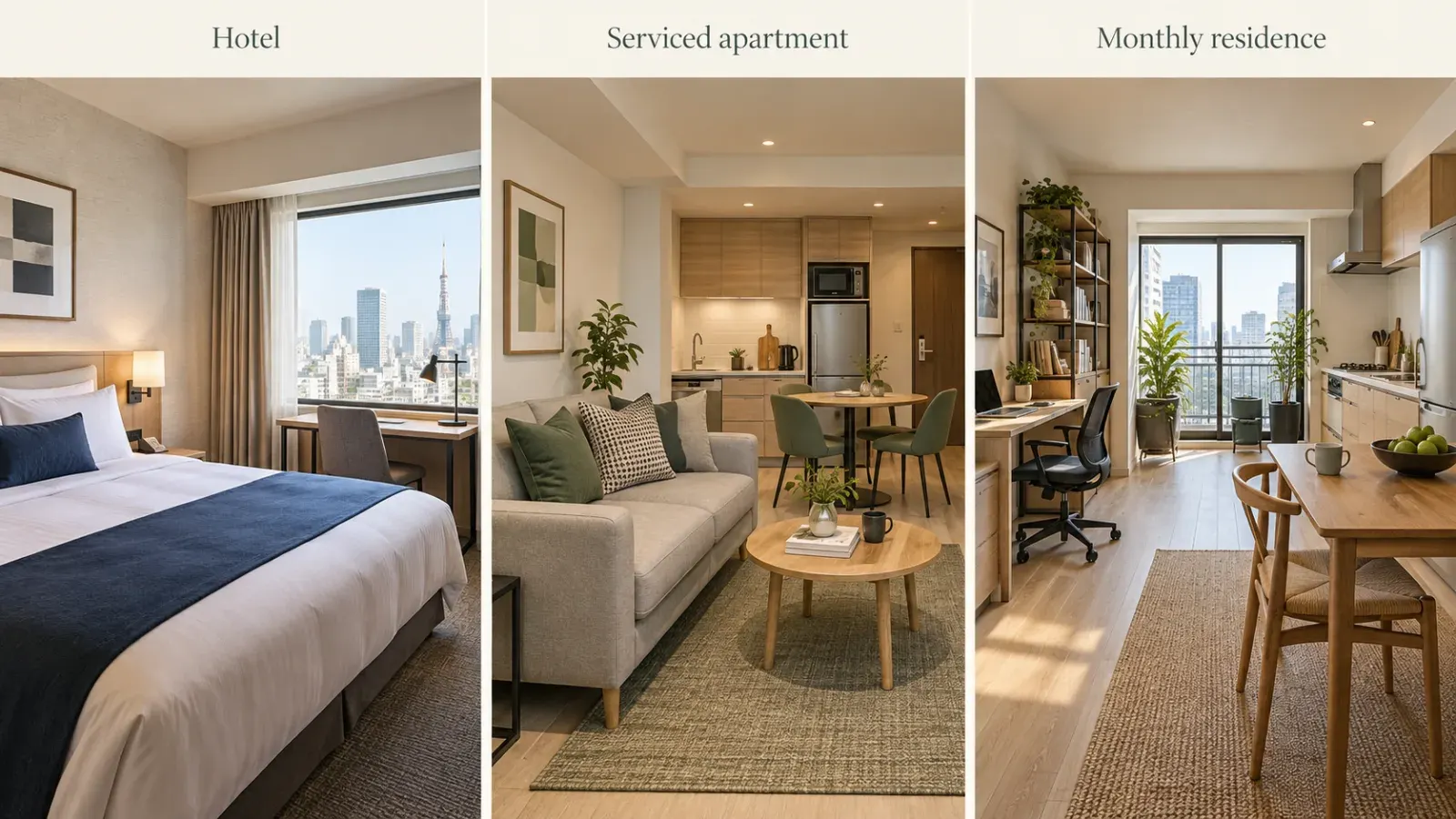
When does a hotel make sense?
Hotels are optimized for short stays: simple booking, reception services and frequent room servicing. They can be practical for a few nights at arrival, executive visits or situations where the schedule is not yet stable.
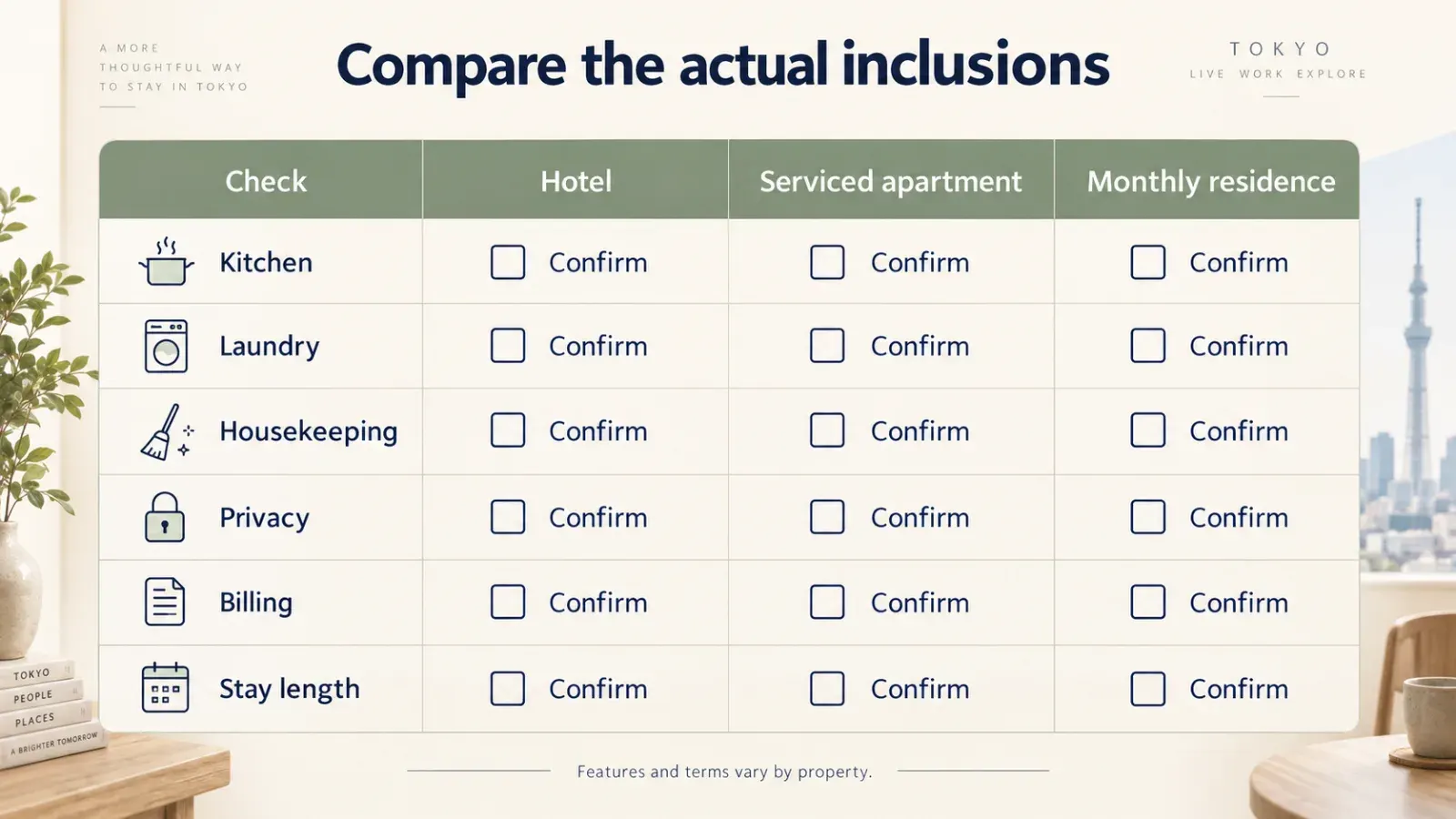
For longer stays, check whether the room has enough workspace, storage, laundry access and food-preparation options. Repeated restaurant meals and external laundry may be acceptable for days but less convenient over months.
What does a serviced apartment typically solve?
Serviced apartments generally combine a furnished residential setup with some hospitality-style services. The exact service level varies widely, so compare the real unit rather than assuming the label guarantees a particular kitchen, cleaning schedule or front desk.
They can suit employees who want a residential layout with more service support, especially when the company values a managed experience and centralized billing.
What is a monthly residence or monthly apartment?
Monthly housing is designed around longer occupancy. Depending on the operator, it may offer furnished rooms, utilities, Wi-Fi and simpler contracting than a conventional Japanese lease. The term “monthly mansion” is also commonly used in Japan, but inclusions vary by provider.
For an assignee, the advantage can be living more like a resident: preparing food, doing laundry, working from the room and keeping personal belongings in place without daily hotel-style interruption.
How should companies compare total cost?
Do not compare only the advertised nightly or monthly rate. Add utilities, internet, cleaning, laundry, furniture, deposits, brokerage, guarantor-related costs where applicable, taxes or service charges, and internal administration.
A residence with a higher headline price may still be operationally competitive if more of the monthly living setup is already included. The opposite can also be true, so use a consistent total-cost checklist.
For a one- to three-month assignment, the housing question is less ‘Which category is best?’ and more ‘Which setup removes the most daily friction?’
Which option fits a one- to three-month Tokyo assignment?
If the employee needs only a short landing period, a hotel can be enough. If they want more hospitality services, a serviced apartment may fit. If they want a stable private routine with kitchen, laundry and workspace, a furnished monthly residence may be more appropriate.
The decision should also consider billing, extension terms and commute. Housing type is only one part of the assignment design.
How is HIVEN positioned?
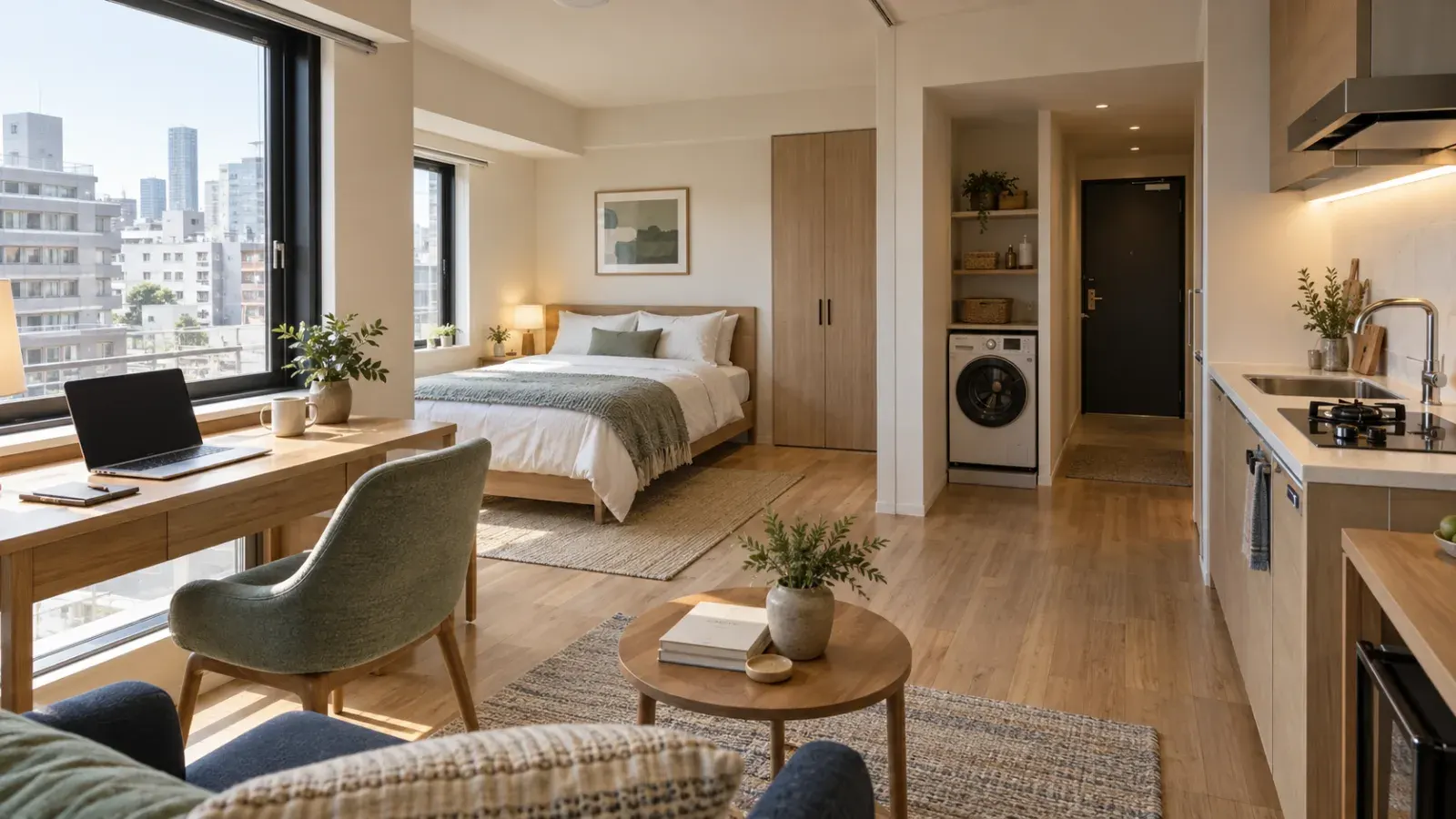
HIVEN’s Corporate page positions the service around long-stay housing for relocating teams and corporate guests in Tokyo, with team relocation, curated proposals from HIVEN residences, bilingual support from inquiry to move-in, and corporate terms with flexible billing. Public residence information also emphasizes 29+ night stays, furnished living, weekly cleaning and practical in-room features.
HIVEN’s public site presents Residence stays from 29 nights and emphasizes furnished long-stay living rather than conventional hotel service. Specific room features and corporate terms vary by proposal and should be confirmed before booking.
Related HIVEN Guides
Continue with “What Makes a Furnished Apartment Work for a Corporate Assignee?” and “Corporate Housing Costs in Tokyo: What Companies Should Compare.”
FAQ
Is a serviced apartment always better than a hotel for expats?
No. It depends on stay length, service needs, room features, commute and cost structure.
What is a monthly mansion in Japan?
It is a common Japanese term for accommodation rented on a monthly or longer short-term basis. Contract terms and inclusions vary by operator.
What matters most for a three-month stay?
Kitchen, laundry, workspace, storage, privacy, cleaning, billing, commute and extension terms are all worth comparing.
Should companies compare nightly rates?
Nightly rates can help, but total assignment cost and administration are more useful for longer stays.