Why Your Clothes Won’t Dry in Tokyo—and What to Do
Slow indoor drying in Tokyo usually needs a better laundry routine: smaller loads, space, airflow and a reliable backup drying option.

Written by Hive Heaven
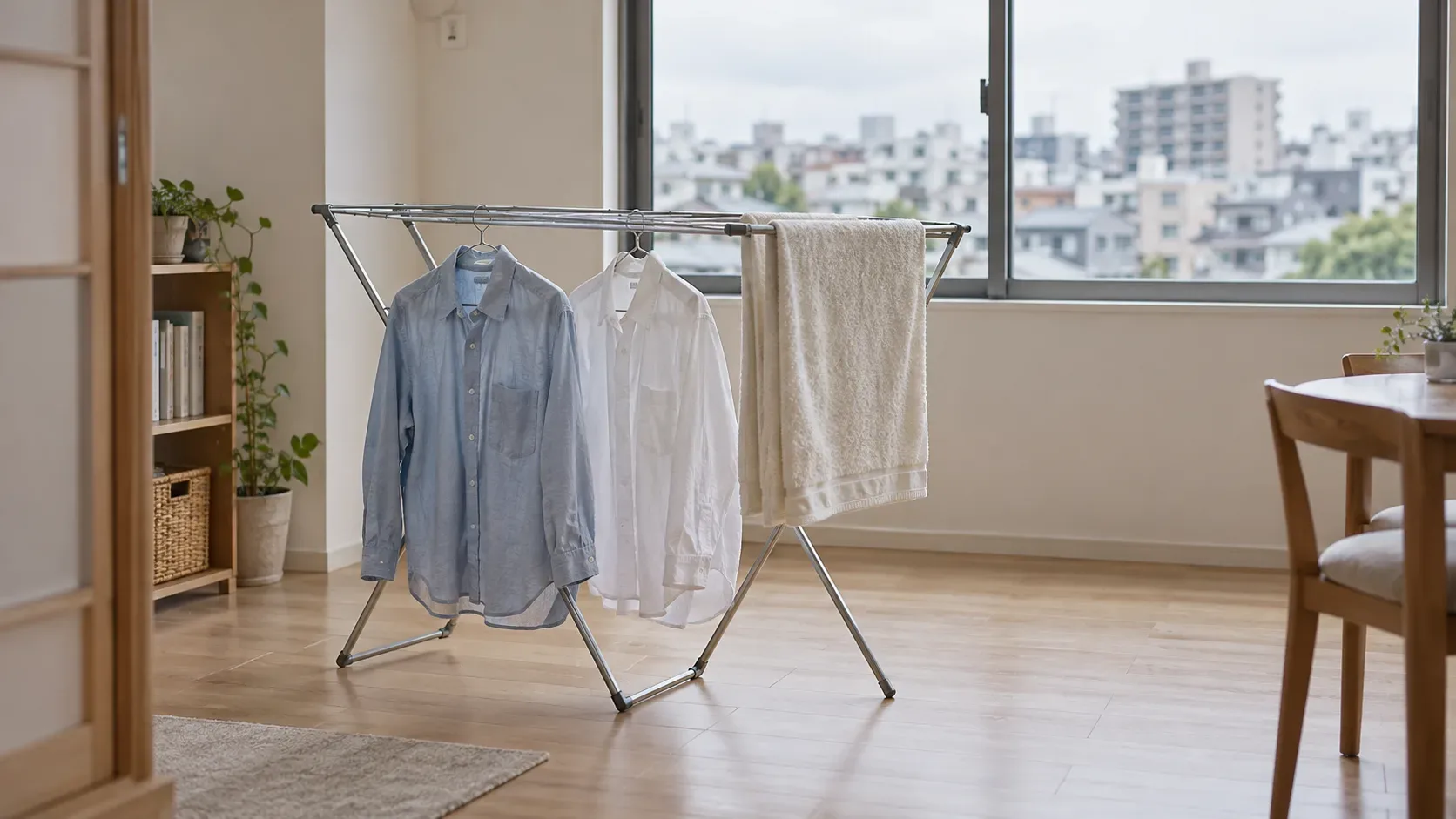
Clothes often dry slowly in Tokyo because moisture cannot escape quickly enough from crowded fabric into the surrounding air. A damp room, limited air movement and heavy seams can all contribute. Start by reducing the size of each load and giving laundry a real drying route; adding more detergent will not solve an airflow problem.
For anyone researching laundry in Japan before a longer visit, the useful question is not only “Is there a washer?” Ask what happens between taking clothes out of that washer and putting them back in the wardrobe.
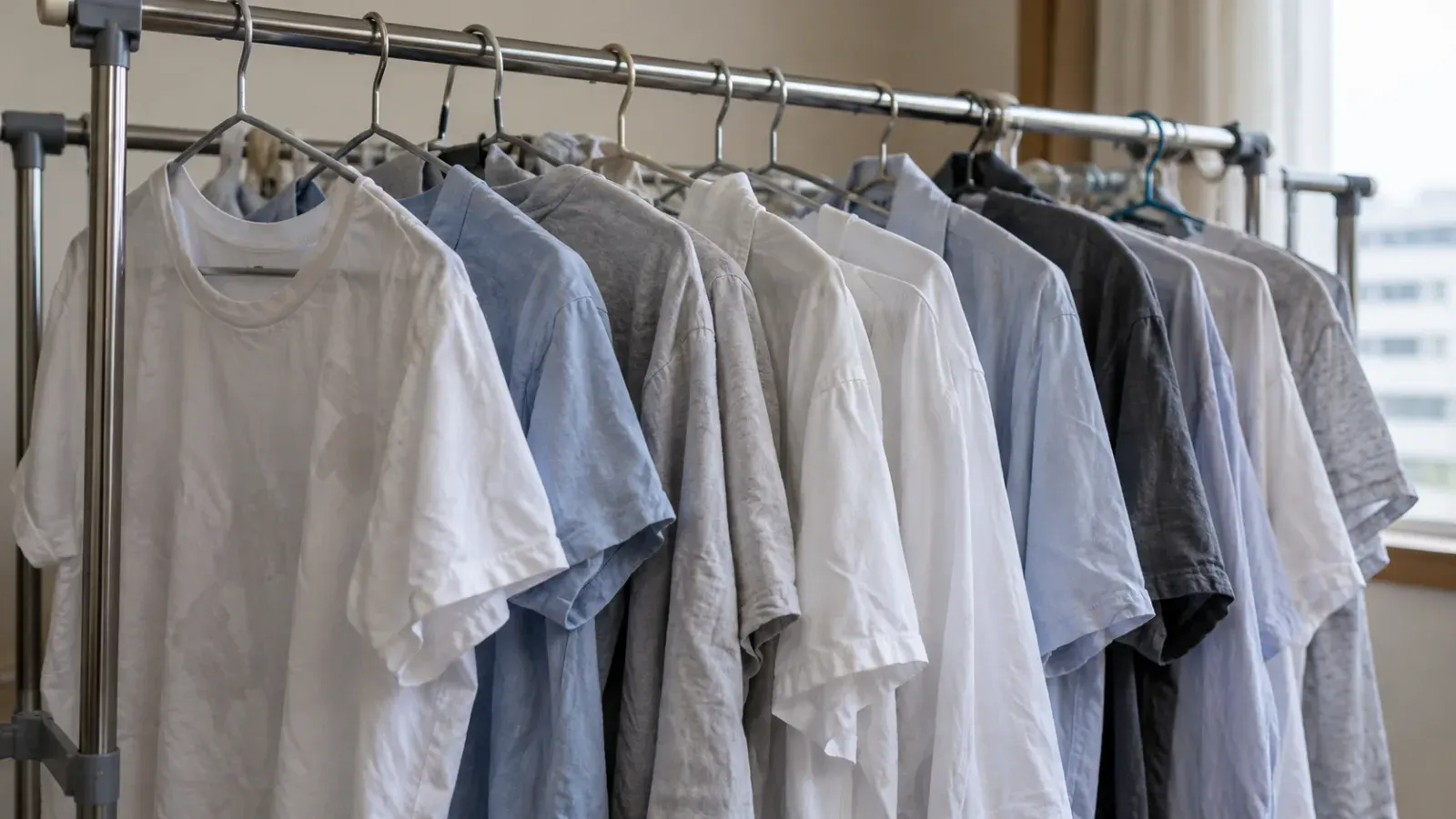
Why do the sleeves feel dry while the waistband stays damp?
Fabric thickness and overlapping layers affect drying. Waistbands, pockets, towel folds and hooded tops hold water differently from a single layer of light fabric. Check these areas before deciding that the whole garment is ready to store.
Turn or reposition suitable items to expose folded sections. Keep clothing off walls and avoid draping wet fabric over furniture. A dry-looking surface is not a reason to shut the entire load in a suitcase.
How should you change your next wash?
Try this practical sequence, following the machine manual and care labels:
✓ Wash a smaller load so every item has hanging space. ✓ Use the recommended detergent amount rather than adding extra for damp weather. ✓ Select an appropriate spin cycle. ✓ Remove the load promptly and separate overlapping fabric. ✓ Check thick sections before folding; arrange a backup if they remain damp.
Make one change at a time so you can see what helps in your room. If a machine is not draining or spinning normally, report the fault instead of repeatedly running the same unsuccessful cycle.
How can you reduce stale laundry smells?
Avoid leaving wet clothes inside the washer or piled in a basket. If an item already smells unpleasant, do not cover the smell with perfume and store it; rewash according to its care instructions and dry it fully. Check the washer’s accessible seals or detergent area only as the host’s instructions permit.
There is no universal drying deadline that guarantees odor-free laundry. Fabric, washing conditions and the room all differ. Recurring smells from the machine itself are a maintenance question, particularly in a furnished residence where guests should not dismantle appliances.
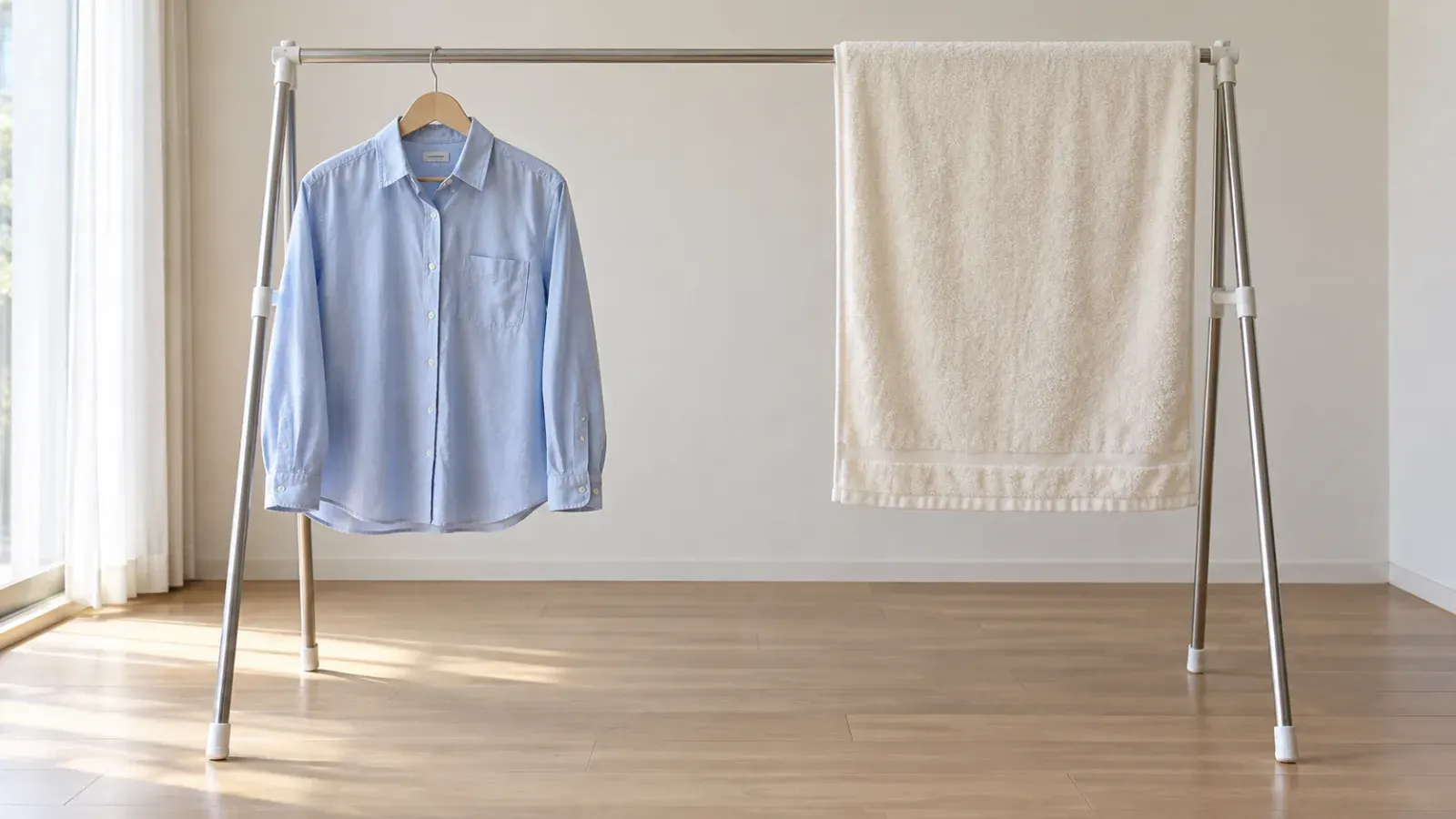
Does a fan or an open window solve the problem?
Air movement can help moisture leave fabric, but a fan does not remove that moisture from the room. Indoor drying adds to the room’s moisture load; Tokyo’s residential guidance recommends limiting it where possible. [1] Use an approved ventilated drying area or a confirmed external dryer when the room cannot keep up.
Opening a window is not always effective in warm, moist weather. EPA guidance notes that outside air can add moisture even when its relative humidity looks lower. [2] Use the room’s actual conditions and building instructions, rather than comparing two humidity percentages alone.
What should you verify before booking a monthly stay?
For a monthly mansion or serviced apartment, check washer capacity, permitted drying space, nearby drying alternatives and appliance support. HIVEN BK501 lists in-unit laundry. [3] That does not verify a tumble dryer, bathroom dryer or dehumidification setting.
Plan the weekly workload around what is confirmed. Washing towels separately from tomorrow’s outfit can be more practical than waiting for one large load. For a one- to three-month stay, this small scheduling choice protects both your time and your usable floor space.
FAQ
Should I use more detergent to stop indoor-drying smells?
Follow the detergent and machine instructions. Extra detergent is not a substitute for proper washing, prompt unloading and complete drying.
Does in-unit laundry mean a washer-dryer?
No. The listing needs to explicitly identify the appliance and its functions. Ask before relying on a drying cycle.
Can I store clothes that feel slightly damp?
Wait until they are dry, especially at seams and folds. Closed storage gives the remaining moisture fewer ways to escape.
What if my room cannot dry a full load?
Reduce the load or use a verified paid dryer for suitable fabrics. Do not obstruct vents or emergency exits to create extra hanging space.