Corporate Housing Costs in Tokyo: What Companies Should Compare
A total-cost framework for comparing corporate housing in Tokyo, including rent, utilities, internet, cleaning, furnishing, deposits and administration.

Written by Hive Heaven

Corporate housing cost in Tokyo should be compared as a total operating cost, not a headline rent. Two apartments with similar monthly prices can create very different company costs once utilities, internet, furnishing, cleaning, deposits, brokerage, guarantor arrangements and internal administration are included.
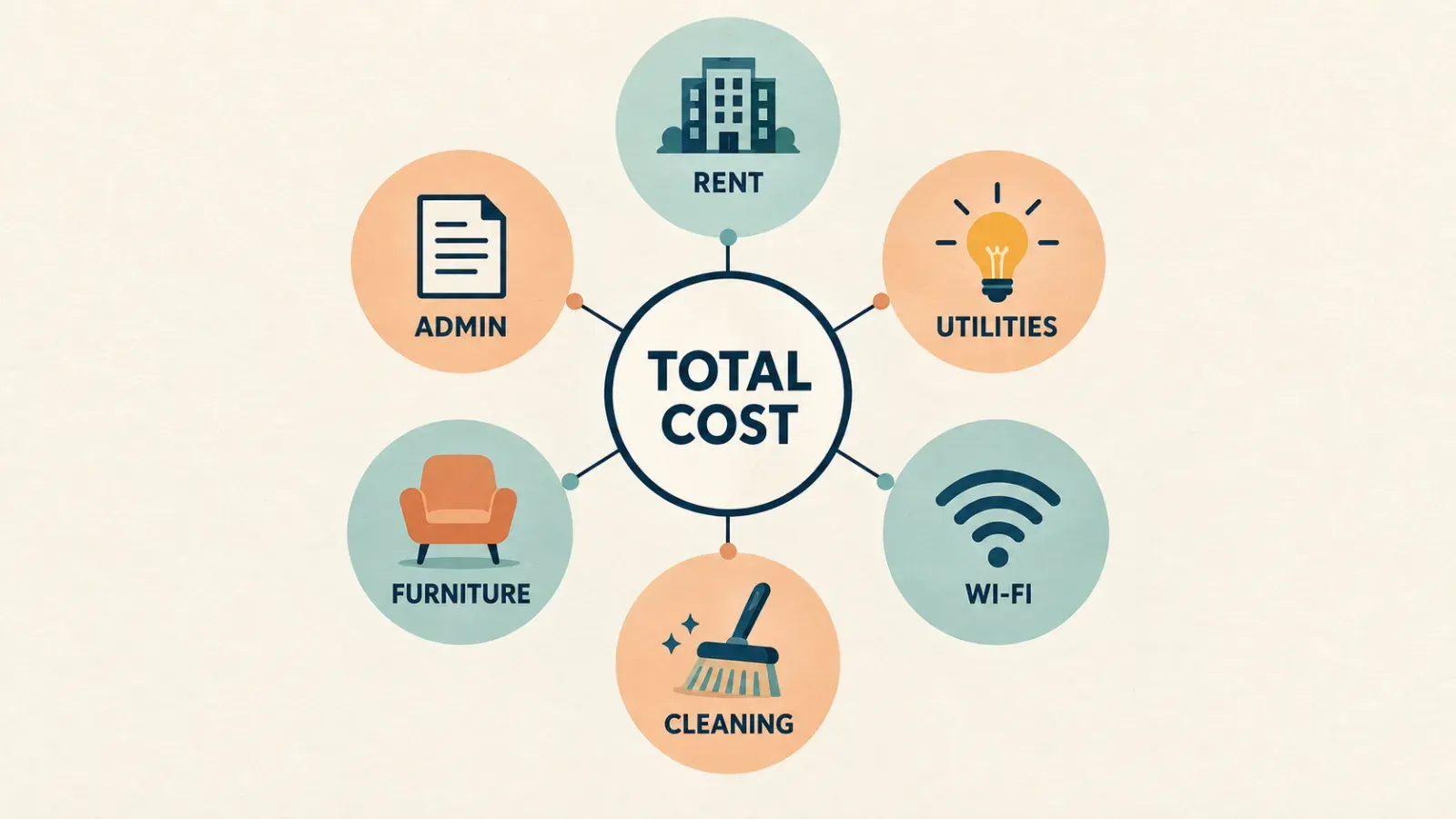
What belongs in a total-cost comparison?
Start with monthly rent or accommodation fee, then add mandatory service charges, utilities, Wi-Fi, cleaning, furniture, linen, laundry access and any taxes or fees that apply to the booking.
Next add move-in costs such as deposit, brokerage or guarantor-related charges where applicable. Finally, consider company administration: vendor onboarding, invoice handling, utility setup and repeated employee reimbursements.
Why can a lower rent cost more?
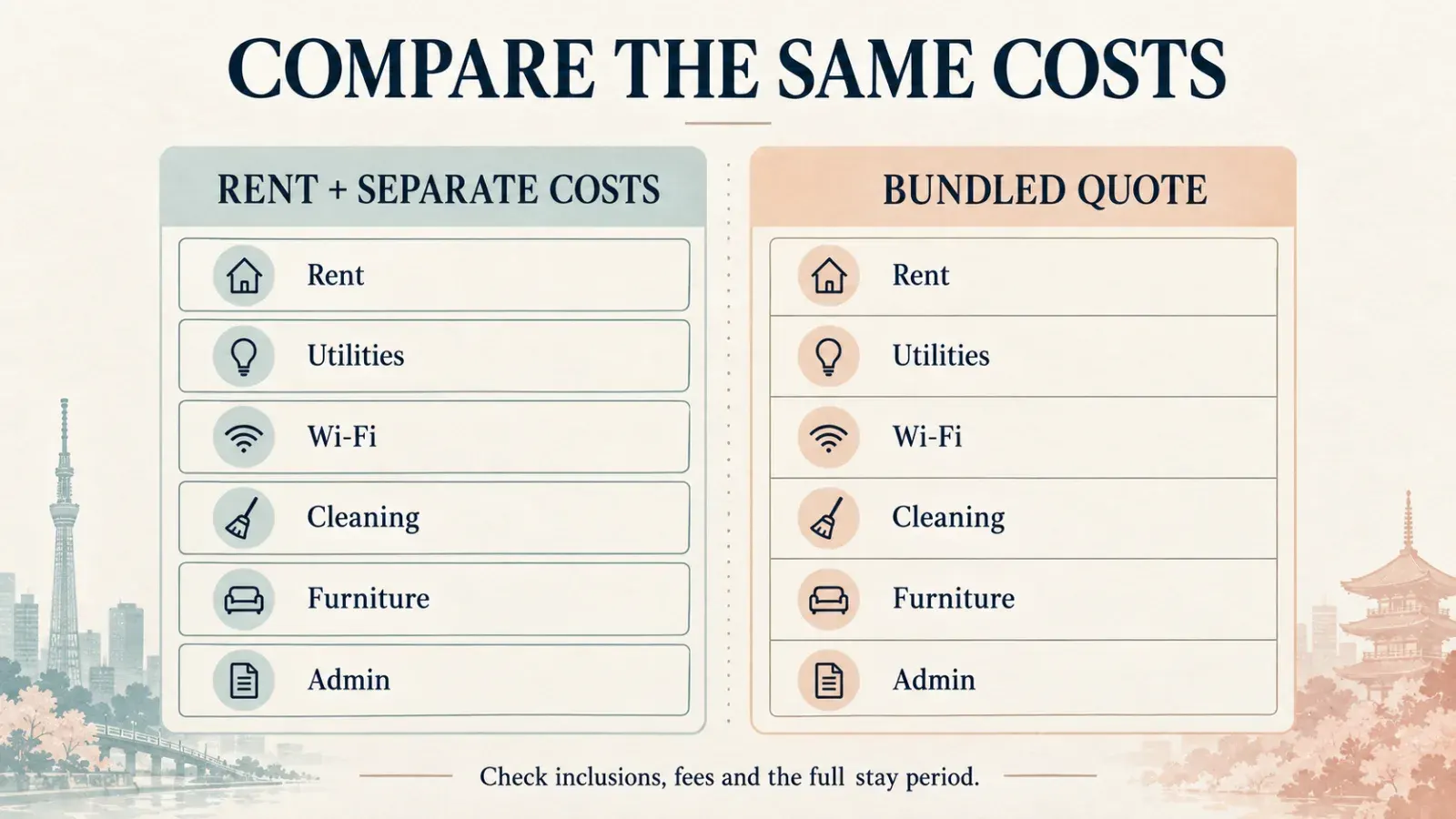
A conventional apartment may have attractive rent but require furniture, utilities, internet and several contracts. A furnished corporate residence may price more of those functions into one package.
The correct answer depends on the actual stay and company policy. The goal is not to prove one category cheaper but to compare the same cost boundaries.
What costs are often missed by HR?
Commonly missed items include overlap when an employee changes housing, cleaning at move-out, extension-rate changes, deposits, currency or payment friction, and the internal time spent solving billing exceptions.
For multiple employees, small administrative costs become material when repeated across many assignments.
How should companies compare hotels and residences?
Convert both into the period the employee will actually stay. Then compare meal dependence, laundry, storage, workspace and billing—not just room price. A hotel can be efficient for days but operationally different over months.
For a residence, verify what the quoted monthly price includes. Avoid assuming that “serviced” or “furnished” means the same thing across providers.
The cheapest corporate housing quote is not necessarily the lowest-cost assignment.
What should procurement request from providers?
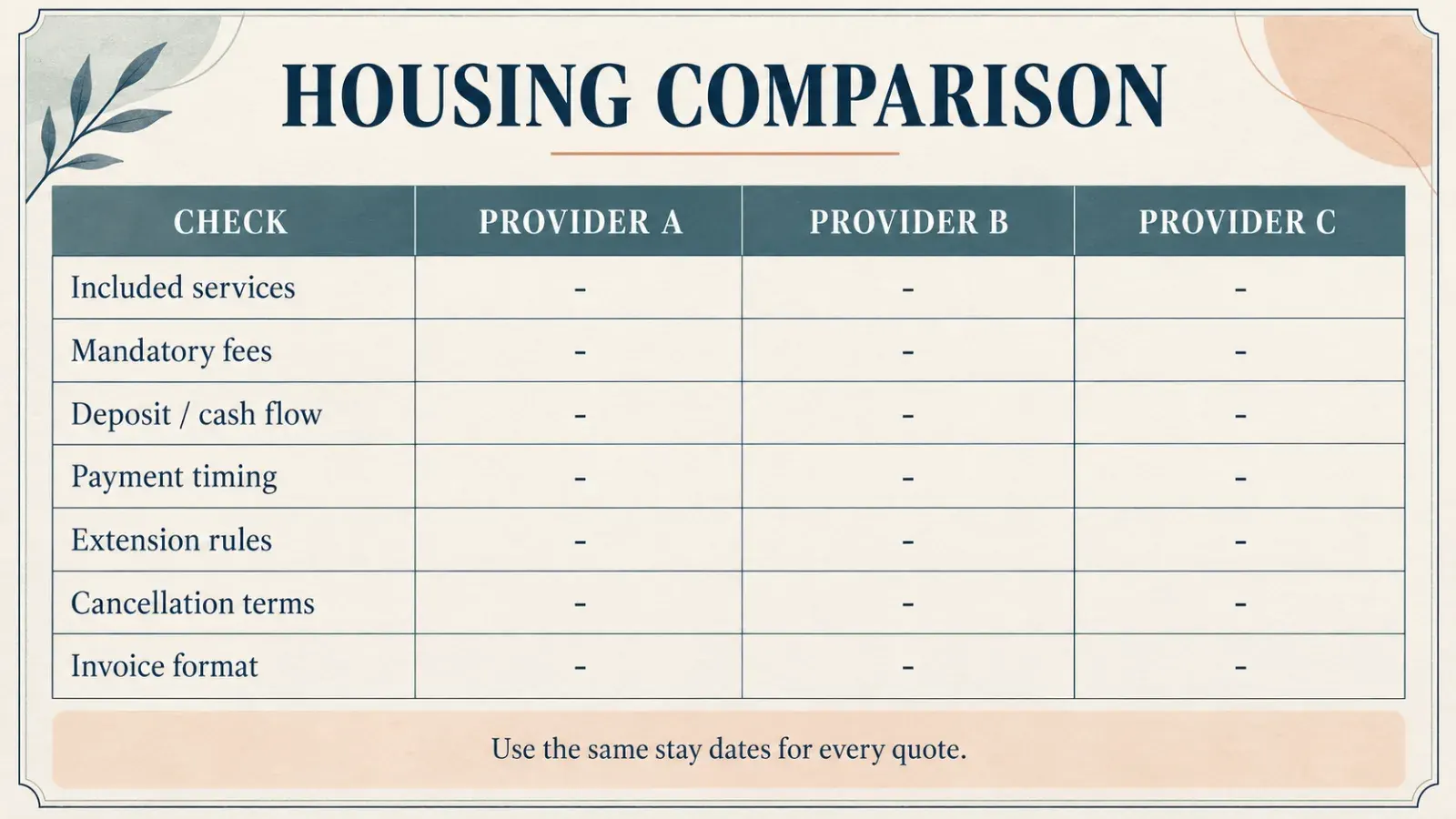
Ask for a written breakdown of included services, mandatory fees, deposits, payment timing, extension rules, cancellation or notice terms, and invoice format. Use one template across providers.
For public-facing content, avoid publishing stale fixed prices. Current quotes and availability can change quickly and should be checked at decision time.
How does HIVEN fit a total-cost comparison?
HIVEN’s Corporate page describes long-stay housing for relocating teams and corporate guests in Tokyo, including team relocation, curated proposals from HIVEN residences, bilingual support from inquiry to move-in, and corporate terms with flexible billing. Public residence information also emphasizes 29+ night stays, furnished living and practical long-stay features.
HIVEN’s public home page currently highlights no guarantor, no brokerage fee, fully furnished residences, weekly cleaning and online contract. Those items can reduce some setup categories, but companies should still review the actual proposal, deposit, service fees, billing and room-specific inclusions.
Related HIVEN Guides
Read “Expat Housing in Tokyo: Hotel, Serviced Apartment, or Monthly Residence?” and “Tokyo Housing for Assignees: What HR Teams Should Check Before Booking.”
FAQ
What is the biggest mistake in corporate housing cost comparison?
Comparing headline rent without defining what is included and what the company must arrange separately.
Should internal HR time be treated as a cost?
For operational comparison, yes. Repeated setup and exception handling consume company resources even if they do not appear on the housing invoice.
Are deposits part of cost?
They affect cash flow and risk even when refundable, so they should be tracked separately in the comparison.
Should public prices be used for budgeting?
They can be directional, but companies should use current quotes and the exact stay dates for decisions.