How Long Should Corporate Housing Be Booked for a Tokyo Assignment?
A practical guide to choosing corporate housing length for Tokyo assignments, including 1-month, 2–3-month and flexible-extension scenarios.

Written by Hive Heaven

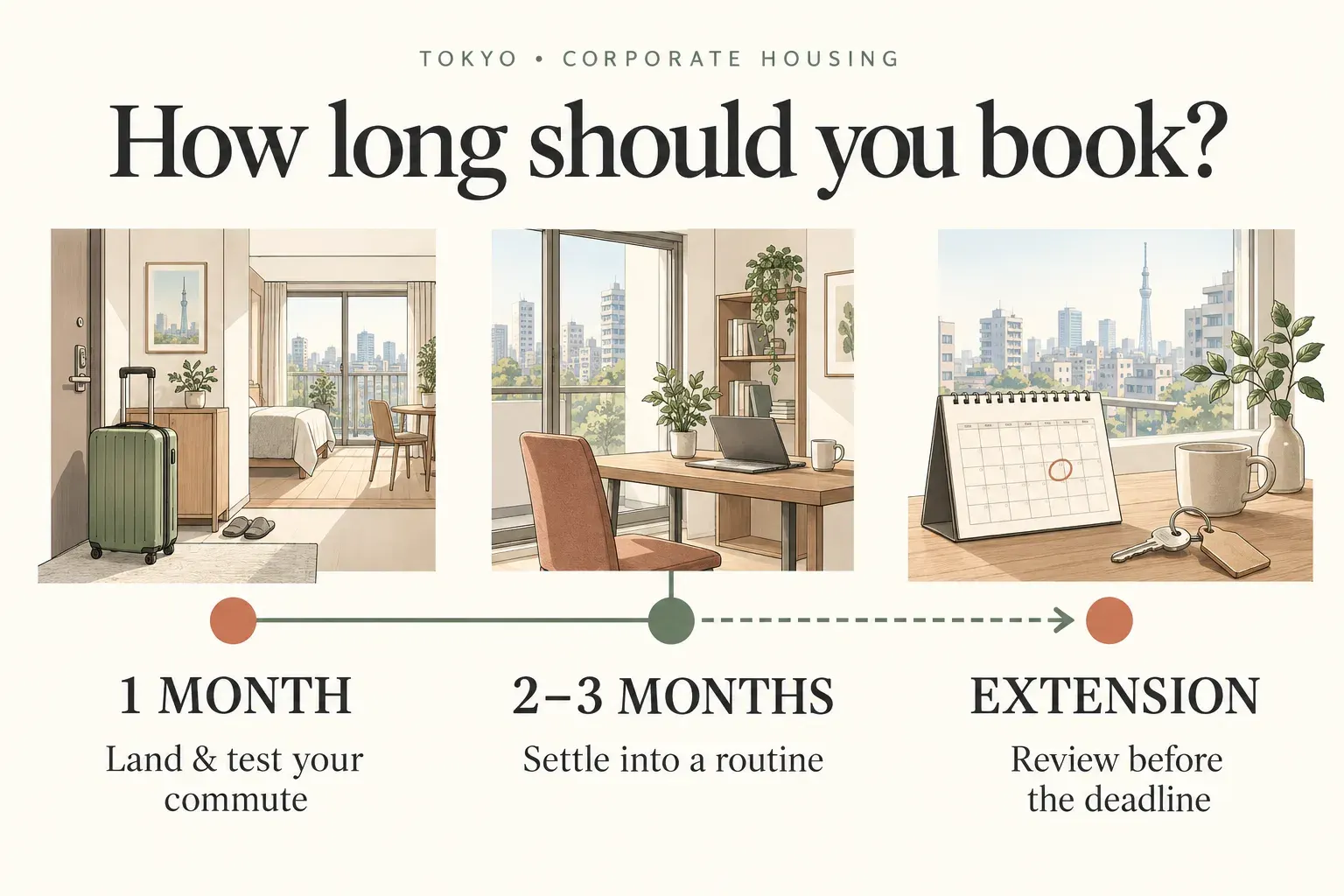
Corporate housing in Tokyo should be booked around the assignment’s uncertainty, not just its nominal end date. For some employees, one month is a landing period; for others, two or three months is the real settling-in window. The right booking length depends on project certainty, permanent-housing plans, commute testing and how costly a change would be later.
When is one month enough?
A one-month booking can work when the assignment itself is short, when permanent housing is already arranged, or when the employee mainly needs a move-in-ready landing base. It can also be a sensible first stage when the company wants to test location and commute before committing longer.
The risk is assuming that every permanent-housing search, internal approval or project decision will finish on schedule. If not, the employee may face a rushed move exactly when work is becoming busiest.
When do two or three months make more sense?
Two to three months can provide enough time to establish a routine, understand the real commute and make a better long-term housing decision. It is also common for project scope, onboarding or family plans to evolve during this window.
For HR, a longer initial period may reduce repeat booking work, but only if the change and extension terms are still reasonable. Compare the cost of unused time with the operational cost of an urgent rebooking.
What should HR ask about extensions?
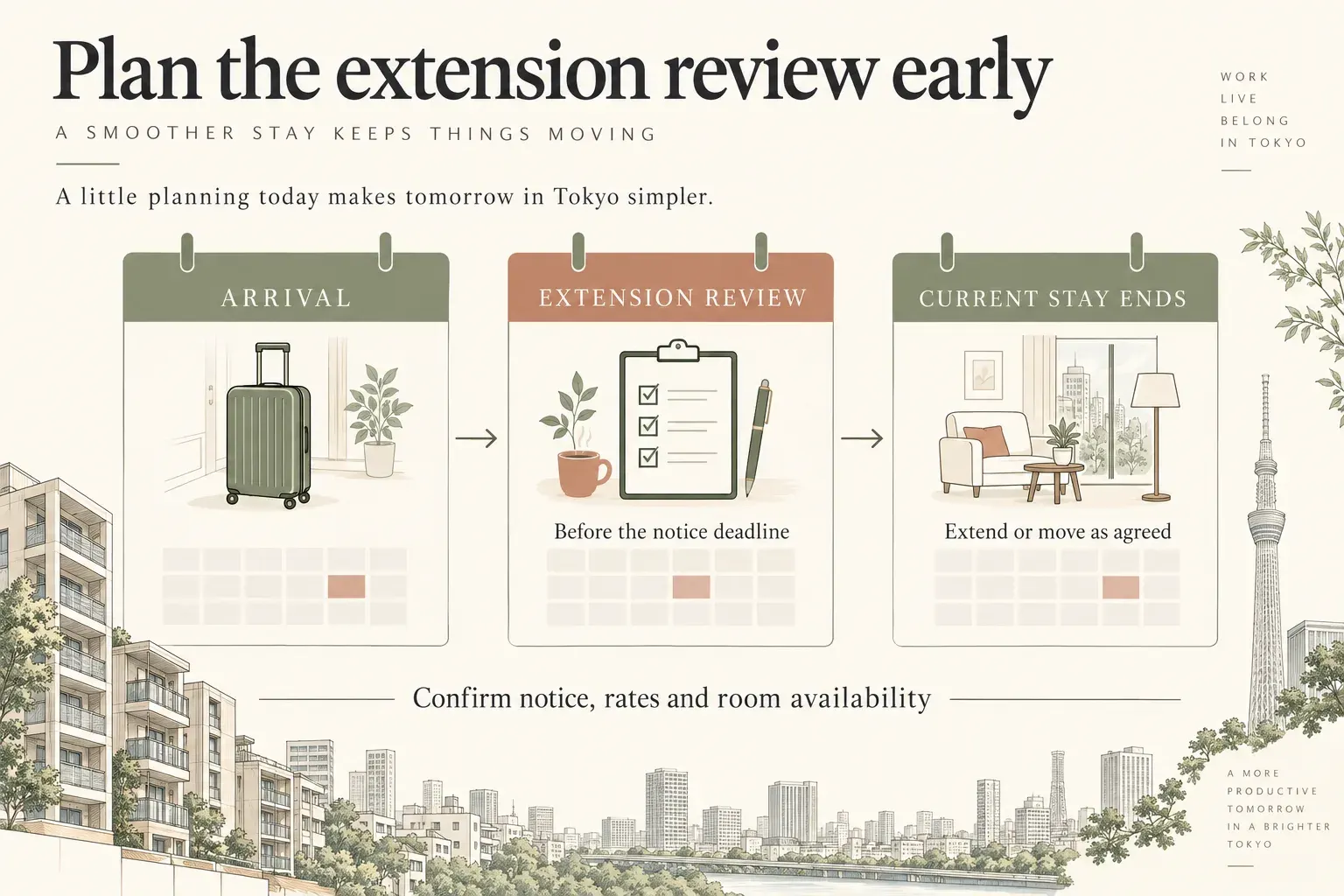
Ask when an extension request must be made, whether the same room can be retained, how the rate is set, what happens if the unit is unavailable, and whether a different residence can be proposed.
Also clarify notice requirements and any cost implications if the employee leaves earlier than expected. Flexible does not mean “no rules”; it means the rules are known before a change occurs.
How should project stays differ from relocations?
A project stay often has a defined operational purpose and may need housing only for the project period. A relocation may start with temporary housing and later transition into a permanent lease. Those two use cases should not be managed with the same default duration.
For teams, staggered arrivals matter too. A single master timeline may be less useful than booking windows by employee, role or project phase.
The best booking length is the one that protects the employee from unnecessary moves without locking the company into avoidable cost.
What is a practical decision rule?
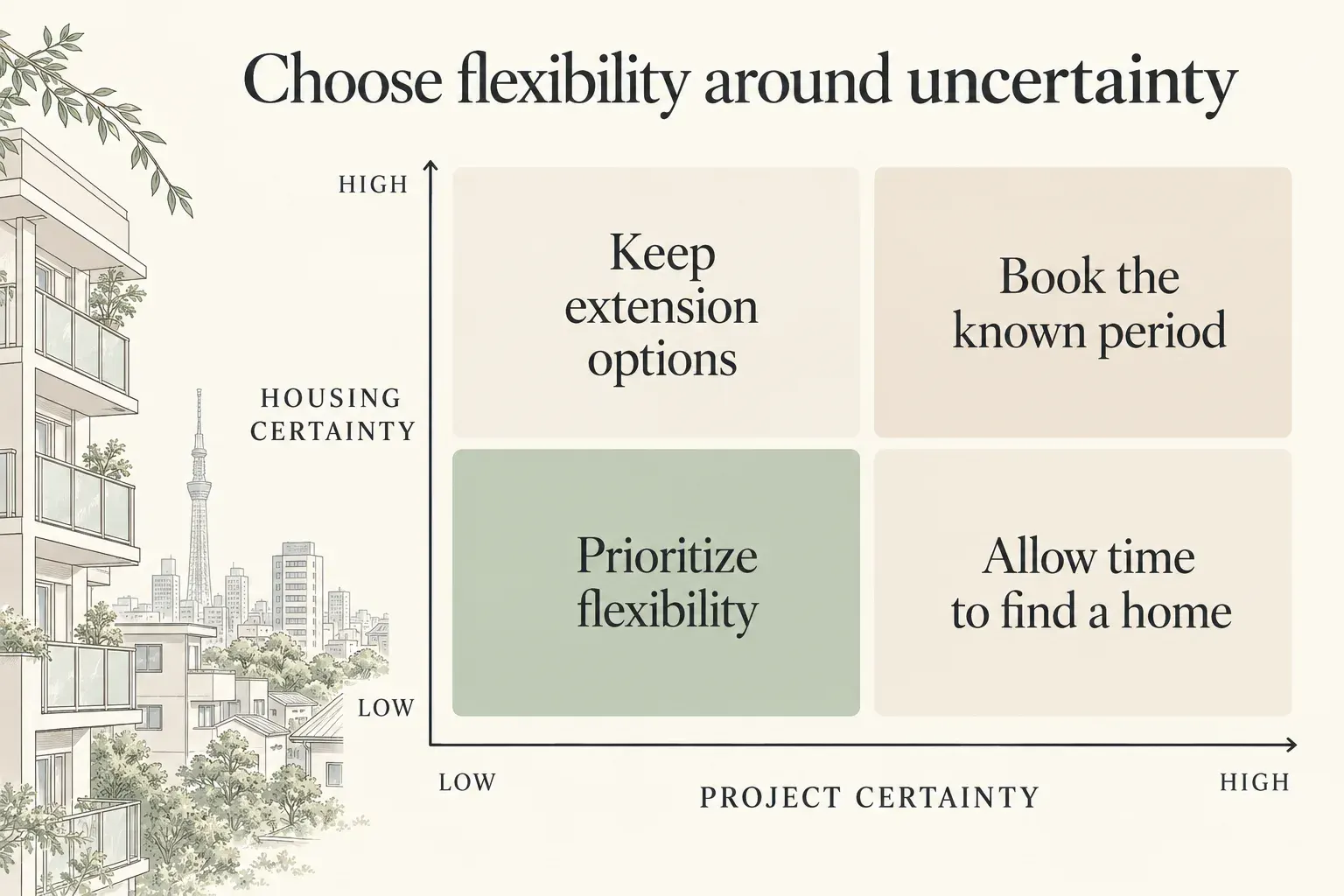
If the assignment date is firm and short, book close to the actual period. If the assignment is likely to extend or permanent housing is undecided, prioritize extension clarity and operational flexibility. If several employees are arriving, coordinate the booking plan around team phases rather than treating every stay identically.
Whatever the duration, document the extension deadline, billing contact and change process in the relocation file.
How does HIVEN fit flexible assignment planning?
HIVEN’s Corporate page describes long-stay housing for relocating teams and corporate guests in Tokyo, including team relocation, curated proposals from HIVEN residences, bilingual support from inquiry to move-in, and corporate terms with flexible billing. Public residence information also emphasizes 29+ night stays, furnished living and practical long-stay features.
That structure can suit assignments where the company needs a residence rather than a nightly hotel stay. The exact stay length, extension availability, rates and corporate terms should be confirmed in the proposal for each booking.
Related HIVEN Guides
Read “Tokyo Housing for Assignees: What HR Teams Should Check Before Booking” and “Corporate Housing Costs in Tokyo: What Companies Should Compare.”
FAQ
Is 30 days enough for a Tokyo assignment?
It can be if the assignment is short or permanent housing is already secured. For uncertain timelines, extension flexibility may matter more than the initial length.
Should companies book extra weeks as a buffer?
Sometimes, but compare the cost of unused time with the risk and administration of urgent rebooking.
What should an extension clause cover?
Timing, rate, room availability, alternative-room options, notice and any cost impact.
Is project housing different from relocation housing?
Yes. Project housing often follows a defined project period, while relocation housing may bridge the employee into a longer-term home.