How to Survive Japan’s Rainy Season: A Tokyo Tsuyu Guide
Plan for Tokyo’s tsuyu with practical laundry, moisture and indoor routines, plus the room features to check before a longer stay.

Written by Hive Heaven
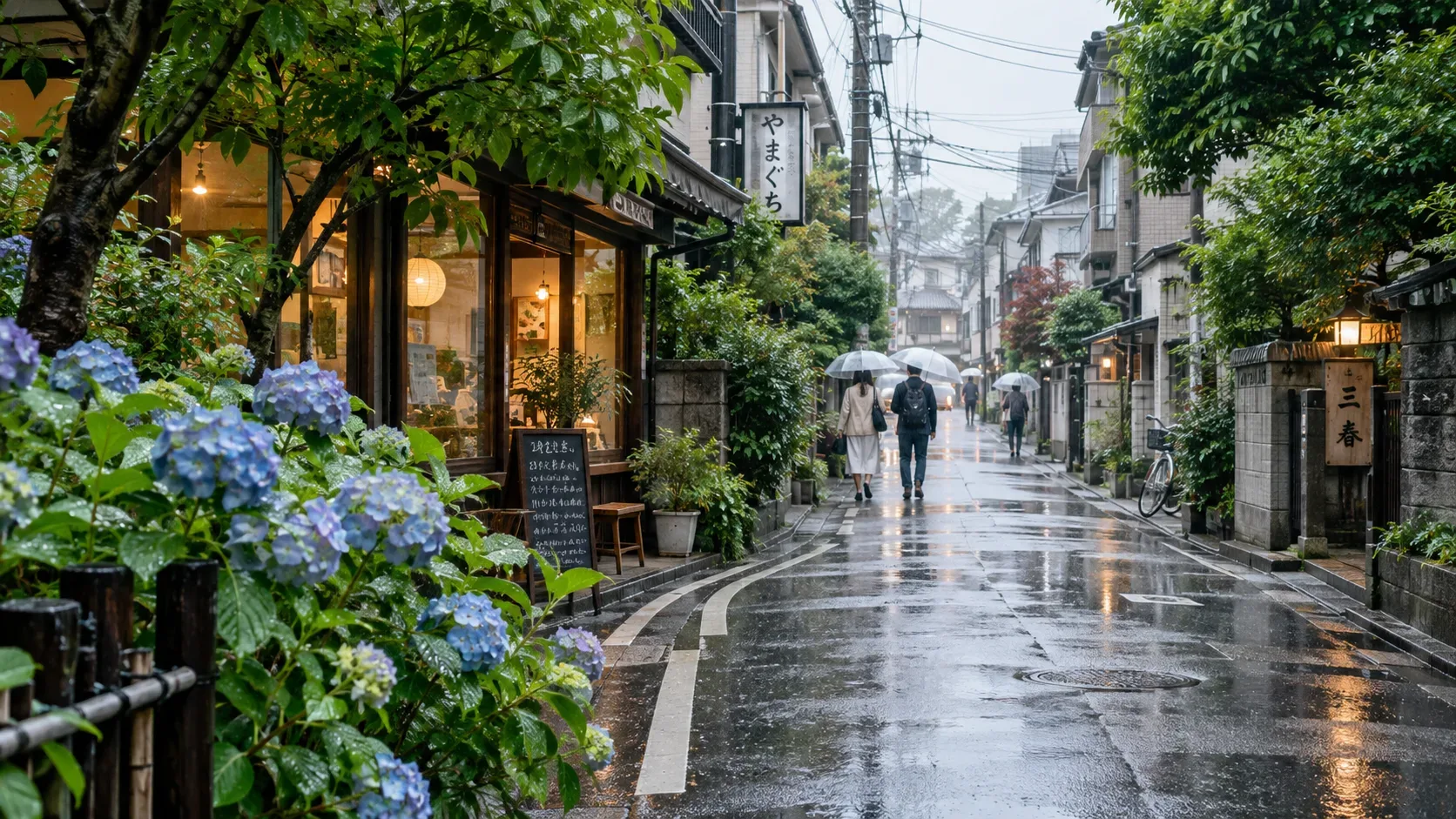
Japan’s rainy season is easier to manage when you plan how to dry things, not just how to stay out of the rain. For a Tokyo one month stay, start with small laundry loads, a place for wet shoes and towels, and clear instructions for the room’s ventilation and cooling controls. A comfortable routine matters more than carrying a suitcase full of rain gear.
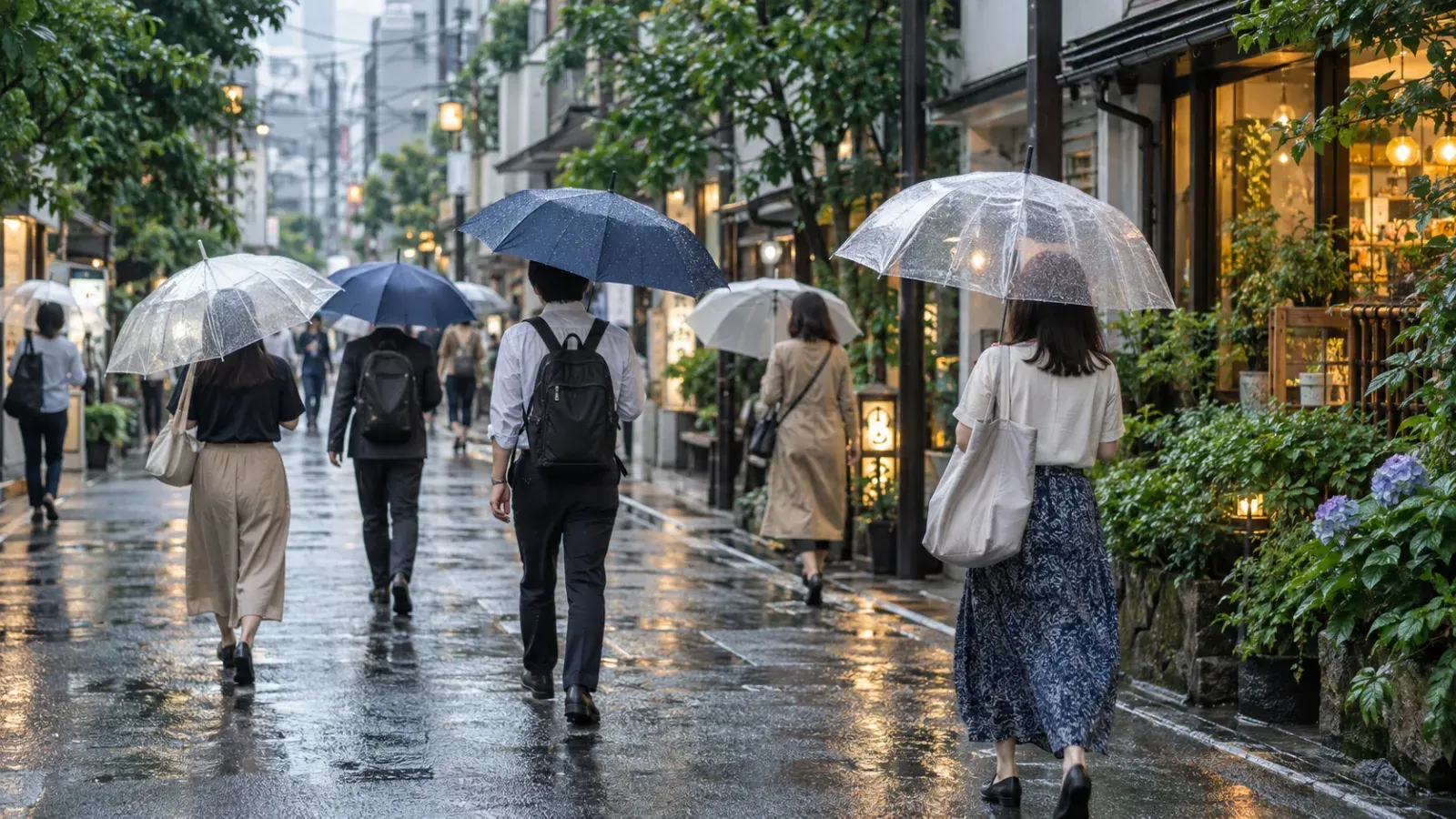
When is tsuyu in Tokyo?
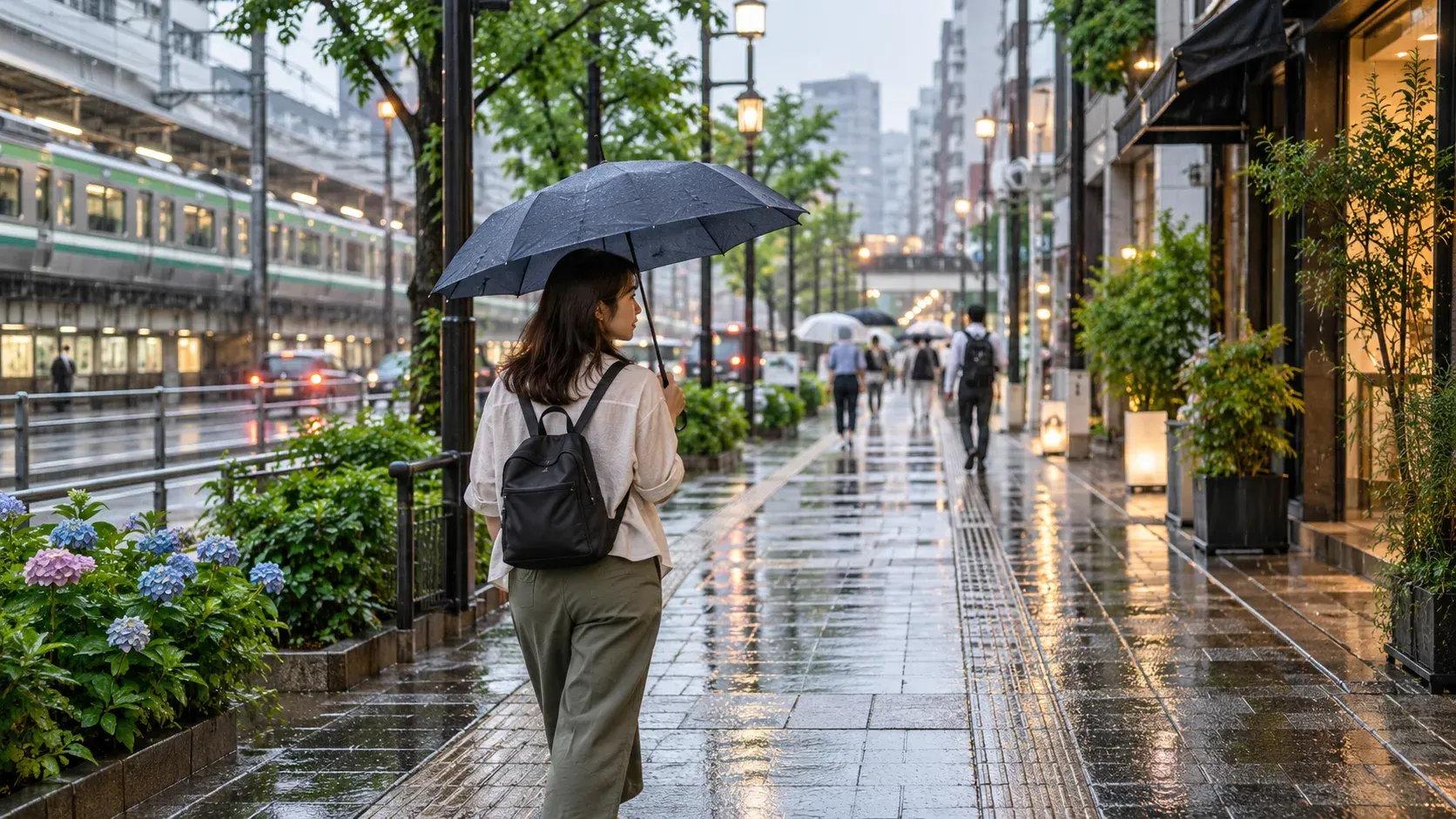
Tokyo belongs to JMA’s Kanto-Koshin rainy-season region. Its 1991–2020 normal dates are around June 7 to July 19; these describe a climate pattern, not guaranteed travel dates. JMA’s confirmed table records around June 2 to July 19 for 2026. [1] Tsuyu is a seasonal transition, so it does not mean uninterrupted rain every day.
For future travel, use the normal period to plan and check the actual forecast close to departure. A June booking does not tell you whether your particular walking tour will be wet. Keep one outdoor plan and one indoor alternative for each day.
What should you do on the first evening?
Make a small drying zone near the entrance, wherever the property permits it. Open a wet umbrella only where drips will not damage flooring or obstruct a corridor. Separate damp shoes from clean clothing, and unpack wet items before sitting down for the evening.
Find the bathroom fan switch and any continuous ventilation controls; ask the host how they should be used. Check where laundry may be hung and whether there is a nearby paid drying option. Knowing this before the first full wash prevents a rack of wet clothes from taking over the room.
How can you keep laundry from becoming a daily problem?
Wash before the basket is full, leave space between hanging items, and take clothes out of the machine promptly. Choose the spin setting allowed by the fabric label. A washing machine provides washing access; it does not establish that a dryer, heated bathroom or dedicated drying program is included.
If clothes are still damp when you need them, use a confirmed laundromat dryer for suitable fabrics rather than folding them into a drawer. Keep a spare set of quick-drying clothes for the day when yesterday’s wash is not ready.
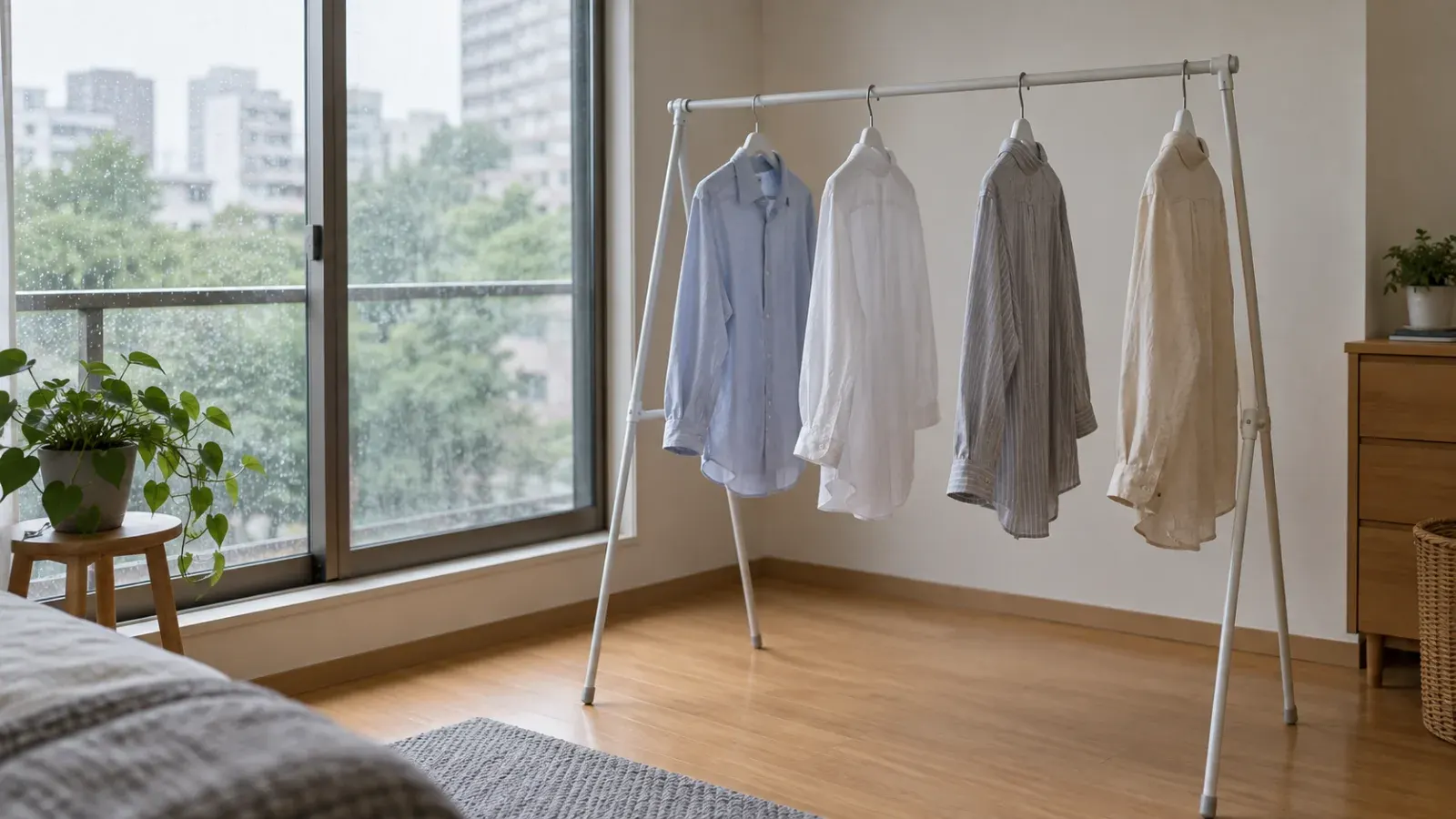
Should you leave the windows open all day?
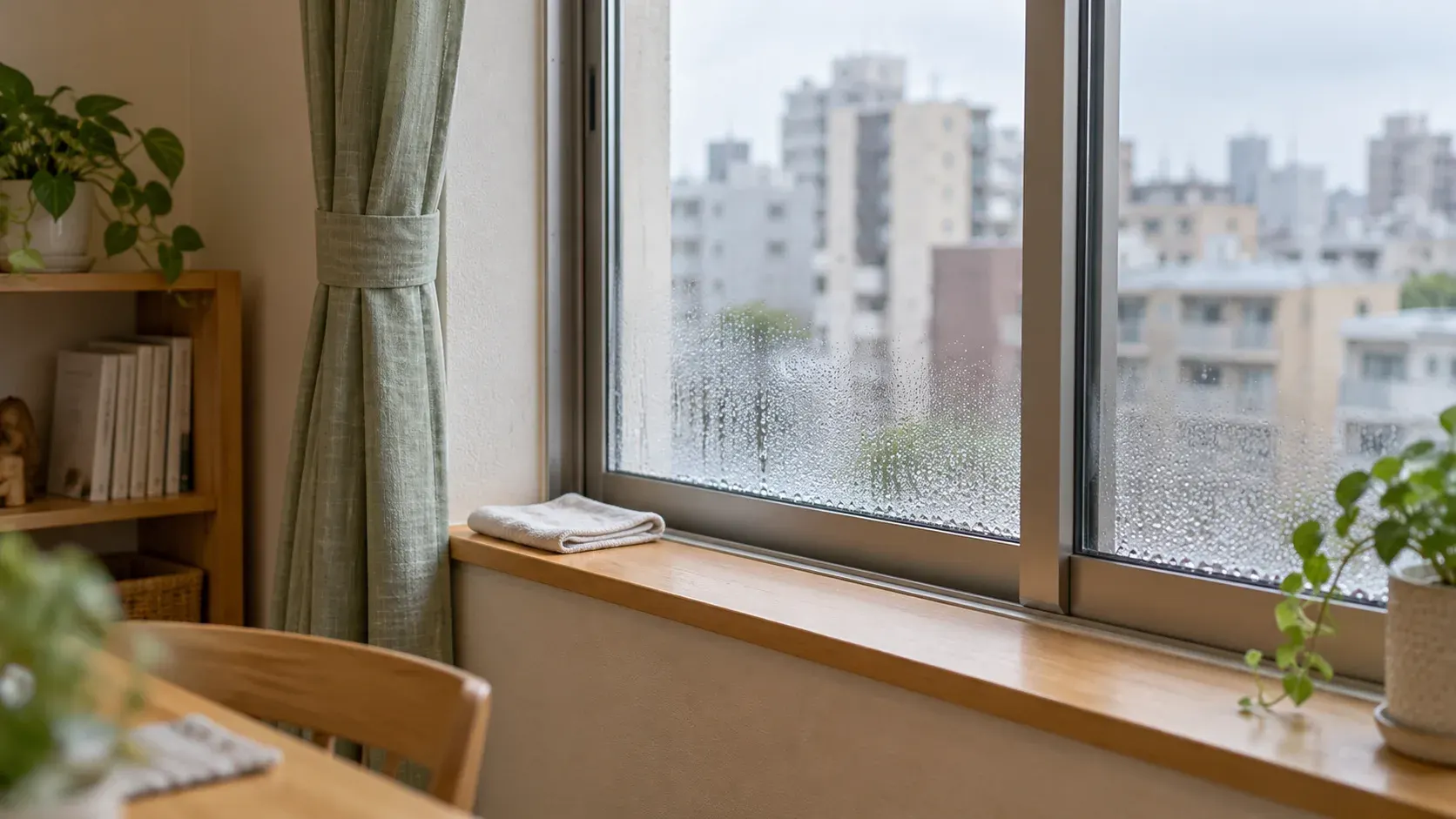
No single window-opening rule fits every day. Rain, wind, outside moisture and security all matter. Tokyo’s residential guidance treats ventilation and humidity management as related but separate tasks. [2] Follow the building’s ventilation instructions, use available extraction when producing steam, and keep rain out.
A simple room checklist is more useful than guessing from how sticky the weather feels: check for window condensation, damp towels, wet flooring and blocked vents. A humidity meter can help you notice a persistent problem. If a room remains damp or smells musty, report it; do not compensate by setting the air conditioner uncomfortably cold.
Which accommodation features actually help?
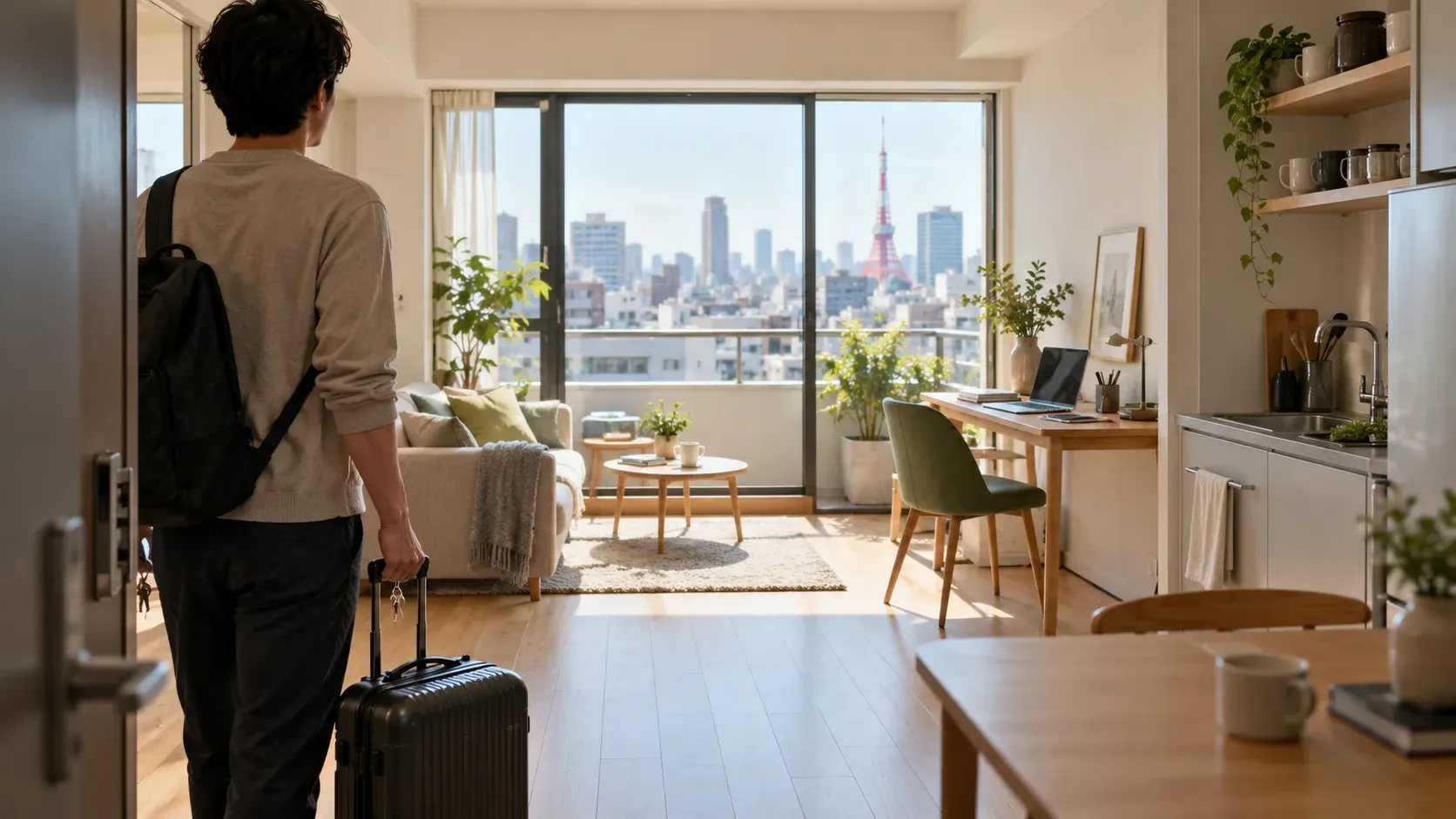
For a monthly apartment in Tokyo, ask how washing, drying and maintenance work in the specific unit. HIVEN BK501 publicly lists in-unit laundry and air conditioning. [3] These support ordinary routines, but a dedicated dehumidifier and bathroom drying equipment are not verified here. Confirm any essential appliance before booking.
Keep your indoor day simple: finish wet chores early, clear a dry workspace, and put away only fully dry clothing. Your accommodation should make that routine practical rather than require constant improvisation.
FAQ
Does tsuyu mean I should cancel a Tokyo trip?
Not automatically. Build flexible days around current forecasts and official warnings; seasonal averages cannot assess the safety of a particular outing.
Is air conditioning the same as a dehumidifier?
No. Cooling can remove some moisture during operation, but a separate dry mode or appliance depends on the installed model. Ask for the actual controls.
Can I dry everything in the bathroom?
Only if the property authorizes that location and provides a workable drying setup. A bathroom fan alone does not establish a heated drying facility.
What is the most useful rainy-season packing habit?
Bring enough changes to tolerate a delayed wash, and keep a separate place for wet items. Never pack damp clothing tightly for days.