From Airport to Move-In: A Smooth Arrival Plan for Tokyo Assignees
A practical airport-to-move-in plan for Tokyo assignees, covering arrival communication, transport, check-in, first-night essentials and HR follow-up.

Written by Hive Heaven
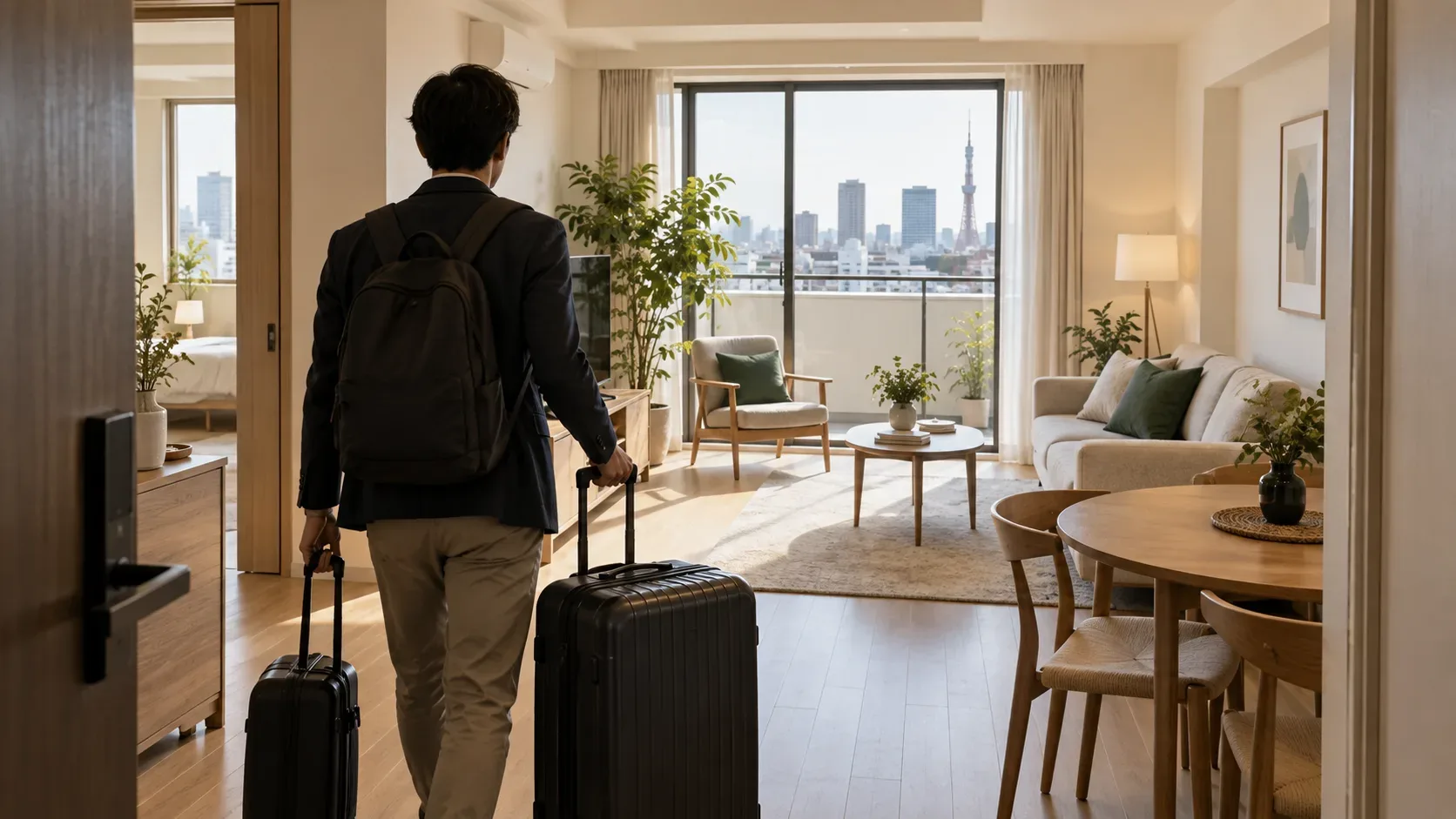
The best arrival plan for a Tokyo assignee is deliberately boring: the employee knows where to go, how to reach the residence, how to enter, what to do if delayed and where to find the first essentials. After a long flight, predictability is more valuable than an ambitious first-day schedule.

What should be confirmed before the flight?
Send the employee one arrival sheet containing the accommodation address, provider contact, check-in method, expected arrival window, transport plan, office contact and a backup procedure if the flight is delayed.
If airport pickup, taxi, train or another transfer is being arranged, confirm the actual reservation and meeting point. Do not treat a promotional service as automatically included for every booking.
How should the transport option be chosen?
The best transfer depends on arrival airport, luggage, arrival time, number of travelers, mobility needs and the residence location. Rail can be efficient; a booked vehicle may be easier with multiple large bags or a family.
Avoid hard-coding one universal travel time into relocation materials. Tokyo transport conditions vary and should be checked for the actual arrival date and property.

What should happen immediately at move-in?
The employee should be able to access the room, connect to Wi-Fi, use hot water and air conditioning, understand the basic appliances and know how to contact support. Those checks matter more on the first night than learning every building detail.
If something is not working, report it through the provider’s stated process rather than waiting until the next workday.
What does an assignee need on the first night?
Water, a simple meal, basic toiletries, charging, sleep and a plan for breakfast. A nearby convenience store or supermarket is more useful than a full neighborhood tour after an international flight.
Keep the next morning manageable too. If the first office day follows immediately, prepare the route and departure time before going to bed.
A strong arrival experience feels uneventful because every critical handoff has already been confirmed.
What should HR do the next day?
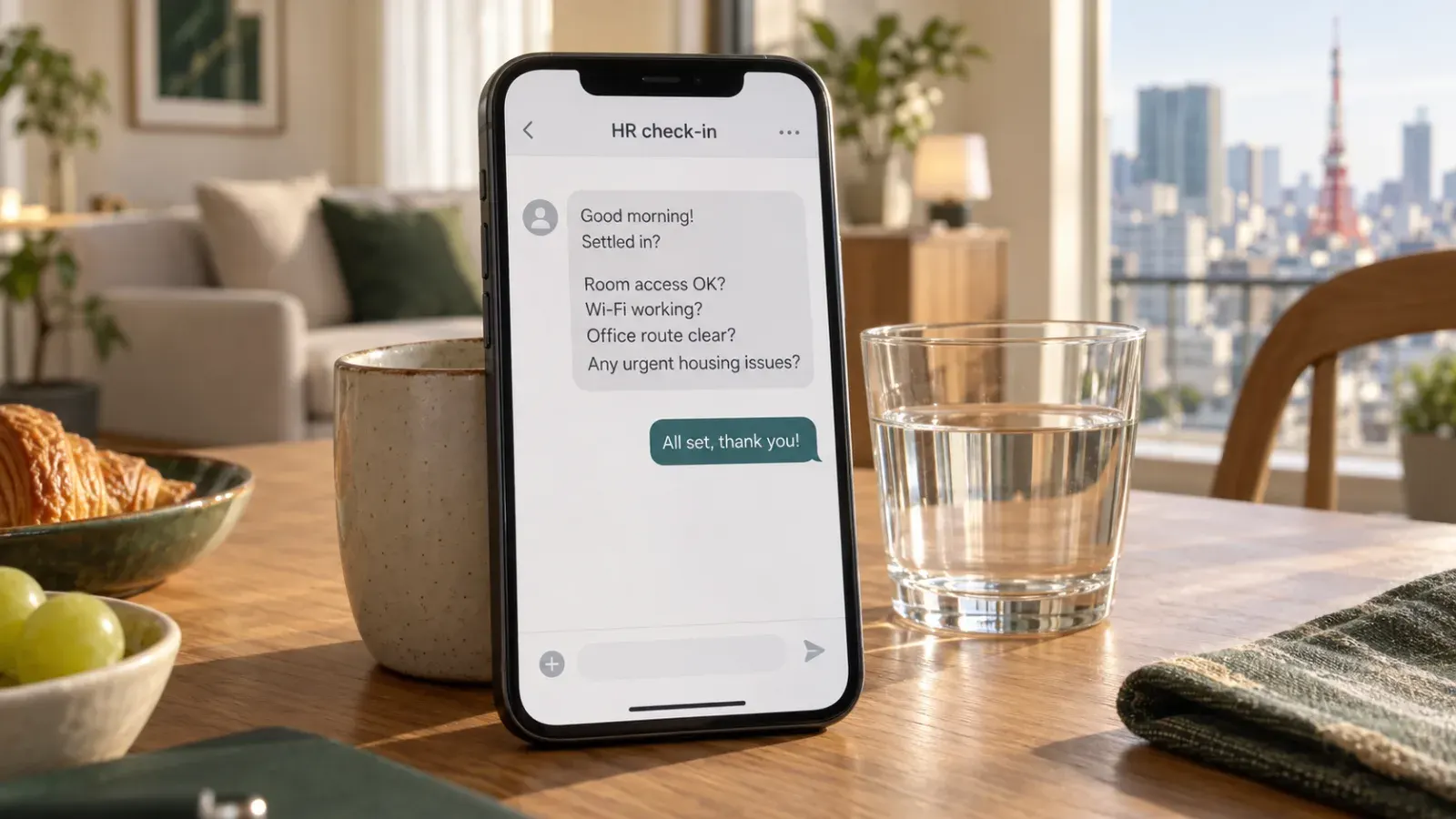
Send one short check-in: Were you able to enter the room? Is connectivity working? Do you know the office route? Is there any urgent housing issue?
Then move the employee into the normal first-week process rather than continuing to manage every small personal task.
How can HIVEN fit an arrival plan?
HIVEN’s Corporate page describes long-stay housing for relocating teams and corporate guests in Tokyo, including team relocation, curated proposals from HIVEN residences, bilingual support from inquiry to move-in, and corporate terms with flexible billing. Public residence information also emphasizes 29+ night stays, furnished living and practical long-stay features.
HIVEN’s public site currently promotes complimentary one-way airport pickup from HND or NRT for a limited number of eligible rides, but eligibility and availability are campaign-specific. Corporate guests should confirm whether the service applies to their actual reservation instead of assuming it is included.
Related HIVEN Guides
Read “Your First Week in Tokyo After Relocation” and “Moving to Tokyo for Work: A Practical Relocation Checklist.”
FAQ
Should HR always arrange airport pickup?
Not necessarily. The best transfer depends on luggage, arrival time, travelers, budget and residence location.
What should be on an arrival sheet?
Address, provider contact, check-in method, transport plan, arrival window, office contact and backup steps for delay.
What should be checked first in the room?
Entry, Wi-Fi, hot water, air conditioning, basic appliances and support contact.
When should HR follow up?
A short check the next day is usually useful, followed by the normal first-week relocation check.